
An Instrumental Letter of Love, Written in Silence, Memory, and Gentle Winter Light
When “I Still Write Your Name in the Snow” appeared in 1975, it reminded listeners that words are not always necessary to tell a love story. Recorded and released by Chet Atkins, the song became a Top 40 hit on the Billboard Hot Country Singles chart, a rare achievement for an instrumental recording in an era increasingly dominated by vocals and polished pop-country production. Its success was quiet, steady, and deeply telling: audiences were still willing to listen closely, to feel rather than be told.
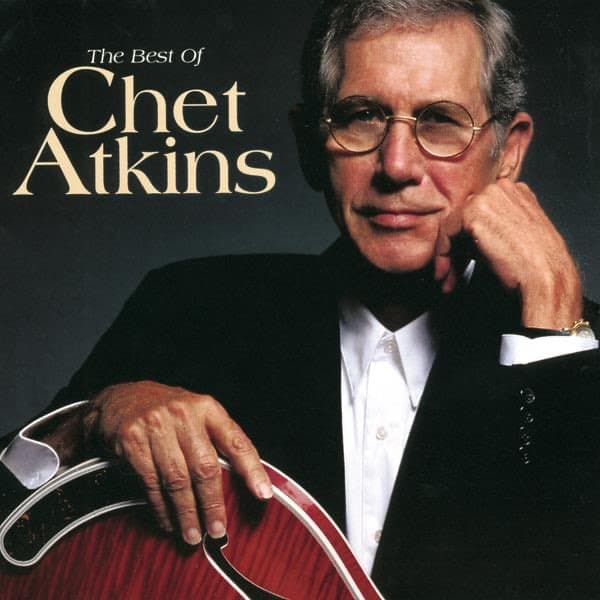
By the mid-1970s, Chet Atkins was already a towering figure in American music. Often called “Mr. Guitar,” he had shaped the Nashville Sound, influenced generations of guitarists, and proven that technical mastery and emotional subtlety could coexist. Yet “I Still Write Your Name in the Snow” stands apart even within his remarkable catalog. It is not a showcase of speed or complexity. Instead, it is an exercise in restraint—an intimate confession expressed entirely through touch, tone, and space.
The song was released as a single and later included on Atkins’ 1975 album Pickin’ My Way, a record that leaned into warmth and reflection rather than innovation. The title alone sets the emotional scene. Writing a name in snow is a fragile act temporary, vulnerable, and deeply personal. It suggests memory that refuses to fade, even while knowing it cannot last. Before a single note is played, the listener already understands the emotional terrain.
From the opening phrases, the guitar speaks softly, almost hesitantly. There is no dramatic entrance, no announcement of intent. The melody unfolds like a thought returning on a quiet winter morning. Chet Atkins’ signature fingerstyle technique allows bass, harmony, and melody to exist simultaneously, yet nothing feels crowded. Each note has room to breathe, much like memories that surface gently rather than all at once.
What makes “I Still Write Your Name in the Snow” especially powerful is its emotional clarity. There is longing here, but no desperation. Nostalgia, but no bitterness. The song does not try to resolve anything. It simply exists in the act of remembering. The absence of lyrics becomes its greatest strength, allowing listeners to place their own stories inside the melody. The guitar does not tell you who was lost, or why it only acknowledges that someone mattered, and still does.
By 1975, Atkins was no longer chasing trends or chart dominance. His career had entered a reflective phase, where expression mattered more than expansion. That maturity is audible in every measure of this recording. He resists ornamentation. He avoids dramatic flourishes. Instead, he focuses on tone warm, rounded, and human. The pauses between phrases are as meaningful as the notes themselves, suggesting thoughts left unspoken.
In the broader context of popular music, “I Still Write Your Name in the Snow” is a reminder of an older listening culture one that valued patience and emotional nuance. At a time when instrumental hits were becoming increasingly rare, the song’s chart success felt almost symbolic. It suggested that melody alone, when played with honesty, could still reach people deeply.
The piece has since become one of Chet Atkins’ most beloved late-career recordings, frequently cited by guitarists as an example of how less can truly be more. It is often returned to not for technical study, but for emotional grounding. It slows time. It invites reflection.
Listening to the song today feels like stepping into a memory that does not belong to any single moment, yet feels unmistakably familiar. The snow is fresh. The air is still. And somewhere in that quiet space, a name is being written again not to be seen by anyone else, not to last forever, but because remembering itself is an act of love.
In “I Still Write Your Name in the Snow,” Chet Atkins leaves us with no final statement, no grand conclusion. Instead, he offers something far more enduring: the sound of memory lingering, gently, long after the season has passed.