
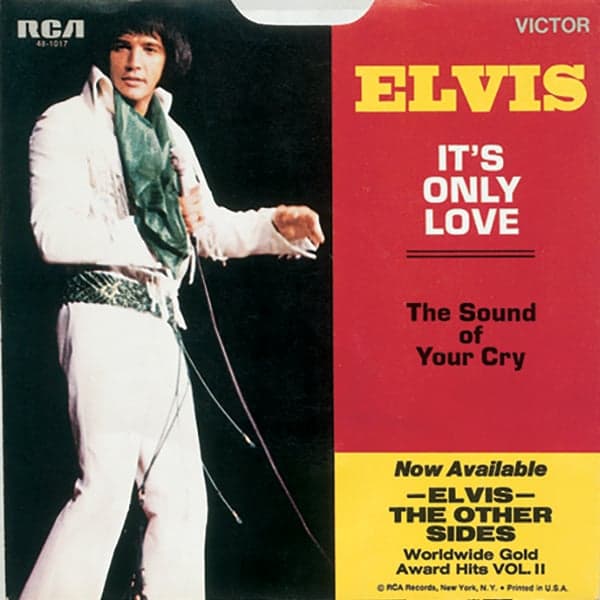
When heartbreak whispers instead of shouts, and Elvis lets vulnerability lead
“The Sound of Your Cry” is one of Elvis Presley’s most overlooked late-1960s recordings a quiet, introspective ballad that reveals a softer, more emotionally restrained side of his artistry. Released in 1970 as part of the album That’s the Way It Is, the song stands apart from Elvis’ grand anthems and powerhouse performances, choosing subtlety over spectacle.
Written by Bernie Baum, Bill Giant, and Florence Kaye, the song belongs to a group of compositions that focused less on dramatic storytelling and more on emotional atmosphere. Lyrically, it captures the moment when love has already begun to slip away not through arguments or betrayal, but through silence, distance, and the unspoken sadness in another person’s voice. The “cry” in the title is not loud or theatrical; it is internal, barely audible, and that is what makes it so devastating.
Elvis’ vocal approach here is remarkably controlled. He sings with restraint, almost conversational at times, allowing space between phrases and letting the melody breathe. There is no attempt to overpower the listener. Instead, he leans into gentleness, trusting that nuance will carry the emotion. His voice sounds mature, reflective, and deeply human qualities that defined his best work during this period.
Musically, the arrangement is minimal and elegant. Soft strings and understated instrumentation create a delicate backdrop, supporting the vocal without drawing attention away from it. This production choice aligns perfectly with the song’s emotional core, emphasizing intimacy rather than drama. It feels less like a performance and more like a confession overheard.
Recorded during the That’s the Way It Is sessions in June 1970, the song emerged at a pivotal moment in Elvis’ career. He had returned triumphantly to live performance in Las Vegas, reasserting his relevance as a serious contemporary artist. At the same time, his recordings began to reflect greater emotional complexity songs about regret, loneliness, and the quiet costs of love. “The Sound of Your Cry” fits seamlessly into this phase, offering depth without melodrama.
Though never released as a major single, the track has earned lasting appreciation among longtime fans and collectors. It is often cited as a hidden gem, valued precisely because it does not seek attention. In a catalog filled with iconic hits, this song survives on honesty alone.
What makes “The Sound of Your Cry” especially poignant is its universality. Many love songs describe heartbreak after it has already happened. This one exists in the moment of realization when you hear, perhaps for the first time, that the person you love is already hurting, and you know the end is near. Elvis conveys that realization with empathy rather than sorrow, making the listener feel understood rather than overwhelmed.
In retrospect, the song feels like a quiet pause in Elvis Presley’s late-career journey a moment where he allowed stillness to speak louder than power. It reminds us that some of the most enduring emotions are not shouted from the stage, but spoken softly, almost as if afraid to be heard.
For those willing to listen closely, “The Sound of Your Cry” is not just a song it is an emotional echo, lingering long after the final note fades.