
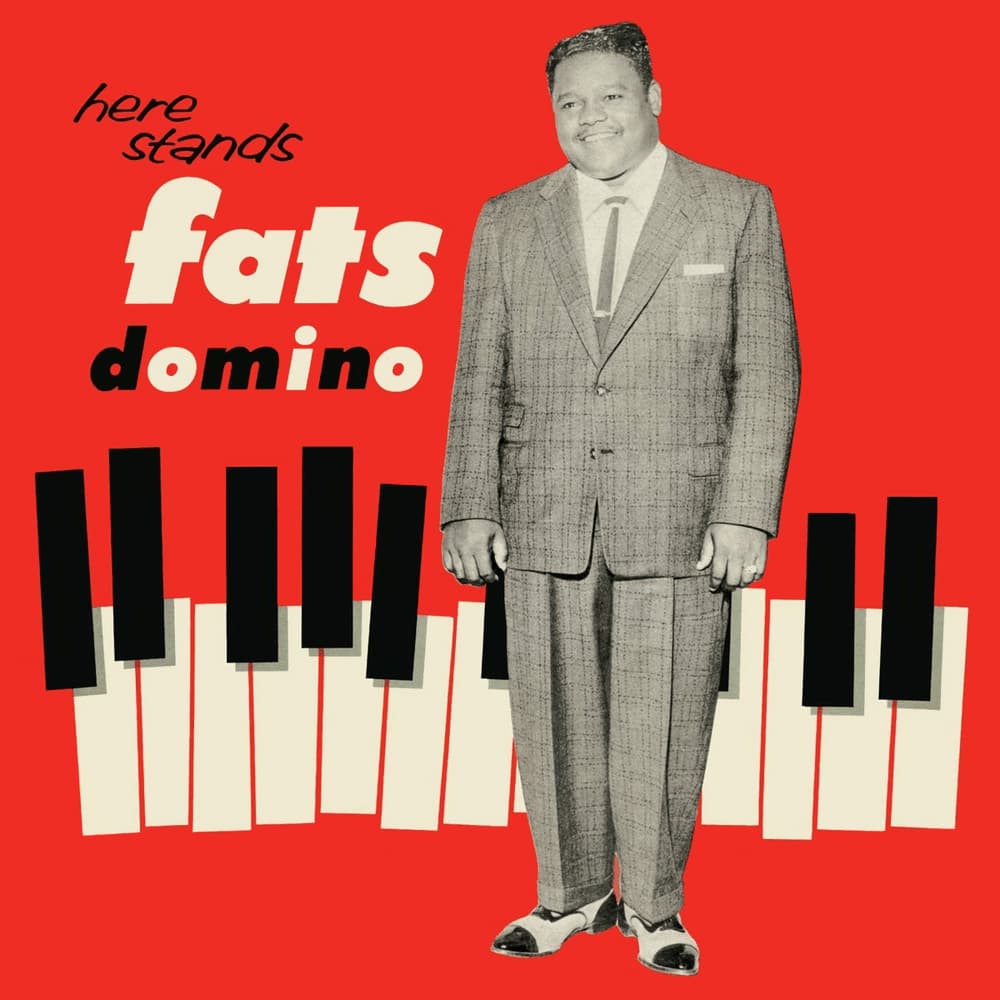
The Thunderous Birth of a New Rhythm: How a Piano-Pounding Prodigy from New Orleans Set the World in Motion
In the sweltering, creative crucible of New Orleans in 1949, a young man with a wide smile and a diamond-studded technique walked into J&M Studio and changed the course of musical history. That man was Antoine “Fats” Domino, and the song was “The Fat Man.” Released in 1950 on the Imperial label, this track didn’t just climb the charts it blew them wide open. It reached number two on the Billboard R&B charts, becoming one of the first true rock and roll records to sell over a million copies. For those who can still feel the primal pull of a heavy backbeat, “The Fat Man” isn’t just a song; it is the sound of a cultural revolution. It was the moment when the elegance of jazz met the grit of the blues and gave birth to the joyous, unbridled energy that would eventually be called Rock and Roll.
The story behind “The Fat Man” is as rich and flavorful as a bowl of New Orleans gumbo. Produced by the legendary Dave Bartholomew, the track was a reimagining of an old drug-lament song called “Junker Blues.” However, Fats and Bartholomew stripped away the darkness and replaced it with a rolling, boogie-woogie piano line and a vocal delivery that was pure charisma. One of the most distinctive elements of the recording is Fats’ use of his voice to mimic a muted trumpet a “wah-wah” scatting that added a layer of playful virtuosity to the driving rhythm. When the needle dropped on that 78rpm record, listeners were greeted with a sound that was heavier, louder, and more rhythmic than anything they had heard before. It was the sound of Fats Domino declaring his presence, turning a nickname given by a bandleader into a brand that would dominate the airwaves for the next two decades.
Lyrically and musically, “The Fat Man” is a celebration of identity and the vibrant street life of the Crescent City. When Fats sings about standing on the corner with his money in his hand, looking for the women, he isn’t singing about high drama; he is singing about the simple, universal pursuit of a good time. For the sophisticated listener, the “meaning” of the song lies in its revolutionary simplicity. It replaced the complex arrangements of the Big Band era with a steady, “pounding” 8/8 piano rhythm that invited everyone to the dance floor. It was music that didn’t demand a degree to understand—it only demanded that you move. It captured the spirit of a post-war generation that was ready to shake off the constraints of the past and embrace a more visceral, honest form of expression.
To listen to “The Fat Man” today is to experience a powerful surge of nostalgia for the dawn of a new age. It evokes memories of neon-lit diners, the smell of pomade and hairspray, and the electric thrill of hearing a sound that felt both dangerous and delightful. For those who were there when the foundations of the Rock and Roll Hall of Fame were being laid, this track is a sonic time capsule. It reminds us of a time when music felt tactile and alive, vibrating through the floorboards of a high school gymnasium or crackling through a jukebox in a seaside pavilion. There is a “honky-tonk” soul in Fats’ piano playing that feels as fresh today as it did seventy years ago a reminder that while technology evolves, the human desire for rhythm and joy is constant.
Today, “The Fat Man” is recognized as a cornerstone of modern music, often cited by historians as one of the strongest contenders for the title of “the first rock and roll record.” It established Fats Domino as a global icon whose influence would stretch from Elvis Presley to the Beatles. To revisit this track is to honor the roots of the music we love. It invites us to appreciate the genius of a man who could take a simple blues progression and turn it into a million-selling masterpiece through sheer talent and a relentless sense of fun. It is a song for the young at heart, reminding us that no matter how much time passes, there is always room to stand on the corner, money in hand, and wait for the music to take us home.