
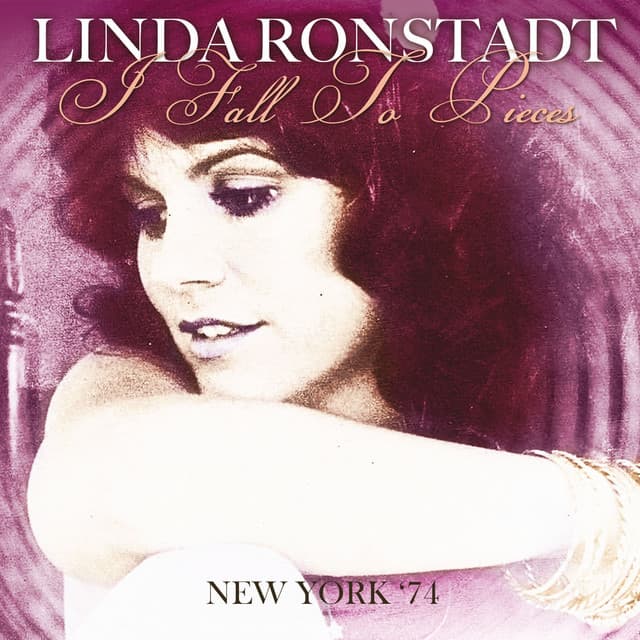
A Sublime Intersection of Country Heart and Pop Precision: Reclaiming the Soul of a Hank Williams Classic
In the mid-1970s, the California music scene was a sun-drenched laboratory of sound, and at its very center stood Linda Ronstadt, a woman whose voice possessed the power of a gale-force wind and the delicacy of a desert bloom. In 1974, for her landmark album Heart Like a Wheel, she recorded a breathtaking rendition of “I Can’t Help It (If I’m Still in Love with You).” While the song was originally penned and performed by the legendary Hank Williams in 1951, Ronstadt’s version was a revelation, peaking at number two on the Billboard Hot Country Singles chart. This recording was a pivotal moment in the “Country Rock” movement, proving that a rock-and-roll siren from Tucson could inhabit the sacred halls of Nashville with absolute authenticity. For the sophisticated listener, it is a masterclass in the art of the interpretive vocal a performance that honors the bones of the original while dressing it in a timeless, modern elegance.
The story behind this recording is steeped in the collaborative brilliance of the era. Produced by Peter Asher, the album Heart Like a Wheel was designed to showcase Linda’s incredible range. For “I Can’t Help It,” she was joined by her close friend and future “Trio” partner, Emmylou Harris, who provided the high, lonesome harmonies that give the track its haunting, ethereal quality. Recorded during a period of intense creative ferment, the arrangement is a perfect blend of traditional country instrumentation pedal steel and fiddle and a refined, crisp production style that made it palatable for the pop airwaves. Ronstadt’s delivery is marked by a profound sense of “Real Love” for the source material; she doesn’t sing the song as a museum piece, but as a living, breathing confession of a heart that simply cannot move on.
Lyrically, the song is an unflinching look at the helplessness of residual affection. It captures the agonizing moment when you encounter a former flame and realize that despite the passage of time, the emotional architecture of the relationship remains standing. The phrase “I can’t help it” is not an excuse, but a surrender to a force larger than oneself. For those who have navigated the long, often unpredictable seasons of life and love, the song resonates as a truthful depiction of human vulnerability. It speaks to the “ghosts” that linger in the periphery of our lives. Linda’s voice, with its rich, velvety lows and crystal-clear highs, navigates this landscape with a dignity that elevates the song from a simple lament to a sophisticated emotional inquiry.
To listen to this track today is to engage in a profound act of nostalgia for a golden era of musicianship. It evokes memories of a time when the lines between genres were beautifully blurred when you could hear Hank Williams on a rock station and feel the world getting a little bit smaller and more connected. For the listener who values the nuances of a storied past, “I Can’t Help It” serves as a sensory bridge. It brings back the scent of old vinyl, the warmth of a tube-driven stereo, and the quiet comfort of a voice that feels like a trusted companion. There is a “purity” in this 1974 recording that feels increasingly rare; it is the sound of real instruments played by real people, captured in a moment of genuine creative synergy.
Today, Linda Ronstadt’s version of this classic is celebrated as a cornerstone of the Rock and Roll Hall of Fame and Country Music Hall of Fame narratives. It remains one of the most beloved tracks on Heart Like a Wheel, an album that transformed her into the “Queen of Rock” while simultaneously crowning her a princess of country. To revisit it now is to honor the enduring power of a great melody and the unmatched interpretive genius of an artist who knew that the most profound truths are often found in the simplest songs. It invites us to acknowledge our own “uncontrollable” feelings with grace, reminding us that being “still in love” is not a failure of the will, but a testament to the depth of the human heart.
 Oldies Songs