
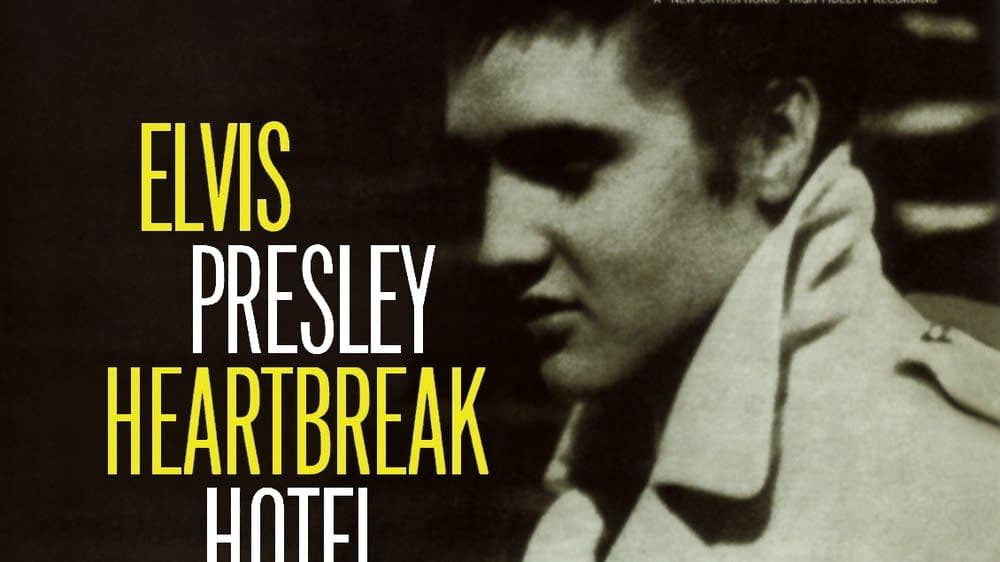
A Haunting Echo of Loneliness and Longing
When Elvis Presley stepped into the spotlight with “Heartbreak Hotel” in 1956, he didn’t just release a single he unveiled a raw, emotional confession wrapped in rock ’n’ roll. The song stormed to No. 1 on the U.S. pop chart, marking Elvis’s first #1 hit with his new label, RCA.
From its very opening bars, “Heartbreak Hotel” carries a deep sense of desolation. It was co-written by Mae Boren Axton and Tommy Durden, who were inspired by a haunting newspaper report about a man who left behind a note reading, “I walk a lonely street.” The image of a “lonely street” leading to a metaphorical Heartbreak Hotel struck Axton, and within an hour, the song was born.
Elvis first heard a demo of the song and was immediately captivated. He famously exclaimed, “Hot dog, Mae, play that again!” and listened to it repeatedly, committing it to memory. When he recorded it in January 1956, in RCA’s Nashville studio, the arrangement stood apart: a spare, echo-heavy production featuring Scotty Moore (guitar), Bill Black (bass), D.J. Fontana (drums), Floyd Cramer (piano), and the Jordanaires on backing vocals. The anxious reverb, the trembling piano, and Elvis’s vulnerable voice all combine to evoke heartbreak as something vast, dark more than just a failed romance; it is a place where sorrow resides.
Interestingly, not everyone believed in the song at first. RCA executives and engineers reportedly thought it sounded morbid, even called for re-recording. But Elvis remained certain: this was the one that would change everything. And he was right.
Beyond its production and chart success, the story behind “Heartbreak Hotel” carries a deeply human resonance. Mae Axton was not only a songwriter but a teacher and a publicist, and she believed Elvis had star power but needed a song that could truly reach people. Her collaboration with Durden was driven by empathy by imagining the hotel at the end of someone’s most painful journey. Their shared artistic vision gave voice to loneliness, heartache, and the strange comfort of knowing there are others broken in the same way.
The significance of the song grew with time. It became Elvis’s first million-selling single. In recognition of its cultural weight, “Heartbreak Hotel” was later inducted into the Grammy Hall of Fame.
Listening to “Heartbreak Hotel” today still feels like stepping into an old, dimly lit room where the air trembles with sorrow and longing. It’s not just a song it’s an echo from a lonely street, a doorway into a heartbreak so real that it became universal. For those who remember when rock ’n’ roll was new, or those who feel the weight of memory every time a lonely melody plays this song remains timeless.
Because ultimately, Elvis Presley didn’t just sing “Heartbreak Hotel”. He invited us all to visit.