
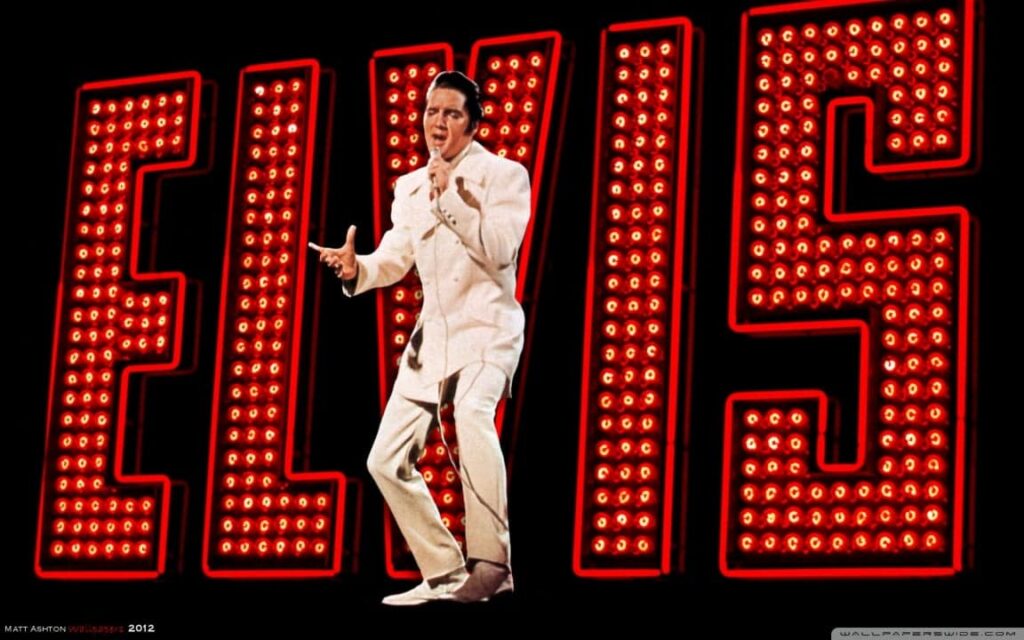
A powerful plea for peace, unity, and hope amid a turbulent age “If I Can Dream” by Elvis Presley
“If I Can Dream” stands as one of Elvis Presley’s most heartfelt and socially conscious songs: a stirring call for a better world rooted in the longing for justice and understanding.
Written specifically for Elvis, the song was penned by Walter Earl Brown (lyrics) and composer Billy Goldenberg to serve as the closing number for the now-legendary ’68 Comeback Special. It premiered on December 3, 1968, in the TV special a moment that remains etched in music history as Elvis’s passionate re-introduction to his audience, and the public’s emotional reconnection with him.
The emotional weight behind “If I Can Dream” is deeply tied to the social context of its creation. In 1968, America was reeling from the assassinations of Martin Luther King Jr. and Robert F. Kennedy. Steve Binder, the special’s director, felt strongly that Elvis needed a song that reflected this period of grief and longing. According to accounts, Binder asked Brown and Goldenberg to write a hopeful, idealistic anthem overnight a plea for peace, unity, and understanding in a fractured world.
Elvis recorded “If I Can Dream” on June 23, 1968, at Western Recorders in Hollywood. The emotional intensity of the session is unforgettable: he recorded multiple takes, and on one particularly raw take, with the lights turned off, he reportedly fell to his knees, pouring his soul into every line. He later selected his favorite take and listened to it repeatedly in the control room, deeply moved by what he heard.
Musically, the arrangement is measured yet powerful, with orchestral backing, restrained rhythm, and a grand yet tender feel. It allows Elvis’s voice weary but resolute to carry the message. The lyric “There must be lights burning brighter somewhere / Got to be birds flying higher in a sky more blue” speaks to universal hope; “If I can dream of a better land / Where all my brothers walk hand in hand” expresses his desire for unity across racial and social divides.
Upon release, “If I Can Dream” resonated strongly with audiences. The single came out in November 1968, with “Edge of Reality” on the B-side. On the U.S. Billboard Hot 100, it climbed to #12, staying on the chart for around three months. In Canada, it peaked at #6, and in the UK, it reached #11.
The legacy of “If I Can Dream” is profound. It became not just a highlight of Elvis’s comeback, but a symbol of his emotional and artistic maturity. According to his Graceland biographers, after recording it, Elvis declared, “I’ll never sing another song I don’t believe in.” That line underscores how deeply he embraced the song’s meaning — he understood the moment and what it demanded from him.
For older listeners, especially those who lived through the late 1960s, “If I Can Dream” carries a strong dose of nostalgia as well as moral weight. It evokes a time of social upheaval, of hope and despair, and of a voice Elvis’s voice reaching out not just for personal revival, but for collective healing. Listening to it feels like returning to a pivotal moment the lights of that TV special, the sincerity in his voice, and the urgent call for a dream that is still so necessary.
In the end, Elvis Presley’s “If I Can Dream” is more than a song it’s a prayer, a prophetic vision, and a lasting testament to the power of hope in dark times.