
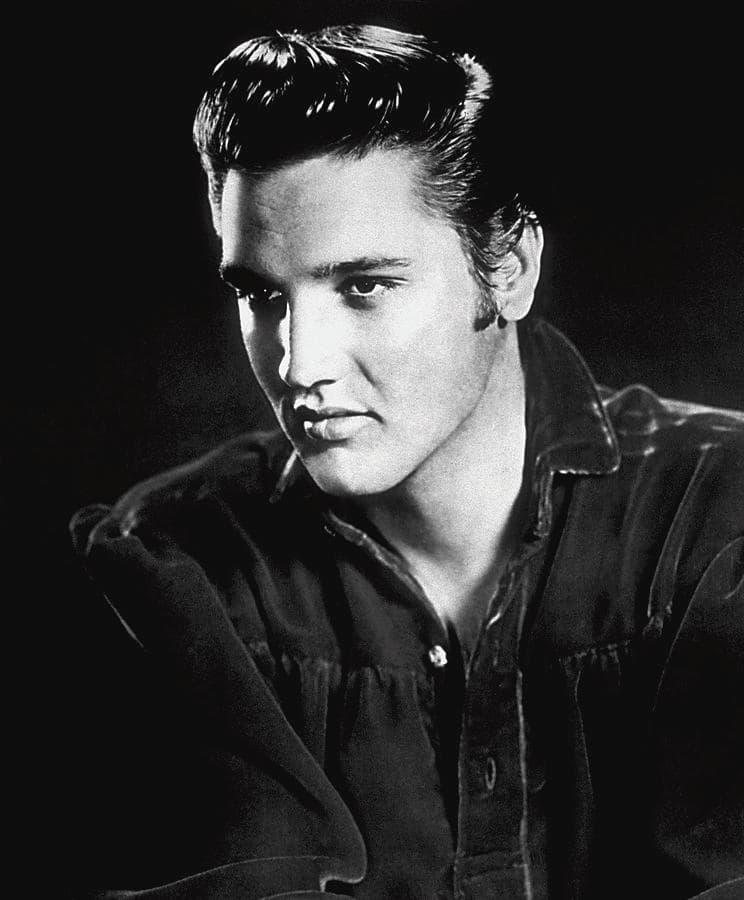
A triumphant return and a declaration of steadfast love “Stuck on You” by Elvis Presley
“Stuck on You” marks a joyous comeback: Elvis Presley’s heartfelt promise of devotion as he re-entered the musical world after his army service.
When Elvis Presley released “Stuck on You” on March 23, 1960, it was more than just a new single it was his official re-entry into the public stage after two years in the U.S. Army. Fast forward only a few weeks, and the song soared to #1 on the U.S. Billboard Hot 100, becoming his first number-one hit of the 1960s and his 13th overall. It also climbed high on other charts: peaking at #6 on the R&B chart, while internationally reaching #3 on the UK Singles Chart.
The story behind the song is wrapped in hope and urgency. Having just returned from service, Elvis recorded “Stuck on You” on March 20, 1960, at RCA Victor Studio B in Nashville. The track was written by Aaron Schroeder and J. Leslie McFarland, longtime collaborators who understood Elvis’s voice and the kind of honest, catchy rock-and-roll that could carry a message.
Lyrically and emotionally, “Stuck on You” is bright, immediate, and full of affectionate energy. The chorus “I’m gonna stick like glue … Because I’m stuck on you” speaks of a love that is unshakeable, playful yet determined. The verses are full of vivid, almost whimsical imagery: running fingers through “your long black hair,” holding tight “like a grizzly bear,” hiding and finding each other all gestures that portray love as wild, innocent, and all-consuming.
Musically, the song retains the rock-and-roll spirit that defined Elvis’s early career, yet with a smoother, more polished sound that reflects his maturity as an artist. The recording features the classic lineup Elvis on rhythm guitar, Scotty Moore on lead guitar, Floyd Cramer on piano, D.J. Fontana and Buddy Harman on drums, Hank Garland on tic-tac bass, with backing vocals by The Jordanaires. The upbeat tempo (about 132 BPM) and bright key (G major) give the song a buoyant, hopeful feel fitting for a track that celebrates love’s return and unwavering commitment.
But beyond the charts and the catchy tune, “Stuck on You” carries symbolic weight. It wasn’t just a love song it was Elvis announcing: I’m back. After a hiatus of two years, during which rock ’n’ roll seemed to shift and change, he returned with vitality, proving that his voice and charisma had not diminished. For many fans, this song represented continuity, comfort, and the reassurance that some things remain timeless love, longing, and the music that binds us across years.
In the larger arc of Elvis’s career, “Stuck on You” stands as a bridge between the raw rockabilly energy of his 1950s hits and the more polished, versatile sound he would explore in the 1960s. It showed that he could adapt, stay relevant, and still deliver songs that resonated across generations. Its success helped pave the way for his next hits, reaffirming his status as “The King” in a new decade.
For listeners who recall vinyl spinning on a turntable or radios humming softly in living rooms, “Stuck on You” remains a warm, familiar echo a song that doesn’t just play notes and words, but memories. It evokes a time when returning home meant more than geography; it meant returning to love, to music, to oneself.
Ultimately, Elvis Presley’s “Stuck on You” is more than an upbeat rock-and-roll tune. It’s a heartfelt promise, a joyful reunion, and a timeless testament to devotion both to a beloved and to the music itself.