
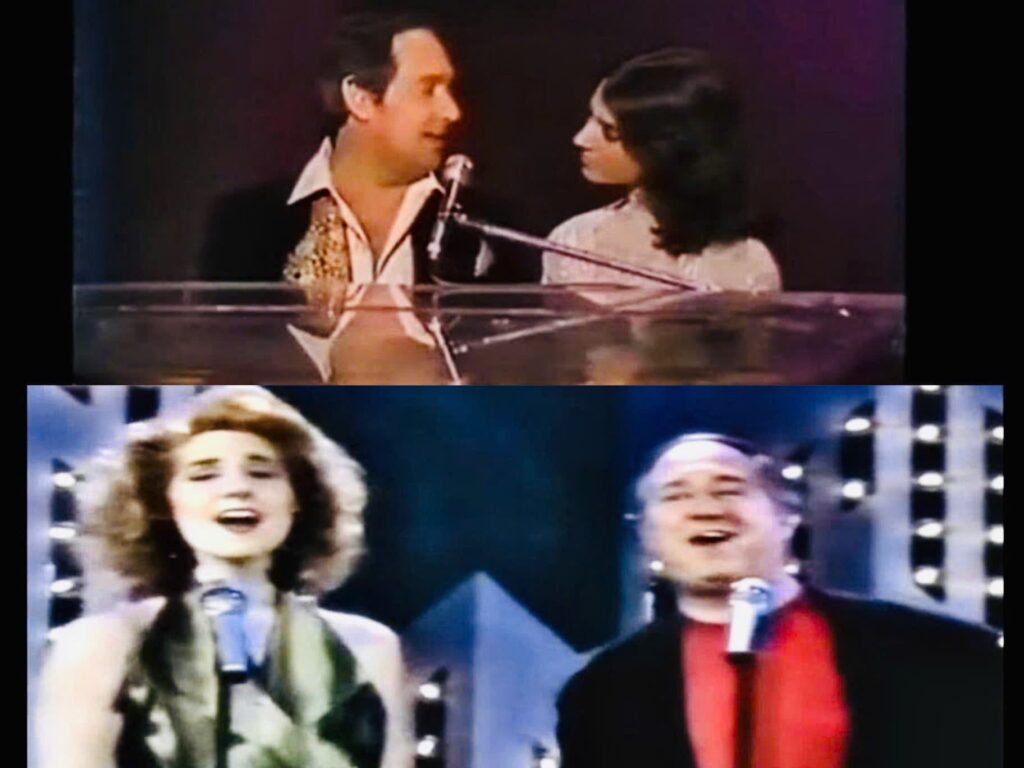
Echoes of a Classic Era, Revisiting Dara Sedaka’s Archival Performances
A fan made compilation spanning two decades of performances offers a rare and valuable look at the artistic journey of Dara Sedaka, as well as her collaborations with her father, Neil Sedaka. Covering appearances from 1976 to 1996, the collection highlights a period when television specials and live performances played a central role in connecting artists with audiences.
The compilation brings together clips from multiple broadcast programs, including Neil Sedaka’s Steppin’ Out and The Neil Sedaka Touch. These televised events were important platforms during the late twentieth century, allowing established artists to present both their classic hits and new material in a curated format. Within this context, Dara Sedaka’s presence reflects both continuity and transition within a musical family.
One of the recurring songs featured is Laughter in the Rain, a well known composition by Neil Sedaka that achieved international success. Dara performs the song both as a duet with her father and as a solo artist, offering a useful comparison of interpretation. Her solo versions demonstrate a controlled vocal style, while the duets emphasize harmony and familial chemistry.
Another key performance included is Should’ve Never Let You Go, a duet that was released commercially and reached the Billboard charts in 1980. The song remains one of the most recognizable collaborations between father and daughter, representing a moment when Dara Sedaka stepped into a more visible role within mainstream pop music.
The compilation also features performances of Your Precious Love, as well as lesser known material such as Angel Queen and I Tuoi Capricci. These selections illustrate Dara Sedaka’s range, from pop standards to international adaptations, and provide insight into her versatility as a performer.
Beyond the musical numbers, the inclusion of interview footage offers additional context. These segments reveal a professional relationship grounded in mutual respect, while also underscoring the influence of Neil Sedaka’s long career on his daughter’s development as an artist.
Importantly, the compilation does not present a single concert or unified performance, but rather a curated archive assembled by fans. As such, it functions as a historical document, capturing moments that might otherwise remain scattered across television archives and private recordings.
Viewed collectively, these performances highlight a broader narrative about artistic inheritance. Dara Sedaka did not simply replicate her father’s success, but instead participated in a shared musical space that blended legacy with personal expression. For audiences revisiting this material today, the compilation offers both nostalgia and a deeper appreciation of how musical traditions can be passed down, adapted, and preserved over time.
 Timeless Melodies