
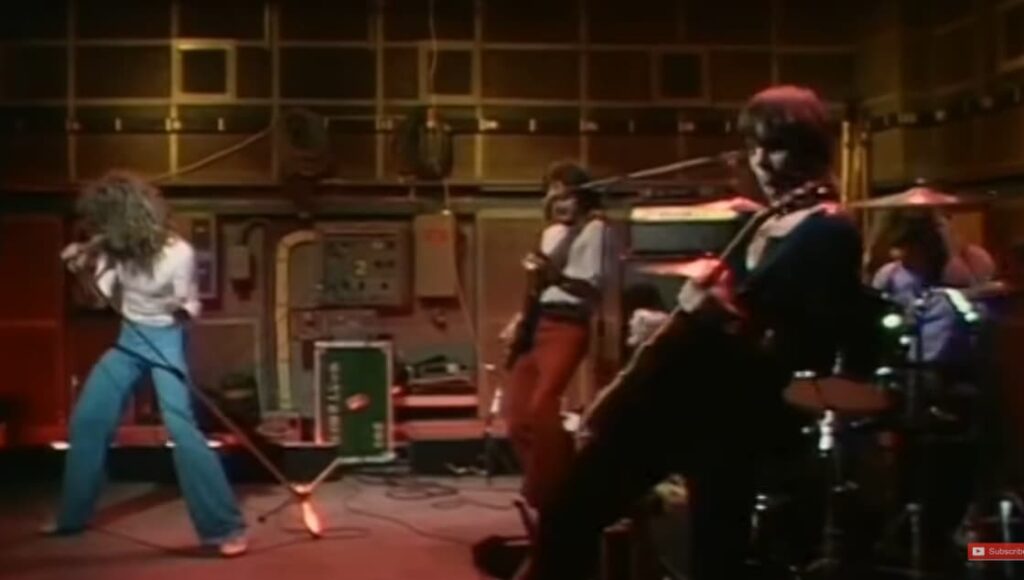
Raw Power on British Television, Montrose and Sammy Hagar Ignite a 1974 BBC Performance
A rare archival performance from 1974 continues to attract attention among classic rock audiences, documenting the American band Montrose during a pivotal moment in their early career. Recorded at the BBC Television Centre in London for the program The Old Grey Whistle Test, the session features vocalist Sammy Hagar alongside guitarist Ronnie Montrose and the original lineup of the band.
The broadcast took place on May 21, 1974, at a time when Montrose was still promoting its debut album released the previous year. That record, titled Montrose, would later gain recognition as an influential work in the development of American hard rock, despite only modest chart success at the time of its release.
The performance itself is widely associated with the song Bad Motor Scooter, one of the band’s most recognizable tracks written by Sammy Hagar. The song is notable for its distinctive guitar introduction, designed to imitate the sound of a revving motorcycle, a feature that became central to its identity both in studio recordings and live performances.
What distinguishes this BBC appearance is not only the song choice but also the context in which it was presented. The Old Grey Whistle Test was known for focusing on album oriented rock rather than mainstream chart hits, offering a platform for artists whose work emphasized musicianship and live performance. Broadcast on BBC2 between 1971 and 1988, the program became an important venue for serious music audiences in the United Kingdom.
Montrose’s appearance on the show has since been cited as a defining early television moment for the band. Contemporary accounts describe the performance as energetic and forceful, capturing the group’s raw stage presence at a time when American hard rock was still establishing its identity internationally.
For Sammy Hagar, who would later achieve major success as a solo artist and as a member of Van Halen, the recording provides insight into his formative years as a frontman. His vocal delivery in this period reflects a developing style that combines blues influences with a more aggressive rock approach.
Today, the footage serves as both a historical document and a reminder of a transitional era in rock music. It captures a young band performing with intensity in a modest television studio, long before the scale and production of modern live broadcasts. In doing so, it preserves a moment when performance, rather than spectacle, remained at the center of the musical experience.