
A haunting echo of longing and loneliness wrapped in moonlight
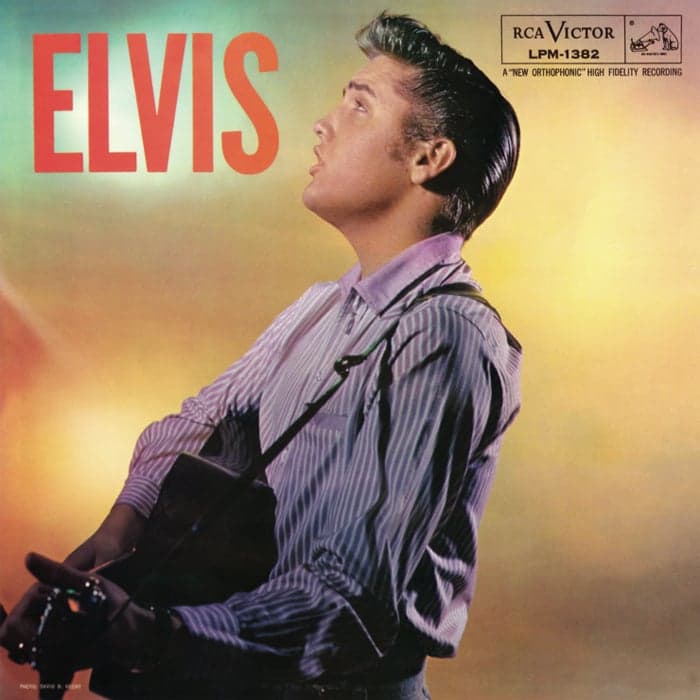
There is a special stillness surrounding “Blue Moon”, the kind of quiet that only settles in the late hours of the night when memories drift in like clouds and the heart becomes unguarded. When Elvis Presley recorded his version of this timeless classic in 1954 at Sun Studio, he transformed a well-known standard into something far more intimate and mysterious. Though released later on the 1956 LP Elvis Presley, the track was never issued as a single and therefore did not chart under Elvis’s name. Yet it remains one of the most striking early performances of his career, a piece whispered into the world before fame had yet remade him.
Originally written in 1934 by Richard Rodgers and Lorenz Hart, Blue Moon began as a Broadway song before blossoming into a beloved American standard. Decades later, Elvis still young, unknown, and recording under Sam Phillips at Sun Records took this elegant melody and stripped it bare. He removed its lush orchestration, its smooth ballroom glow, and replaced them with a stark, echoing vulnerability that still feels otherworldly today. His rendition is unlike any that came before or after: part doo-wop, part lullaby, part lonely prayer carried across a midnight field.
What stands out most is the sound of loneliness shaping every breath. Elvis leans into the microphone softly, almost uncertain, and the engineer’s raw Sun Studio echo turns his voice into a drifting apparition distant, trembling, unguarded, and achingly young. You can hear the room in the recording, the faint rattle in his voice, the breath between phrases. Instead of delivering the smooth, romantic croon found in earlier versions, Elvis sings as though the moon itself is listening.
The backing vocals simple, ghostly hums circle around him like a soft halo. The absence of strong instrumentation heightens the surreal quality of the entire performance. It is minimalism at its most powerful: a recording built out of empty space, where every second of silence carries meaning.
Lyrically, Blue Moon is a plea for companionship, a quiet wish whispered toward the sky. And when sung by a 19-year-old Elvis, whose life was still uncertain and whose dreams were only barely beginning to take shape, the words gain a tremble of innocence and yearning:
“Blue moon, you saw me standing alone…”
It feels less like a polished performance and more like a glimpse into a young man’s private hopes caught on tape almost by accident.
Though the song did not chart for Elvis, its long-lasting significance is undeniable. It became a defining example of his early Sun sound raw, experimental, and filled with an emotional honesty that would soon capture the world. For longtime listeners, returning to this recording is like opening an old keepsake box: the scent of decades past rises, and the soul is swept somewhere quieter, gentler, more fragile.
Blue Moon transports us to nights when we, too, waited under dim skies for a sign, a voice, a touch to ease the ache of solitude. Elvis’s voice does not try to solve that loneliness; it simply rests beside it, offering a soft companion in the dark. It is the kind of recording that grows deeper with age, revealing new shades of feeling with each passing year.
In the glow of Elvis’s “Blue Moon”, time slows. Memories return. And for a few quiet minutes, the night feels both vast and tender lit not by brightness, but by longing itself.