
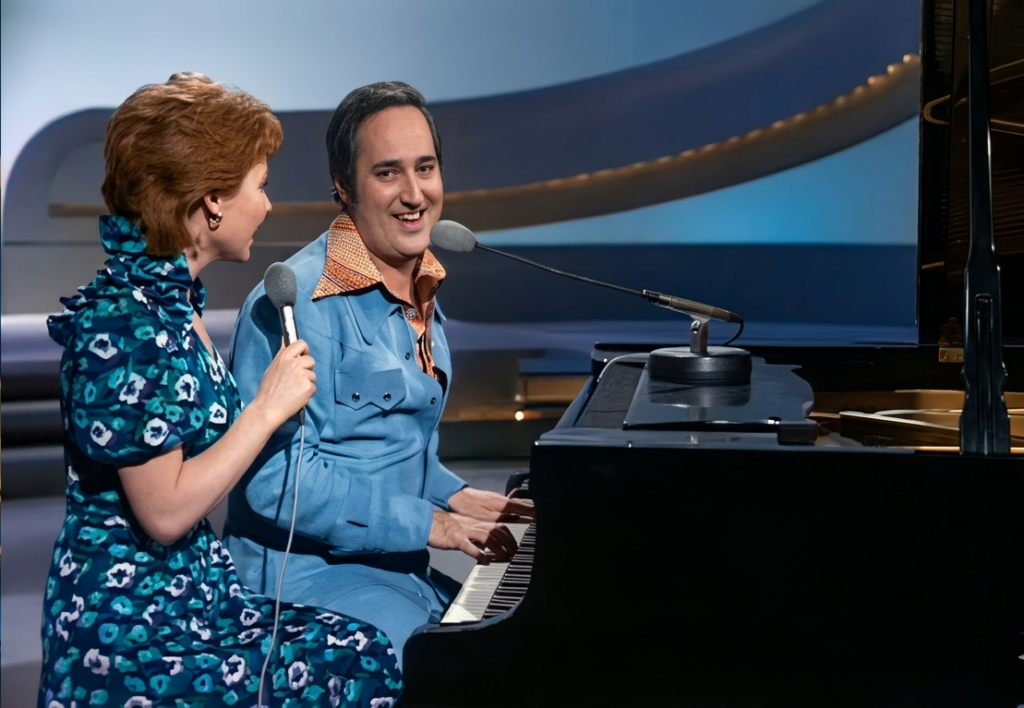
A spectacular comeback on the London stage, where the “king of melodies” reclaimed his glory with elegance and masterful piano skills.
In 1975, when the British television program featuring singer Lulu aired, audiences witnessed one of the most brilliant rebirths in pop music history: the return of Neil Sedaka. After a decade overshadowed by the British Invasion in his native America, Sedaka chose England as his springboard to revive his career. His medley performance of “The Queen of 1964” and “Laughter in the Rain” was more than just a musical display; it was a powerful affirmation that good melodies never go out of style. For music lovers who lived through the ups and downs of the 60s and 70s, Neil’s radiant image at the piano is a symbol of perseverance and innate talent.
Historically, 1975 was a golden age when the ballad “Laughter in the Rain” reached number 1 on the Billboard charts, bringing Sedaka back to the top after more than 10 years of absence. Meanwhile, “The Queen of 1964” is a deeply personal piece, recreating the nostalgic atmosphere of a bygone era with a witty and sophisticated perspective. The combination of these two songs on stage by Lulu—a British cultural icon—created a perfect fusion. It reflected a period when Adult Contemporary music began to rise, emphasizing elegance in arrangement and depth in lyrics, rather than the fleeting noise of the moment.
The story behind the performance was one of mutual admiration between two generations of artists. Lulu, with her youthful style and powerful vocals, created a wonderful synergy with Neil’s decisive piano playing. In that moment, Sedaka wasn’t just singing; he was sharing his life story—from his golden days at the Brill Building to his secluded retreats honing his craft. The live performance allowed the audience to clearly see his masterful piano technique, something that recordings sometimes fail to capture. It was the authenticity of a true artist, one who uses music to connect a glorious past with a hopeful present.
The profound meaning of this performance lies in its message about “moment.” If “The Queen of 1964” is a vibrant tapestry of memories, then “Laughter in the Rain” is the simple happiness of the present. For middle-aged audiences, this contrast evokes a deep sense of empathy: we cherish the past but still fully enjoy the present moment. Laughter in the rain is not just a romantic image; it’s also a symbol of optimism—the ability to find beauty even in stormy days. Neil Sedaka proved that with a sincere melody, an artist can transcend the barriers of time to touch the hearts of listeners.
Listening again to the sound from the 1975 performance, one feels the warmth and confident demeanor of a master. The support from the orchestra and the enthusiastic cheers of the British audience further empowered Neil’s distinctive tenor voice. For those who have followed his musical journey since the 1950s, this is an unforgettable chapter in the sonic memoir of his life. It reminds us that true talent is like aged wine, becoming richer and more precious with time.