
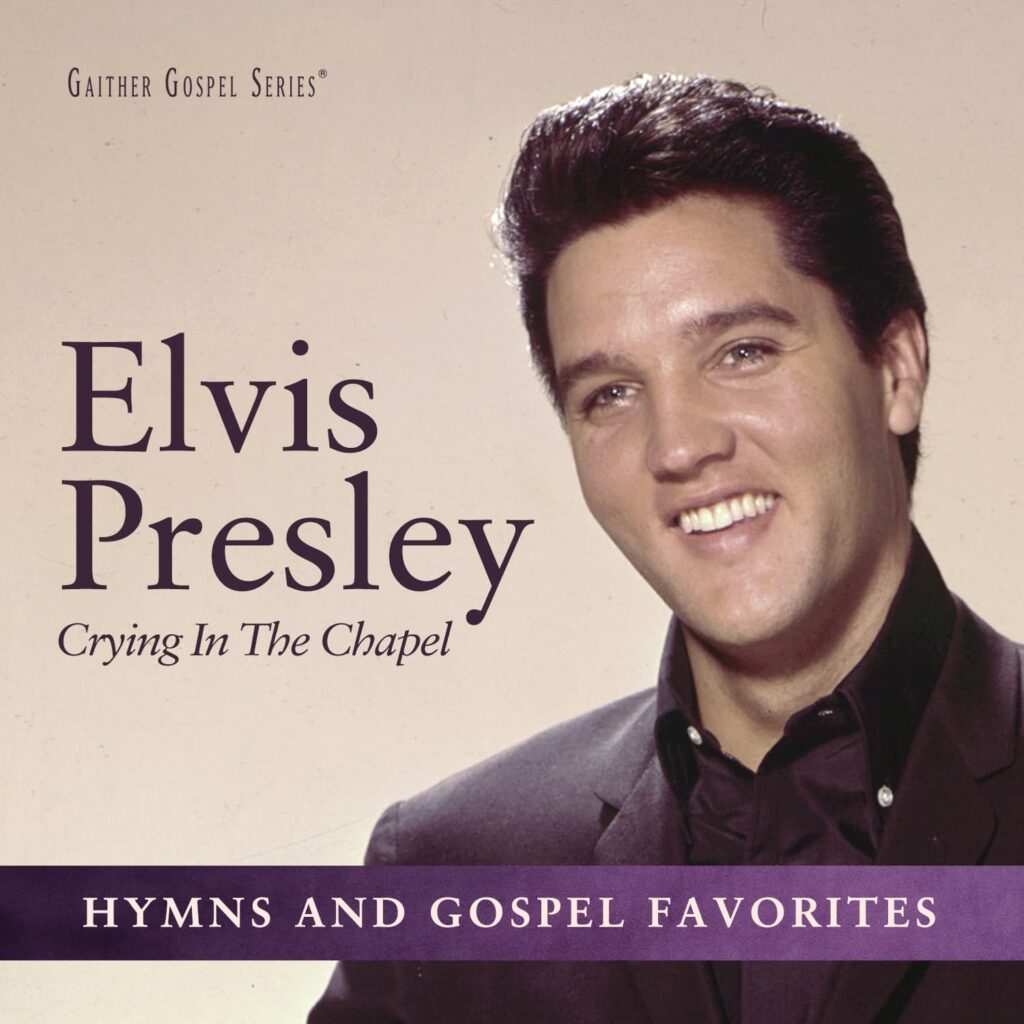
A gentle hymn of longing, redemption, and peace, carried through the unmistakable voice of Elvis Presley
When Elvis Presley released “Crying in the Chapel” in April 1965, the world was reminded of a side of him often overshadowed by the charisma, the swagger, and the bright lights of his fame. Here, in this quiet and deeply spiritual recording, Elvis revealed the heart of a man searching for comfort, connection, and forgiveness. The song rose quickly on the charts, reaching No. 3 on the Billboard Hot 100 and becoming one of his most successful gospel-leaning singles. Remarkably, it was recorded years earlier, in 1960, during the sessions for his gospel album His Hand in Mine, marking a return to the hymns and sacred music that shaped his upbringing.
Its delayed release gives the track a special character. At the time it finally reached listeners, Elvis was in the midst of his Hollywood years, releasing movie soundtracks that often felt worlds away from the sincerity that shaped his early career. Yet “Crying in the Chapel” stood apart not by being loud or dramatic, but by being still. Its tenderness struck a chord across generations, and its quiet dignity reminded many of the singer they had fallen in love with years earlier.
Behind the song lies a history older than Elvis himself. Originally written by Artie Glenn in 1953 and first recorded by his son, the tune carries with it the echoes of mid-century gospel tradition a blend of devotion, reflection, and simplicity. But when Elvis stepped up to the microphone to record it, something transformed. He removed the backing choir. He kept the arrangement bare. His voice, warm and steady, carried the weight of a man laying down his burdens in a quiet sanctuary. The result is a recording that feels almost intimate, as though the listener is sitting beside him in that small chapel, hearing him confess his heart to the dim light of stained-glass windows.
The meaning of “Crying in the Chapel” runs deep for many. It speaks of finding solace after hardship, of discovering grace in unexpected places. The chapel becomes a metaphor for refuge a space where tears are not signs of weakness but of release. The narrator finds peace not through triumph, but through humility, through admitting that the world has worn him down and that he longs for a guiding hand to lift him back up. That message, wrapped in Elvis’s gentle delivery, resonated strongly with listeners who knew the cost of struggle and the quiet hope of renewal.
For those who lived through the early days of Elvis’s rise, the song stirs memories of gospel mornings, family gatherings, and the steadfast comfort of music that soothed rather than stirred. It calls back to a time when songs were shared across kitchen tables and front porches, when voices blended naturally without microphones or fancy arrangements. There is something profoundly human in the way Elvis phrases each line not showy, not polished to perfection, but honest, as though he is singing from a place deep within his own past.
Though released in the mid-’60s, “Crying in the Chapel” has endured as one of Elvis’s most beloved recordings, often cited as a reminder of his spiritual roots. It stands almost outside of time, untouched by trends, a song that feels as relevant today as it did decades ago. In its soft glow, one finds a rare blend: the power of faith, the weight of memory, and the voice of a man who, despite all the fame and frenzy of his world, never forgot the humble hymns that shaped his soul.
Listening to it now, the song becomes more than just a performance it is a quiet conversation between the singer and the listener, a shared moment of reflection that lingers long after the final note fades.