
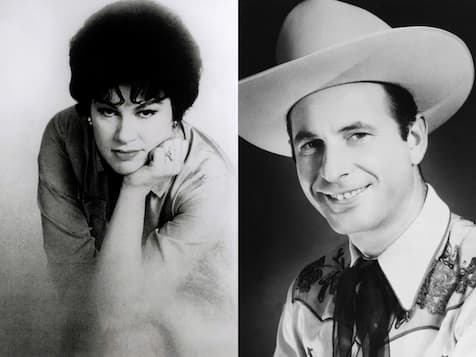
Before the Tragedy, There Was Laughter: Patsy Cline and Cowboy Copas in a Rare, Playful Duet
In the archive of classic country performances, few moments feel as quietly poignant as the duet between Patsy Cline and Cowboy Copas on “I’m Hogtied Over You.” What unfolds on stage is not merely a song, but a vivid snapshot of an era when country music thrived on simplicity, personality, and human connection.
The performance captures a meeting point between two distinct generations of country music. Copas, already an established figure from the radio barn dance tradition of the 1940s and 1950s, brings a relaxed, seasoned presence. Alongside him, Cline represents a newer wave, one that would soon help redefine the genre through emotional depth and crossover appeal. Together, they form a bridge between old and emerging country styles, their voices weaving a dialogue rather than competing for attention.
What is perhaps most striking is the tone. Unlike the aching ballads that would later define Cline’s legacy, “I’m Hogtied Over You” reveals a different facet of her artistry. There is humour here, a lightness, even flirtation. The structure of the song allows for a call and response dynamic, and both performers lean into it with ease, exchanging lines like conversational partners. It is a reminder that country music, at its core, has always been as much about storytelling and character as it is about vocal power.
Viewed through a contemporary lens, the performance carries an added emotional weight. Both Cline and Copas would lose their lives in the 1963 Camden plane crash, a devastating accident that also claimed fellow performers and marked one of the darkest moments in country music history. In that context, this duet becomes something more than entertainment. It stands as one of the few surviving visual records of their shared presence on stage, imbued with an unintended sense of farewell.
Yet to focus solely on that tragedy would be to overlook the vitality of the moment itself. The staging is minimal, the atmosphere unvarnished. There are no elaborate effects, no production gloss, only two artists engaging directly with each other and their audience. It is precisely this authenticity that gives the performance its enduring appeal.
In an age of increasingly polished musical presentation, such recordings offer a compelling contrast. They remind us of a time when music was immediate and unfiltered, when a song could feel like a conversation, and when even legends like Patsy Cline could step outside their defining image to simply enjoy the act of performance.