
Before They Were Legends: A 1974 Stage Where Friendship Shaped the Sound of a Generation
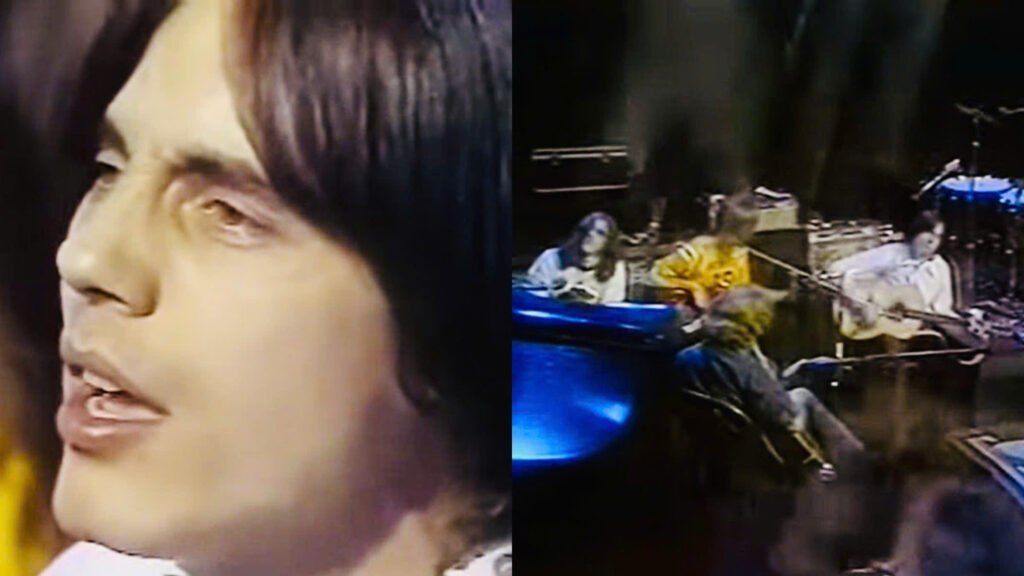
In a rare live recording from 1974, Jackson Browne joins Eagles and Linda Ronstadt on stage, offering more than just a performance. The concert, centered around the Eagles, quietly becomes a snapshot of a musical community in formation. Among the songs performed, Browne’s Your Bright Baby Blues stands out as a deeply personal moment within a shared experience.
At its core, “Your Bright Baby Blues” is a song about inner conflict. It reflects the restless search for meaning, the attempt to escape through movement, sound, or connection, only to confront the inescapable truth of the self. Browne’s writing does not dramatize this struggle. Instead, it presents it with clarity and restraint, allowing the listener to sit within the tension rather than resolve it.
What makes this performance particularly compelling is its context. In 1974, none of the artists on stage had yet fully reached the legendary status they would later hold. The Eagles were still rising. Browne was establishing his voice. Ronstadt was defining hers. Yet their histories were already intertwined. The Eagles had once backed Ronstadt. Browne had contributed to their early success. This was not simply a lineup. It was a network of artists growing together.
That sense of connection creates a striking contrast with the song itself. While “Your Bright Baby Blues” explores isolation and the impossibility of escape, the stage tells a different story. It shows collaboration, shared momentum, and the early formation of what would become a defining sound of the decade. The tension between these two realities adds depth to the performance.
There is also a sense of time suspended in the recording. The audience in 1974 could not have known the significance of what they were witnessing. There was no sense of legacy, no awareness of future influence. It was simply a concert. And yet, in retrospect, it feels like a moment where something larger was taking shape.
The performance carries an unpolished, organic quality. Voices blend naturally. Instruments do not compete for attention. There is space in the sound, and within that space, a kind of honesty that is difficult to recreate. It feels less like a production and more like a gathering.
In the end, this is what gives the moment its lasting impact. A song about not being able to escape oneself is performed at a time when the artists themselves are still becoming who they are. The uncertainty in the lyrics mirrors the uncertainty of the moment.
And in that overlap, something quietly timeless is created