
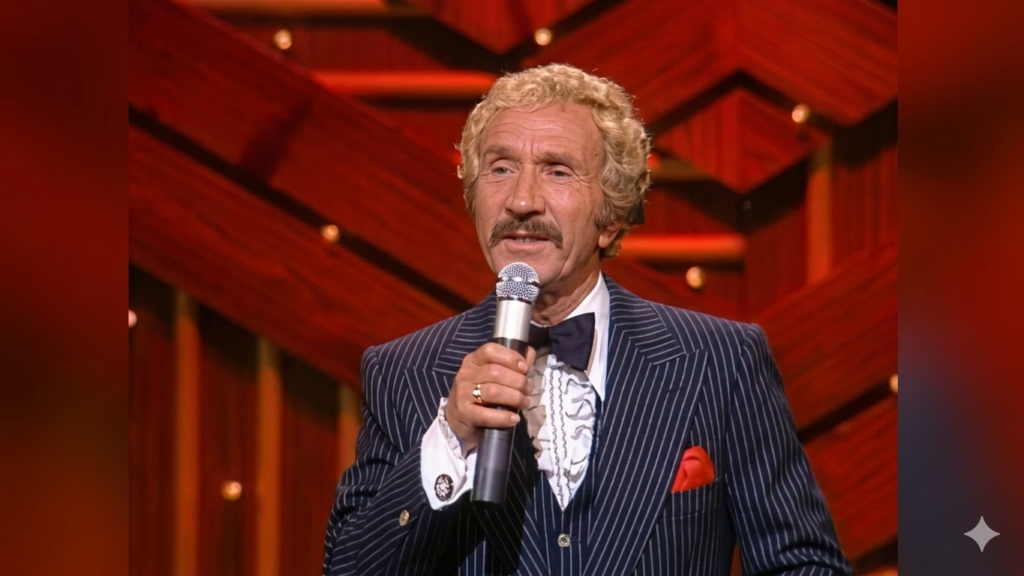
A poignant, belated self-reflection, where the “charming cowboy” confronts the fragments of his past with his classic, deep, resonant voice.
In the early 1980s, when Marty Robbins performed “Some Memories Just Won’t Die” live, audiences witnessed a very different side of him—no longer the heroic gunman in Westerns, but a seasoned man contemplating pain. Written by Bobby Springfield, this song became one of the last dignified milestones in Marty’s brilliant career before his death in 1982. For music lovers who had followed him since the “El Paso” era, this live performance was a heart-wrenching moment, where his smooth tenor voice became richer and deeper than ever. It was the sound of a soul trying to close the doors of the past but realizing that some memories “stubbornly refuse to die.”
Historically, 1982 marked the song’s rise to the Top 10 of the Billboard Country chart, signifying Marty’s spectacular return after health issues. Live performances during this period were often staged in a sophisticated Adult Contemporary style, combining traditional country bands with ornate string arrangements. It reflected a time when Country music began to find its way into a more refined, high-class lyrical genre. The “ranking” of this live performance wasn’t just about the numbers; it was about becoming part of Nashville’s spiritual heritage—proof that a great artist can age gracefully and proudly.
The story behind the song is a confrontation with a harsh reality: time can erase all traces except the memories of someone deeply loved. In his final live performances, Marty Robbins often stood more quietly, with fewer flamboyant gestures, letting his voice tell its own story. The way he emphasizes words like “fire” and “memory” reveals an absolute empathy for the lyrics. It reflects the image of a legend at the age of 57, looking back on his life with both compassion and regret. It’s the spirit of a true artist, one who uses his last breaths to warm the souls of others who also carry within them “memories that refuse to sleep.”
Meaningfully, the song explores the concept of the enduring nature of emotions. “Some memories simply won’t die”—this message resonates with middle-aged audiences, those who have accumulated enough life experience to understand that forgetting is sometimes harder than remembering. We realize that memories aren’t a burden, but an integral part of who we are today. When Marty sings about trying to burn the past but the fire continues to smolder, the song becomes a quiet solace: you are not alone in your memories. It reminds us to cherish the “scars” of our hearts, for they are proof that we have truly lived and loved to the fullest.
Listening to the 1982 live version, we see a Marty Robbins full of artistic skill. The simple guitar provides a backdrop for his smooth, clear, yet powerful vocals. For those who have followed his journey from early rockabilly tracks to epic Westerns, this is a fulfilling conclusion. It reminds us that, though time may take away youth, it cannot touch the class and soul of a true artist. “Some Memories Just Won’t Die” remains there as a final milestone, a sweet and profound farewell that Marty Robbins left to the world of music.
 Oldies Songs