
Part Two of a Rare 1976 Special Reveals the Man Behind the Music,Steppin Out Continues With Quiet Confidence and Lasting Grace
The second part of the rare 1976 television special “Steppin Out” offers a deeper and more revealing look at Neil Sedaka at a defining point in his career. If the opening segment established his return to the public eye, this continuation moves beyond the idea of comeback and into something more enduring. It captures an artist no longer seeking validation, but simply inhabiting his craft with confidence and ease.
As the program unfolds, the tone becomes noticeably more relaxed. Sedaka appears increasingly at home, allowing his personality to surface naturally between performances. His delivery shifts in subtle but meaningful ways. Phrasing becomes freer, less tied to the original recordings, suggesting a performer who has lived with his material long enough to reshape it according to experience. The songs themselves take on new emotional weight, reflecting not just their original intent, but the years that now stand behind them.
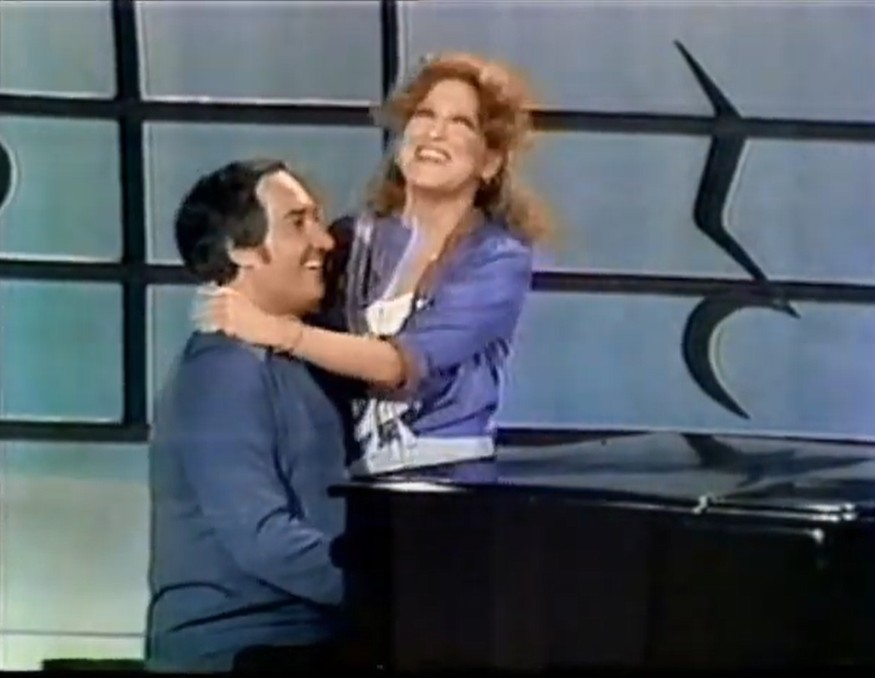
The presence of Bette Midler and David Brenner continues to enrich the atmosphere. Their interactions feel less formal than before, creating the impression of a shared space rather than a structured production. What begins to emerge is not simply a show, but a conversation among artists, one that blends humor, performance, and personal expression.
The title “Steppin Out” evolves in meaning as the program progresses. In this second part, it no longer signifies a return to the stage, but rather a state of being within it. Sedaka is not stepping out to prove anything. He is already there, fully present, embracing both his past and his present without tension.
Today, the rarity of this footage adds to its significance. Each preserved segment feels like a recovered piece of history, offering insight into an era when television allowed artists to reveal multiple dimensions of themselves. For modern viewers, this continuation is not just an extension of a performance. It is an intimate document of artistic maturity, where the true story begins only after the initial applause has faded.
 Timeless Melodies