
Part Three Turns Memory Into Living History,A Rare Television Moment Where Music Meets Memory
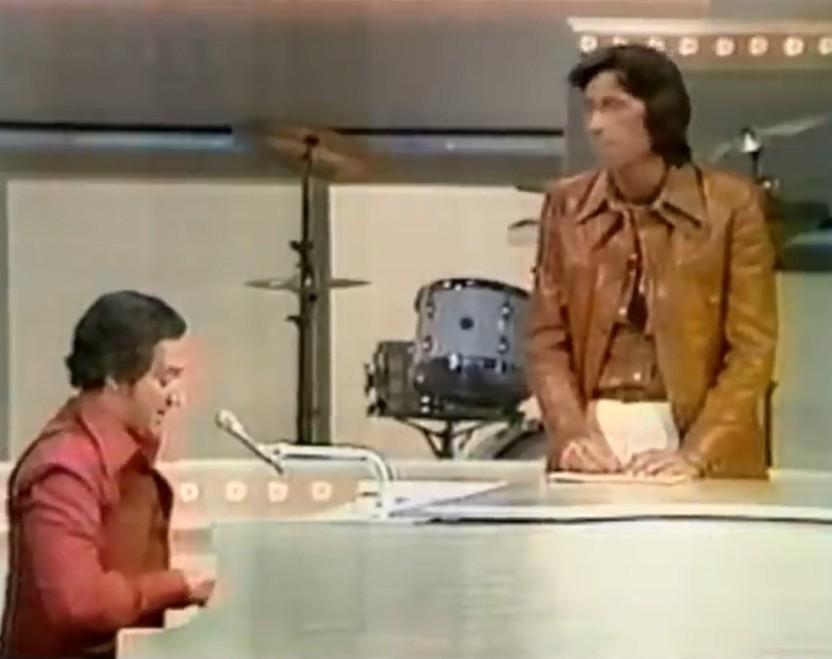
The third installment of the rare 1976 television special “Steppin Out” reveals a striking shift in tone, transforming what began as a musical comeback into something far more layered and culturally resonant. Featuring Neil Sedaka alongside comedian David Brenner, this segment moves beyond performance and into the realm of shared memory, where humor becomes a powerful lens through which an entire era is revisited.
Unlike the earlier parts, which emphasized artistry and personal presence, Part Three leans into storytelling. Brenner’s extended comedic monologue is not merely entertainment. It reconstructs the social fabric of the 1950s and 1960s, touching on dating culture, youth insecurity, and the rituals of growing up. Through humor, he reanimates a world where music was not consumed on demand but experienced in fleeting, meaningful moments.
Central to this recollection is Sedaka’s music itself. References to listening to his songs on the radio during dates or hearing them on iconic programs like American Bandstand highlight how deeply embedded his work was in everyday life. His songs did not exist in isolation. They were woven into first loves, awkward encounters, and the small emotional milestones that define youth.
A particularly compelling moment comes when Brenner playfully engages Sedaka in a mock songwriting exchange, leading to a humorous nod to Breaking Up Is Hard to Do. What appears to be light comedy subtly underscores the enduring power of Sedaka’s catalog. A song that once captured teenage heartbreak now becomes part of a shared cultural joke, proving its longevity and adaptability across contexts.
This segment also offers insight into the structure of television variety shows during the era. Music, comedy, and conversation coexist seamlessly, creating a format that allows artists to present multiple dimensions of themselves. Sedaka, while less dominant in screen time here, becomes the anchor around which these narratives revolve. His presence connects the humor to a deeper emotional core, reminding viewers that behind every joke lies a lived experience.
Today, the rarity of this footage elevates its importance. It is more than archival material. It is a time capsule that preserves not only performances but the spirit of a generation. Part Three stands as a testament to the idea that music does not simply endure through melody. It survives through memory, laughter, and the stories people continue to tell long after the final note fades.
 Timeless Melodies