
Three Songs, One Life: Neil Sedaka Turns a Mini Concert Into a Story of Love and Time
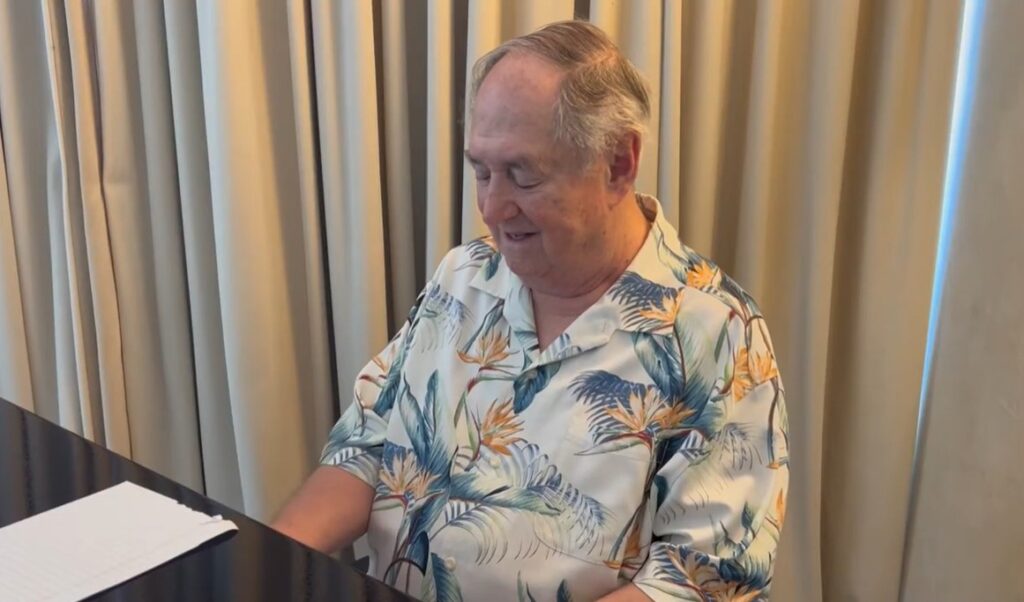
In June 2023, a quietly recorded mini concert by Neil Sedaka revealed something far greater than a simple performance of three classic hits. Seated at the piano, Sedaka presented Breaking Up Is Hard To Do, Laughter in the Rain, and Love Will Keep Us Together not as separate songs, but as chapters of a single emotional narrative shaped by decades of life and experience.
The structure of the performance feels almost intentional in its progression. It begins with heartbreak. Breaking Up Is Hard To Do, first a number one hit in 1962 and later reimagined in 1976, carries a rare dual identity. In its earlier form, it captured the immediacy of youthful loss. In its later version, it reflected a deeper, more measured understanding of separation. By revisiting it now, Sedaka bridges both perspectives, offering a voice that no longer resists pain, but understands it.
The transition into Laughter in the Rain marks a shift from loss to renewal. Introduced as a comeback hit after nearly twelve years away from the charts, the song holds particular significance in Sedaka’s career. With the support of Elton John and Rocket Records, it signaled not just a return to commercial success, but a personal rediscovery. Its imagery is intimate and unassuming, focusing on a fleeting moment of connection rather than grand declarations. In the context of the performance, it becomes a quiet affirmation that joy can reappear in unexpected ways.
The final movement arrives with Love Will Keep Us Together, a song Sedaka once overlooked, only for it to become a defining hit through Captain & Tennille. This backstory adds a layer of humility to the performance. It is a reminder that even the most experienced artists can misjudge their own work, and that meaning often reveals itself over time. Placed at the end of the set, the song feels less like a pop anthem and more like a statement of belief, shaped by a lifetime of both personal and professional endurance.
What distinguishes this mini concert is its simplicity. There is no elaborate staging, no attempt to recreate past grandeur. Instead, Sedaka allows the songs to exist as they are, supported only by piano and memory. The informal nature of the recording enhances its authenticity, preserving moments of reflection and storytelling that might otherwise be lost.
The connection between the songs and the performance becomes unmistakable. This is not a retrospective. It is a reinterpretation. Through three familiar melodies, Neil Sedaka constructs a narrative that mirrors his own life, moving from heartbreak to healing to lasting commitment. It is a reminder that while songs may remain the same, the lives behind them continue to evolve, giving them new meaning with every passing year.
 Timeless Melodies