
The Night Rock Did Not Know It Was Saying Goodbye
On May 25, 1978, inside the controlled environment of Shepperton Studios, The Who delivered what would become one of the most haunting performances in rock history. Filmed for the closing sequence of The Kids Are Alright, their rendition of Won’t Get Fooled Again was intended to be a triumphant finale. Instead, it became an unintentional farewell.
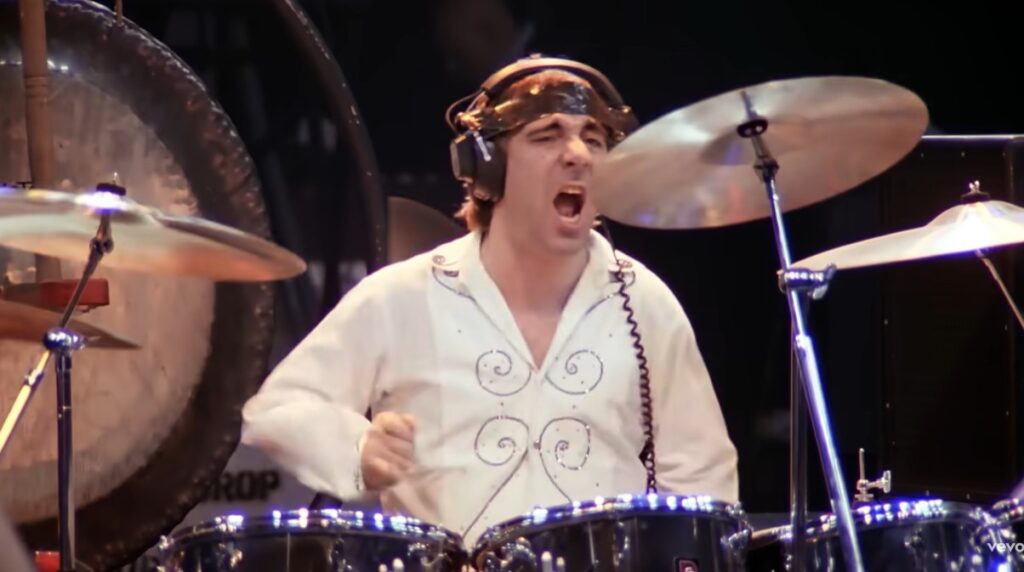
At the center of this moment stood drummer Keith Moon, a force of nature whose chaotic brilliance defined the band’s sound. Watching the performance today, there is no visible sign that this would be his last. Moon plays with his usual explosive energy, pushing the song forward with relentless intensity. The tragedy lies in that very normalcy. No one in the room, or behind the camera, knew they were capturing the end of something irreplaceable.
The song itself carries a message of disillusionment. Written years earlier, Won’t Get Fooled Again rejects the idea that revolutions truly change anything, delivering its famous line about new leaders being no different from the old. In Shepperton, that message takes on an entirely new dimension. The band performs a song about the illusion of change at the exact moment their own future is about to shift irreversibly.
Roger Daltrey’s iconic scream near the end of the track stands as one of the most powerful vocal moments in rock. In this performance, however, it resonates differently. It feels less like a musical climax and more like a rupture in time, a release of energy that unknowingly marks the closing of a chapter.
There is also a striking contrast between the setting and the performance. Without a massive crowd, the band’s energy becomes more concentrated, almost cinematic. Pete Townshend’s windmill guitar strikes and Daltrey’s commanding presence are framed with precision, while Moon’s drumming remains gloriously unpredictable. The absence of an audience amplifies the sense that this is not just a concert, but a document.
In retrospect, the performance is no longer just about the song. It is about timing, fate, and the fragile nature of moments we assume will continue. The Who did not know they were saying goodbye. That is what makes it unforgettable.
Sometimes, the most important endings do not announce themselves. They simply happen, leaving behind echoes that only grow louder with time.