
A Convergence of Six-String Kings: The Electric Brilliance of the 1978 Soundstage Summit
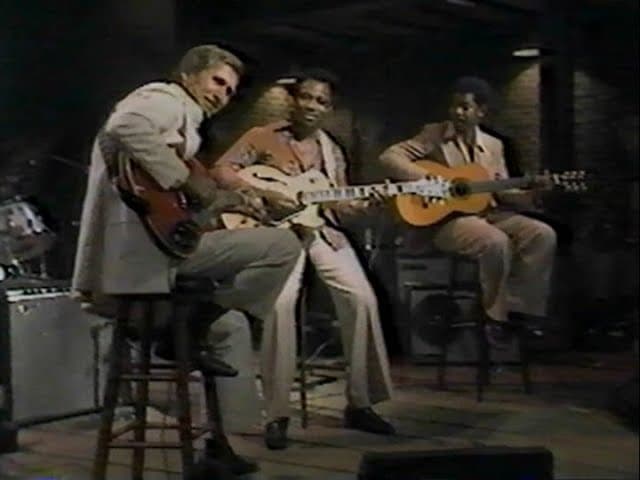
The historic 1978 PBS Soundstage broadcast bringing together Chet Atkins, George Benson, and Earl Klugh remains a holy grail of televised music history, capturing a rare moment when the distinct worlds of Nashville country, urban soul-jazz, and classical-fusion merged into a singular, breathtaking language of pure acoustic joy.
In the late 1970s, public television was a sanctuary for high-fidelity performance. Far away from the frantic, tightly edited variety shows of commercial networks, PBS Soundstage—broadcast from the intimate confines of WTTW Channel 11 Studios in Chicago—offered musicians a sprawling, dignified canvas to simply play. When the legendary Chet Atkins sat down with George Benson and a young Earl Klugh for an episode recorded and first aired on December 18, 1978, the result was not merely a television show; it was a watershed moment in instrumental music. Later rebroadcast on August 20, 1981, to a generation that cherished every grain of VHS tape, this performance became an iconic, cozy evening of legendary status for guitar purists worldwide.
At the time of this taping in 1978, these three men represented three distinct generations and branches of the guitar family tree. Chet Atkins, then 54, was the revered patriarch, the “Country Gentleman” who had designed the very architecture of the Nashville Sound. George Benson, fresh off the staggering, multi-platinum pop-jazz crossover success of his 1976 album Breezin’, was the reigning king of smooth, lightning-fast jazz phrasing. And Earl Klugh, a brilliant 25-year-old disciple who had actually been inspired to pick up the nylon-string guitar as a teenager after watching Chet on television, was the bridge—a classical-jazz hybrid prodigy who had previously played in Benson’s touring band.
The magic of this Soundstage episode lay in its complete lack of pretense. These three giants did not retreat into their respective genre corners. Instead, they shared the stage, trading complex leads and rhythmic backings with an effortless, conversational ease. The setlist was a masterclass in musical versatility. They kicked off the evening with a blistering, swing-tempo rendition of the jazz standard “Cherokee,” followed by a wonderfully unexpected, loping country duet of Don Gibson’s classic “Oh Lonesome Me.” Perhaps the emotional peak of the broadcast was their collaborative journey through Luiz Bonfá’s haunting Brazilian masterpiece, “Manhã de Carnaval,” where the warmth of Klugh’s classical fingerstyle, the soulful sweep of Benson’s Ibanez, and the crisp, thumb-picked elegance of Atkins’ Gretsch created a lush, late-autumn landscape of sound.
Behind the scenes, the show represented a profound circle of mentorship and mutual admiration. Earl Klugh had spent his youth dropping the needle on Chet Atkins vinyl records, trying to decipher the master’s complex thumb-and-finger picking patterns. To stand between his childhood hero and his former mentor, George Benson, on national television was a dream realized. For Chet, who was always looking for fresh inspiration to keep his own playing sharp, the jazz-sensibilities of Benson and the lyrical phrasing of Klugh provided a welcome challenge. The camera captures these moments of mutual reverence beautifully—the quiet smiles, the supportive nods of the head, and the shared glances of pure, childlike wonder when one of them pulled off a particularly dazzling run.
For those who lived through this era of music, this broadcast evokes a deeply sentimental nostalgia. It takes us back to a time when television was a quiet, deliberate experience—an era of wood-paneled console TVs, where a live performance was treated with the reverence of a cathedral service. There were no flashy lasers or pre-recorded backing tracks; there was only the organic warmth of hands on wood, the bright ring of steel strings, and the soft, percussive thump of fingers finding their home on the fretboard.
Decades after that winter night in Chicago, the 1978 Soundstage special remains a towering testament to what can happen when genre barriers are effortlessly dismantled in the pursuit of absolute beauty. It is a warm, glowing fireplace of a performance, inviting the listener to pour a cup of tea, dim the lights, and marvel at the timeless mastery of three friends who spoke the universal language of the guitar better than anyone else in the world.