
A final shimmer of mystery and longing from a voice nearing the end of its journey
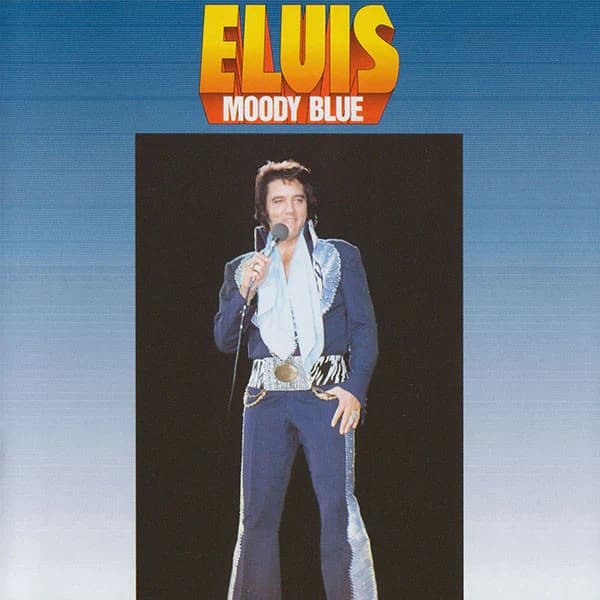
“Moody Blue” by Elvis Presley is one of those songs that carries a special weight — not only because of its unmistakable melody, but because of what it represented at the very close of Elvis’ extraordinary life. Released as a single in November 1976, it became his last No. 1 hit during his lifetime, reaching No. 1 on the Billboard Hot Country Singles chart in February 1977. When the album Moody Blue arrived a few months later in July 1977, it climbed to No. 3 on the Billboard Top 200 and No. 1 on the Country Albums chart. Only a few weeks afterward, the world would mourn his passing leaving this song forever tied to memories, reflection, and the soft, fading glow of his final chapter.
Yet long before it became a symbol of farewell, “Moody Blue” was simply a wonderfully crafted piece of late-era Elvis: lively, polished, and full of charm. Written by Mark James who had also penned “Suspicious Minds” the song blends country warmth with a light disco-pop shimmer, a style that felt both contemporary and uniquely Elvis. Its swinging rhythm, bright strings, and playful bass line offer a contrast to its lyrics, which describe a woman whose moods shift like the weather, leaving the singer helplessly attached yet endlessly puzzled.
Behind the scenes, the creation of “Moody Blue” is another story of Elvis’ late-career struggles. By 1976, he found recording increasingly difficult due to his declining health. RCA had originally hoped for a full studio album recorded in Graceland’s Jungle Room, but Elvis often canceled sessions or sang only when he felt strong enough. This made “Moody Blue” all the more precious. Recorded at Graceland on February 4, 1976, it captured one of the rare moments when his voice still rose with clarity, richness, and that familiar effortless charm.
Listeners often note how surprisingly upbeat the song sounds especially considering how troubled Elvis’ life had become. But that was part of his magic: even when struggling, even when tired, he still delivered performances filled with heart, color, and a certain playful warmth. In “Moody Blue,” his voice dances lightly across the melody, never heavy, never burdened, even as he sings of uncertainty in love. It’s as if he’s smiling through the confusion, shrugging his shoulders at life’s unpredictability.
For many, the song carries a bittersweet quality today. It was the last time audiences would hear Elvis celebrate a chart-topping hit. The track feels like a snapshot of his final musical spirit a man still capable of charm, humor, and sincerity, even as the pressures of the world closed in. And the Moody Blue album itself famously pressed in blue vinyl during early shipments became an immediate collector’s item after his passing, further engraving the song’s place in history.
But beyond its historical importance, “Moody Blue” endures because of the feeling it evokes. It reminds listeners of a time when Elvis’ voice filled living rooms through radio speakers, when new singles carried excitement and anticipation, and when even a song about shifting emotions could sound bright, warm, and wonderfully alive.
In the end, “Moody Blue” is much more than a final hit. It is a soft echo of Elvis’ resilience, a reflection of his ability to lift a song with pure instinct, and a gentle reminder that even in his last year, he could still make the world sway to his rhythm.