
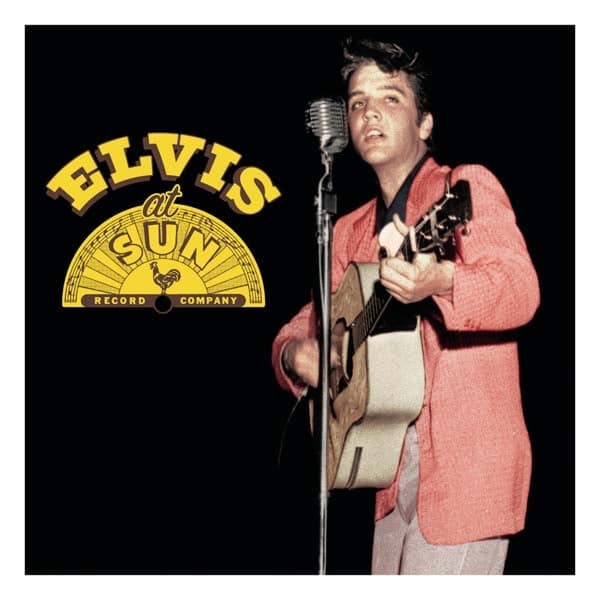
Youth in Motion: Desire, Defiance, and the Moment Elvis Found His Voice
When Elvis Presley released “Baby, Let’s Play House” in 1955, the song marked a decisive turning point not only in his career, but in the emotional direction of American popular music. Issued by Sun Records as the B-side to “I’m Left, You’re Right, She’s Gone,” the record quickly proved that the so-called B-side carried the spark. “Baby, Let’s Play House” climbed to No. 5 on the Billboard Country & Western Best Sellers chart, becoming Elvis’s first national chart hit. That achievement signaled something unmistakable: a new voice had arrived, and it was not content to follow old rules.
The song was originally written and recorded by Arthur Gunter in 1954, rooted in rhythm and blues tradition. But when Elvis encountered it at Sun Studio, he did not simply cover it he transformed it. Under the watchful ear of Sam Phillips, Elvis reshaped the song into something sharper, faster, and more emotionally charged. The result was a performance that blended country, blues, and rockabilly into a sound that felt both familiar and dangerous.
Lyrically, “Baby, Let’s Play House” is deceptively simple. On the surface, it speaks of romance and togetherness. But beneath that simplicity lies urgency an insistence on connection that borders on obsession. The famous line “I’d rather see you dead, little girl, than to be with another man” startled listeners then and continues to provoke discussion today. In the context of the mid-1950s, however, it reflected something raw and unfiltered: youthful intensity, jealousy, and emotional absolutism expressed without polish or apology.
Elvis’s vocal delivery is the key to the song’s lasting impact. He sings with nervous energy, pushing against the beat, stretching phrases, bending words in ways that feel spontaneous rather than rehearsed. There is a sense that he is discovering his own voice in real time. This unpredictability this refusal to sound settled was exactly what made the record electrifying. Elvis was not presenting a finished persona. He was revealing a process.
Musically, the recording is lean and urgent. The slap-back echo, a signature of Sun Records, gives the track a restless edge. Scotty Moore’s guitar work is sharp and rhythmic, while Bill Black’s bass provides a pulsing foundation that drives the song forward. Nothing is excessive. Everything feels necessary. The sound mirrors the emotional content tight, pressing, and impatient.
In the broader cultural landscape of 1955, “Baby, Let’s Play House” landed at a moment of transition. Postwar America was outwardly stable, but beneath that surface, a younger generation was beginning to feel confined by inherited expectations. Elvis’s performance tapped into that tension. His voice carried defiance without ideology, rebellion without slogans. He did not explain himself. He simply sang as he felt. That alone was revolutionary.
The song’s success on the country charts is particularly significant. At the time, musical boundaries were rigid. Country, blues, and pop were expected to remain separate. Elvis quietly ignored those divisions. “Baby, Let’s Play House” sounded country enough for Nashville, bluesy enough for rhythm-and-blues listeners, and energetic enough to hint at something new altogether. It was a bridge and Elvis stood at its center.
For Elvis himself, the record was transformative. It caught the attention of RCA Victor, setting in motion the contract that would soon make him a national and then global figure. But beyond business, the song gave Elvis confidence. It proved that his instincts were valid, that his blend of styles resonated beyond Memphis and beyond the South.
Over time, “Baby, Let’s Play House” has come to represent the moment before explosion the calm just before the world truly noticed. Later hits would bring fame, controversy, and mythology. This song captured something purer: hunger. It is the sound of a young man pushing forward, uncertain but unstoppable.
For listeners returning to the song years later, its meaning deepens. What once sounded like raw energy begins to feel like history in motion. You hear not just a performance, but a beginning. The voice is young, the confidence still forming, the future unwritten.
In the end, “Baby, Let’s Play House” endures because it is honest in a way that cannot be manufactured. It does not ask for permission. It does not seek approval. It moves forward because it must. And in that urgency restless, imperfect, and alive you can hear the exact moment when Elvis Presley stopped being a promising singer and became something far more lasting: a force.