
A Familiar Christmas Dream Reimagined with Quiet Reverence and Deep Human Warmth
When Elvis Presley recorded “White Christmas,” he did not attempt to outshine the song’s long and dignified history. Instead, he approached it with humility, restraint, and a deep sense of respect—allowing one of the most beloved holiday songs ever written to breathe through his voice in a way that felt intimate rather than grand. In doing so, Elvis revealed an often-overlooked dimension of his artistry: his ability to step back, soften his presence, and serve the song above all else.
“White Christmas” was written by Irving Berlin in 1942 and first introduced to the world by Bing Crosby in the film Holiday Inn. Crosby’s recording became the best-selling single of all time, spending 11 weeks at No. 1 on the Billboard charts and defining the sound of Christmas for generations. By the time Elvis recorded the song in 1957, it was already sacred ground in American popular music.
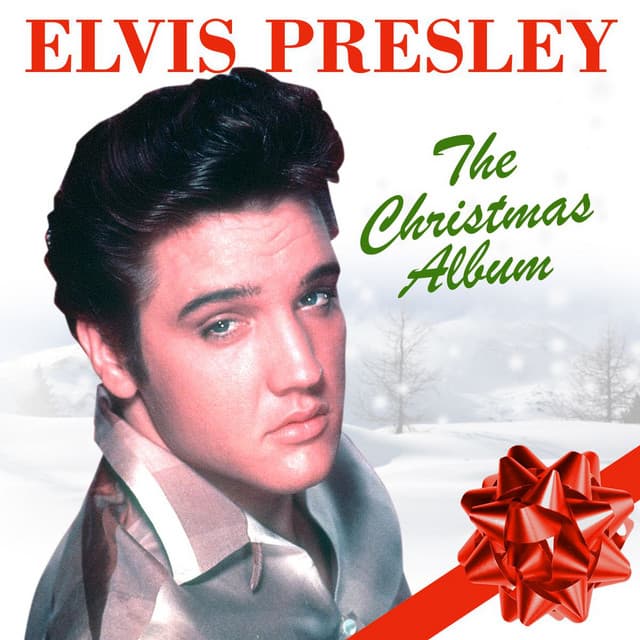
Elvis’s version was released as part of Elvis’ Christmas Album, issued by RCA Victor in October 1957. The album debuted at No. 1 on the Billboard Top Pop Albums chart and also topped the Country Albums chart, making it one of the most successful Christmas albums in history. At a time when Elvis was still seen by some as controversial and disruptive, this album quietly reintroduced him as a serious vocalist capable of reverence and control.
Unlike his blues-driven “Santa Claus Is Back in Town,” Elvis’s “White Christmas” is gentle, measured, and emotionally grounded. The arrangement is traditional: soft strings, restrained rhythm, and a choir that never overwhelms the lead vocal. There are no surprises here and that is precisely the point. Elvis does not reinterpret the song; he inhabits it.
Vocally, this performance is marked by remarkable discipline. Elvis resists the temptation to embellish or dramatize. His phrasing is smooth, unhurried, and deeply sincere. He sings not as a star addressing an audience, but as a voice recalling something personal and tender. The familiar opening line—“I’m dreaming of a white Christmas” arrives not as spectacle, but as memory.
This sense of memory is the emotional core of Elvis’s rendition. Where Bing Crosby’s version feels cinematic and communal, Elvis’s feels inward. It suggests quiet reflection rather than public celebration. Snow here is not just weather it is a symbol of innocence, simplicity, and a world that feels increasingly distant.
The meaning of “White Christmas” has always rested on longing. Written during World War II, it carried the ache of separation and homesickness. Elvis, recording in the postwar 1950s, brings a different but equally powerful layer of yearning. His voice carries the awareness that time moves forward, that childhood traditions fade, and that the idea of “home” becomes more complex with age.
This performance also gains resonance when placed within Elvis’s broader career. In 1957, he was navigating unprecedented fame, intense public scrutiny, and cultural backlash. Against that backdrop, “White Christmas” sounds almost like a pause a moment of stillness amid chaos. It is Elvis stepping away from rebellion and returning, briefly, to something universal and calming.
Notably, Elvis’s Christmas album and this song in particular helped broaden his audience. It reached listeners who might have resisted his earlier rock and roll records, demonstrating that his talent extended far beyond youthful energy and controversy. Over time, Elvis’ Christmas Album would become a perennial favorite, returning to the charts repeatedly across decades.
Within that album, “White Christmas” stands as its emotional anchor. It reminds listeners that Elvis was not only capable of shaking the world he was also capable of holding it gently.
Decades later, this recording continues to resonate each holiday season, not because it tries to redefine Christmas, but because it understands it. Elvis does not compete with memory; he honors it. He allows the song to be what it has always been a quiet wish, spoken softly, and carried forward through time.
In the end, Elvis Presley’s “White Christmas” is not about snow or nostalgia alone. It is about the universal desire for peace, familiarity, and warmth in an ever-changing world. Sung with grace and sincerity, it remains a reminder that sometimes the most powerful performances are the ones that simply let us remember and feel without asking for anything in return.