
A Quiet Cry Beneath the Surface, Where Love Endures Even When It Causes Pain
When Elvis Presley recorded “It Hurts Me” in January 1964, he gave listeners one of the most emotionally honest performances of his mid-career years a song that reveals vulnerability not through volume or drama, but through restraint. This is Elvis not as icon or movie star, but as a man standing helplessly beside someone he loves, watching her be hurt and knowing he can do nothing to stop it.
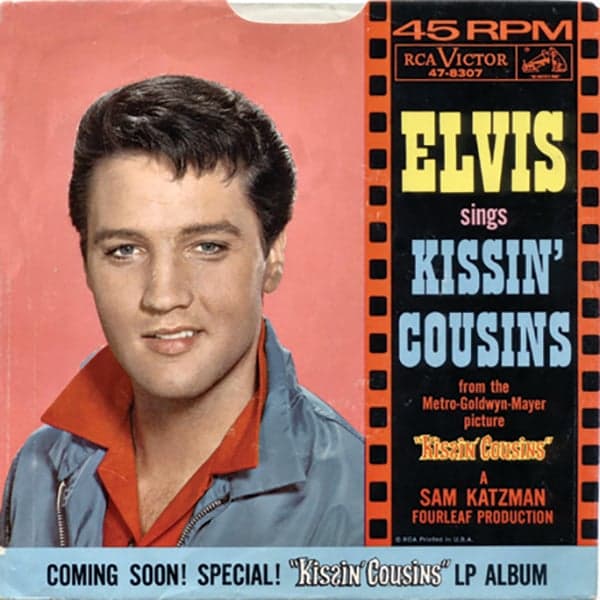
“It Hurts Me” was written by Joy Byers and Charlie Daniels, the latter still years away from becoming a household name. The song was recorded during sessions connected to the film Kissin’ Cousins, though stylistically it stands far apart from the lighthearted material that dominated Elvis’s soundtrack work at the time. Instead, it belongs to a deeper emotional tradition closer in spirit to country soul than to Hollywood pop.
The song was released in 1964 as the B-side to “Kissin’ Cousins,” a single that reached No. 12 on the Billboard Hot 100. Despite being relegated to the flip side, “It Hurts Me” gained significant airplay on its own and charted independently, reaching the lower region of the Billboard Hot 100 a notable achievement for a B-side during that era. Over time, it would become one of the most admired “hidden gems” in Elvis’s catalog.
What makes “It Hurts Me” extraordinary is its emotional perspective. The narrator is not the one being wronged directly. Instead, he watches someone he loves remain trapped in a harmful relationship. There is no anger, no attempt to claim ownership. Only concern. Only pain shared quietly. “It hurts me to see him treat you the way that he does.” In that line, the song reveals its moral center: love defined not by possession, but by empathy.
Elvis’s vocal performance is masterfully controlled. He sings softly, carefully, as though afraid to push too hard and make things worse. There is a tremor beneath the surface of his voice, but he never lets it break. This restraint gives the song its power. Rather than pleading loudly, Elvis sounds resigned aware that love sometimes means standing back, even when every instinct says to intervene.
Musically, the arrangement is subtle and supportive. Gentle rhythm, understated guitar lines, and restrained backing vocals create an atmosphere of quiet tension. Nothing overwhelms the vocal. Everything serves the story. The song moves slowly, deliberately, mirroring the emotional paralysis of the narrator himself.
Within Elvis’s broader career, “It Hurts Me” stands out because it anticipates the artistic direction he would later pursue more fully. This is the emotional realism that would come to define From Elvis in Memphis just a few years later. In 1964, however, such moments were rare often hidden on B-sides, overlooked by chart success but cherished by attentive listeners.
There is also something deeply mature about this performance. The song does not offer solutions. It does not promise rescue. It simply acknowledges pain and refuses to turn away from it. That honesty gives the song its lasting relevance. It understands that not all love stories are meant to be won some are meant only to be felt.
Over the decades, “It Hurts Me” has grown in stature. Many now regard it as one of Elvis Presley’s finest vocal performances of the 1960s a reminder that even during commercially uneven years, his interpretive gifts never disappeared. They simply waited for the right songs to reveal them.
In the end, “It Hurts Me” is not about heartbreak in the dramatic sense. It is about compassion. About loving someone enough to hurt alongside them. Elvis sings not to impress, but to understand and in doing so, he leaves behind a performance that feels less like entertainment and more like quiet truth, spoken gently, and remembered long after the music fades.