
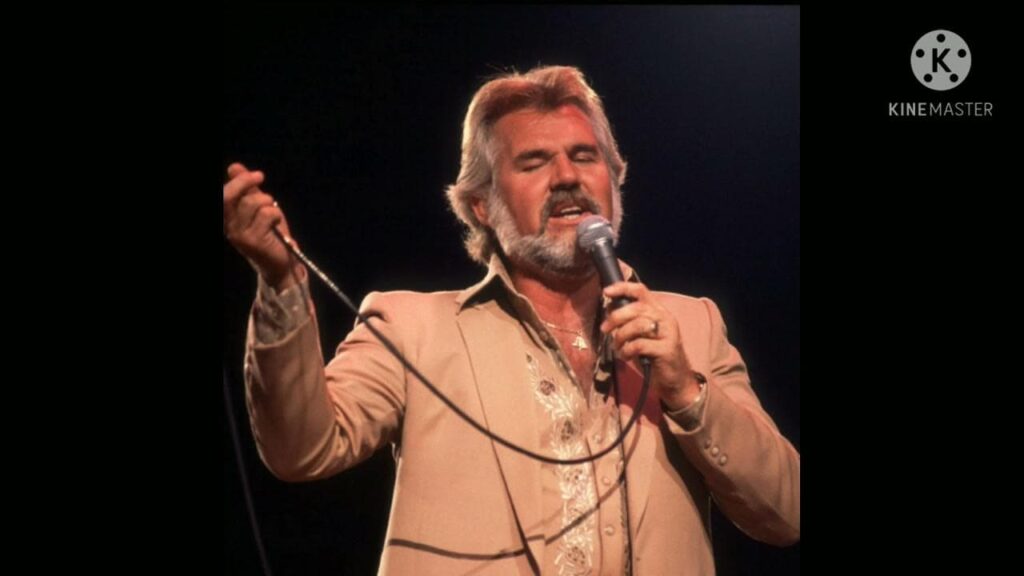
A powerful story of hidden courage and moral reckoning “Coward of the County” by Kenny Rogers
“Coward of the County” is a deeply emotional ballad about restraint, honor, and the breaking point where a promise to “turn the other cheek” can no longer contain a man’s strength.
When Kenny Rogers released “Coward of the County” in November 1979 as the second single from his multi-platinum album Kenny, it became one of his most iconic and controversial songs. The single soared to #1 on the U.S. Billboard Country chart, while also achieving a rare crossover success by reaching #3 on the Billboard Hot 100. It even topped the Cash Box singles chart, underscoring its broad impact. Overseas, it struck a chord as well: it reached #1 on the UK Singles Chart, where it remained a memorable hit.
Behind the stirring melody lies a dramatic narrative crafted by Roger Bowling and Billy Edd Wheeler, two songwriters known for marrying emotional depth with storytelling. The tale unfolds through the voice of Tommy’s uncle the narrator who recalls his nephew being branded a coward by the town. But this supposed cowardice is rooted in a tragic past: Tommy’s father died in prison when Tommy was only ten, and before his death, he made the boy promise not to follow in his violent footsteps. His father’s dying words were not about bravado, but about dignity: “You don’t have to fight to be a man.”
Tommy grows up gentle and avoiding conflict so gently, in fact, that he becomes the subject of scorn and mockery. He falls in love with a woman named Becky, who values and accepts him just as he is. Yet the narrative’s tension arrives when tragedy strikes: while Tommy is away, the Gatlin boys assault Becky, leaving her physically and emotionally broken. Faced with this horror, Tommy is forced to make a painful decision to uphold his father’s pacifist ideal, or to defend Becky and prove his manhood. In a moment of raw courage, he locks the door of the bar, fights all three attackers, and declares “this one’s for Becky.”
Musically, the song is crafted to mirror that emotional struggle. Rogers delivers the story with his rich, steady baritone wise yet filled with warmth and the arrangement beneath him is understated but powerful: gentle country instrumentation that allows the weight of the narrative to carry the listener along. His vocal delivery is emotionally precise: he sounds like someone who has carried the burden of this story close to his heart for years.
The meaning of “Coward of the County” goes beyond a simple moral drama. It asks profound questions about strength, manhood, and when it’s truly honorable to fight back. Tommy’s journey suggests that courage is not defined by constant aggression, but by knowing when peace must be broken for justice. His willingness to stand up for Becky, despite his lifelong commitment to nonviolence, becomes a deeply moving redemption a moment of moral reckoning that redefines him in the eyes of others.
The song’s legacy is long-lasting. According to American Songwriter, it remains one of Rogers’ finest narrative songs, and its moral complexity helped cement his reputation not just as a performer, but as a storyteller. Over the years, “Coward of the County” inspired a made-for-TV movie that expanded on Tommy’s story and brought its moral dilemmas to a wider audience.
For listeners who remember quiet nights listening to country radio, or vinyl spinning under a soft lamp, “Coward of the County” evokes a mix of nostalgia, tenderness, and resolve. It reminds us that life’s toughest choices aren’t always obvious, and that the bravest act may come not from refusing violence entirely but from standing up when the moment demands it.
In the end, “Coward of the County” is more than just a hit song; it’s a parable wrapped in melody a call to compassion, a test of character, and a tribute to the courage that sometimes hides behind the gentlest of exteriors.