
A Lifetime in Two Verses: The Bittersweet Evolution of Love and Loss
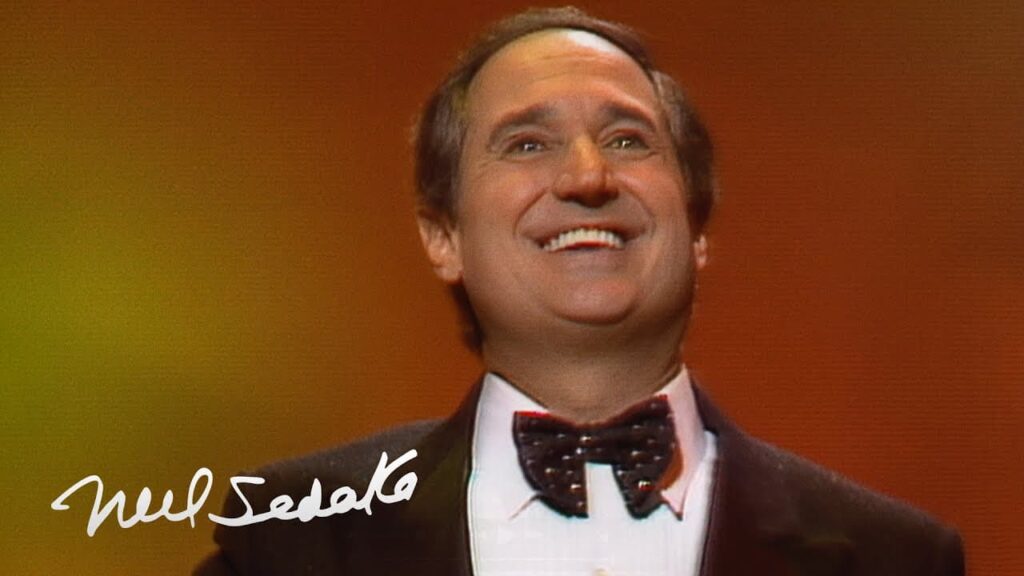
When Neil Sedaka performed “Breaking Up Is Hard To Do (Live From The Piccadilly, October 5, 1986)”, he wasn’t merely revisiting one of his greatest hits; he was reframing a chapter of pop history through the lens of age, wisdom, and the emotional residue of time. Originally a buoyant chart-topper in 1962 that reached No. 1 on the Billboard Hot 100 and later reimagined as a wistful ballad in 1975—earning him another Top Ten success—this live rendition from The Piccadilly Theatre captures Sedaka at a reflective peak. By 1986, he was no longer the youthful Brill Building prodigy crafting perfect teenage pop; he was an artist looking back on the very emotions that had once defined an era of innocence.
What makes this performance so compelling is not just its historical weight, but its emotional recalibration. The brisk doo-wop optimism of the original has long since slowed into something more fragile, more knowing. In this live version, Sedaka’s voice carries the slight tremor of lived experience—the kind that transforms a song about adolescent heartbreak into a meditation on love’s impermanence. The arrangement leans toward intimacy: fewer flourishes, more space for silence to do its work. It’s as if Sedaka is allowing every note to breathe the ache of memory.
The story behind “Breaking Up Is Hard To Do” is, in many ways, the story of Sedaka himself—a man whose career mirrored the shifting moods of popular music across decades. In its first incarnation, the song was the epitome of early-’60s pop craftsmanship: catchy hooks built upon Brill Building precision, a vocal buoyancy that made heartbreak sound almost danceable. Yet when Sedaka returned to it in the mid-’70s, slowing it down into a tender ballad for his album “Sedaka’s Back,” he revealed what had always been hiding beneath its surface: vulnerability. That transformation alone cemented his reputation not just as a hitmaker but as an interpreter of emotion.
By the time of this 1986 performance, Sedaka’s reinterpretation feels less like nostalgia and more like confession. He sings not to recapture youth but to honor it—to remind listeners that even the simplest pop lyric can hold multitudes when revisited through time’s prism. The audience hears not only a familiar tune but also the echo of decades—the laughter, tears, and quiet reckonings that accompany anyone who has ever loved and lost.
In that sense, this live version stands as both artifact and revelation. It bridges two eras—the exuberance of early rock ’n’ roll and the introspection of adult contemporary—with grace and gravity. Sedaka’s voice may have softened, but his understanding has deepened. And in those moments on stage at The Piccadilly, “breaking up” becomes not merely hard to do—it becomes part of life’s unending rhythm: tender, inevitable, and profoundly human.
 Timeless Melodies