
A Gentle Plea for Love’s Return, Wrapped in Warmth, Memory, and the Promise of Forgiveness
Few songs capture longing with such grace and quiet dignity as “Return To Me”, the 1958 classic immortalized by Dean Martin. Released at the height of his solo recording success, the song quickly resonated with listeners who understood that love, once lost, often leaves behind an ache that time alone cannot heal. Upon its release, “Return To Me” climbed to No. 4 on the Billboard Hot 100 in the United States and reached No. 1 on the UK Singles Chart, confirming its international appeal and enduring emotional power.
At a time when popular music was filled with youthful exuberance and dramatic heartbreak, Dean Martin offered something different an invitation rather than a demand, a soft-spoken confession rather than a grand declaration. The song was written by Carmen Lombardo and Danny DiMinno, and its structure is deceptively simple. Yet within its gentle melody lies a depth of feeling that feels lived-in, as if the narrator has already known love, loss, and regret and is now standing quietly at love’s door, hoping it might open once more.
The opening lines are immediately disarming. There is no bitterness here, no accusation. Instead, the voice speaks with humility, acknowledging mistakes without naming them. This emotional restraint is precisely what gives “Return To Me” its power. The song’s famous Italian refrain “Senza di te” (“Without you”) adds a layer of Old World romance, a nod to heritage and tradition that felt deeply comforting in the late 1950s, especially for listeners who valued continuity, family, and memory.
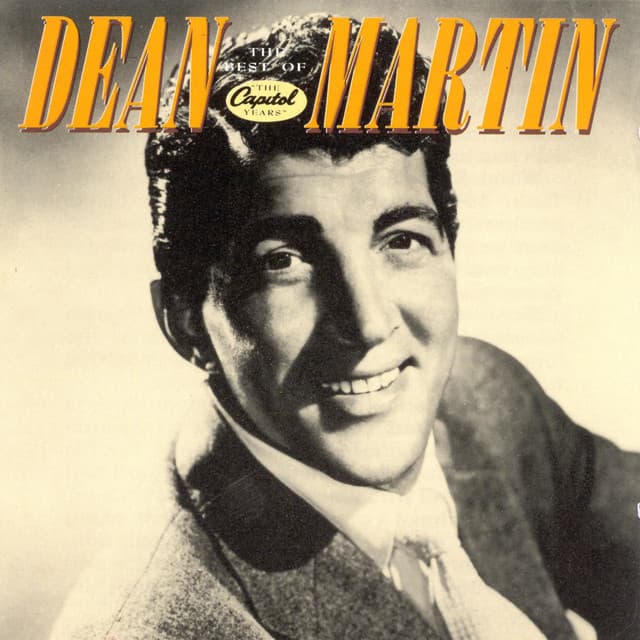
Dean Martin’s performance is central to the song’s lasting legacy. His voice, warm and unforced, sounds less like a performance and more like a late-night confession spoken over a quiet table. Martin never oversings the emotion. He trusts the listener to feel what he feels. This restraint was a hallmark of his style cool on the surface, deeply emotional underneath. In “Return To Me”, that balance is perfected.
The song later appeared on his 1958 album This Is Dean Martin!, a record that helped solidify Martin’s reputation not just as a charismatic entertainer, but as a serious interpreter of romantic material. While he was already famous for his easy charm and cinematic presence, “Return To Me” revealed something more intimate: a man unafraid to sound vulnerable.
Beyond charts and accolades, the meaning of “Return To Me” lies in its emotional honesty. It speaks to anyone who has ever wished for a second chance not to rewrite the past, but to begin again with greater understanding. There is wisdom in its acceptance that love cannot be forced. All one can do is ask, sincerely, and wait.
Over the decades, the song has been featured in films, television, and countless retrospectives, often used to evoke an era when romance unfolded slowly, through letters, glances, and patience. Yet its appeal is not bound by nostalgia alone. The emotions it carries remain timeless. Love still leaves. Hearts still hope. And apologies, when spoken with sincerity, still matter.
Listening to “Return To Me” today feels like opening an old photograph edges slightly worn, colors softened, but the feeling intact. It reminds us that some songs do not chase trends or shout for attention. They endure because they speak quietly, truthfully, and with respect for the listener’s own memories.
In the vast catalog of classic popular music, Dean Martin’s “Return To Me” stands not as a dramatic landmark, but as a familiar place one we return to, again and again, whenever the heart remembers what it once held, and what it still hopes to find.