
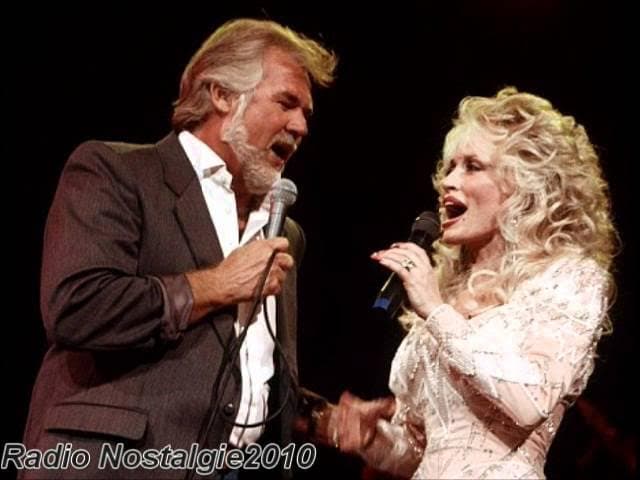
A Quiet Conversation Between Two Hearts, Where Love Is Measured Not by Possession but by Letting Go
“The Greatest Gift of All” stands as one of the most tender and emotionally restrained collaborations between Dolly Parton and Kenny Rogers. Released in 1984 as part of their holiday album Once Upon a Christmas, the song did not arrive with the commercial ambition of their earlier smash “Islands in the Stream.” Instead, it entered the world quietly—almost reverently—asking listeners not for excitement, but for reflection. Though it received modest attention on Adult Contemporary and country radio, its true legacy has never been defined by chart positions. It has endured because of its message.
By the mid-1980s, Dolly Parton and Kenny Rogers were already one of the most trusted vocal pairings in popular music. Their voices carried familiarity, emotional credibility, and a sense of lived experience. That history matters deeply here, because “The Greatest Gift of All” is not a song that works without trust—between singers, and between the song and its listener.
Written by Barry Gibb and Maurice Gibb of the Bee Gees, the song is deceptively simple. On the surface, it unfolds as a conversation between two people reflecting on love. But beneath that structure lies a far more complex idea: that the deepest form of love may not be holding on, but knowing when to step aside. This is not a romantic fantasy. It is a moral reckoning.
From the opening lines, the tone is intimate and restrained. Kenny Rogers begins with the voice of reflection—steady, thoughtful, slightly worn. He sounds like someone who has already wrestled with the truth he is about to speak. Dolly Parton answers not with resistance, but with understanding. Her voice carries empathy rather than defense, clarity rather than emotion for its own sake. Together, they do not argue. They listen.
What makes “The Greatest Gift of All” so striking is its refusal to dramatize pain. There is heartbreak here, but it is expressed through calm acceptance rather than anguish. The song proposes an idea that feels almost radical in popular music: that love does not always mean staying, and that selflessness may require sacrifice without reward.
The title itself becomes the song’s moral center. The greatest gift of all is not companionship, nor devotion, nor even shared history. It is freedom—the courage to release someone you love so they may find the life they truly need. This is a message shaped by maturity, by the understanding that love and possession are not the same thing.
Musically, the arrangement mirrors this emotional restraint. There are no sweeping crescendos, no theatrical flourishes. The melody moves gently, giving space to the lyrics. Each pause feels intentional, as though silence itself is part of the conversation. The production avoids sentimentality, trusting the words—and the voices—to carry the weight.
Within Once Upon a Christmas, the song stands apart. While the album includes warmth, nostalgia, and seasonal comfort, “The Greatest Gift of All” feels almost timeless rather than seasonal. It is not tied to a holiday mood. Instead, it reflects moments of decision that arrive quietly, often at the end of long reflection.
For Kenny Rogers, the song aligns perfectly with his legacy as a storyteller of moral complexity. He does not portray himself as a hero or a victim—only as someone willing to speak an uncomfortable truth. For Dolly Parton, the performance highlights one of her greatest strengths: emotional intelligence. She conveys acceptance without weakness, compassion without surrendering dignity.
Over the years, the song has gained a quiet reverence among listeners who return to it not casually, but intentionally. It is often rediscovered later in life, when its meaning lands with greater clarity. It does not comfort easily. Instead, it offers understanding—a rarer and more lasting gift.
Listening to “The Greatest Gift of All” today feels like overhearing a conversation that was never meant to impress, only to be honest. There is no resolution promised, no reassurance offered. Only truth, spoken gently, between two voices that know what it costs to love well.
In the shared history of Dolly Parton and Kenny Rogers, this song may not be the most famous. But it may be the most profound. Because it dares to suggest that love, at its highest form, is not measured by how tightly we hold on—but by how gracefully we are willing to let go.