
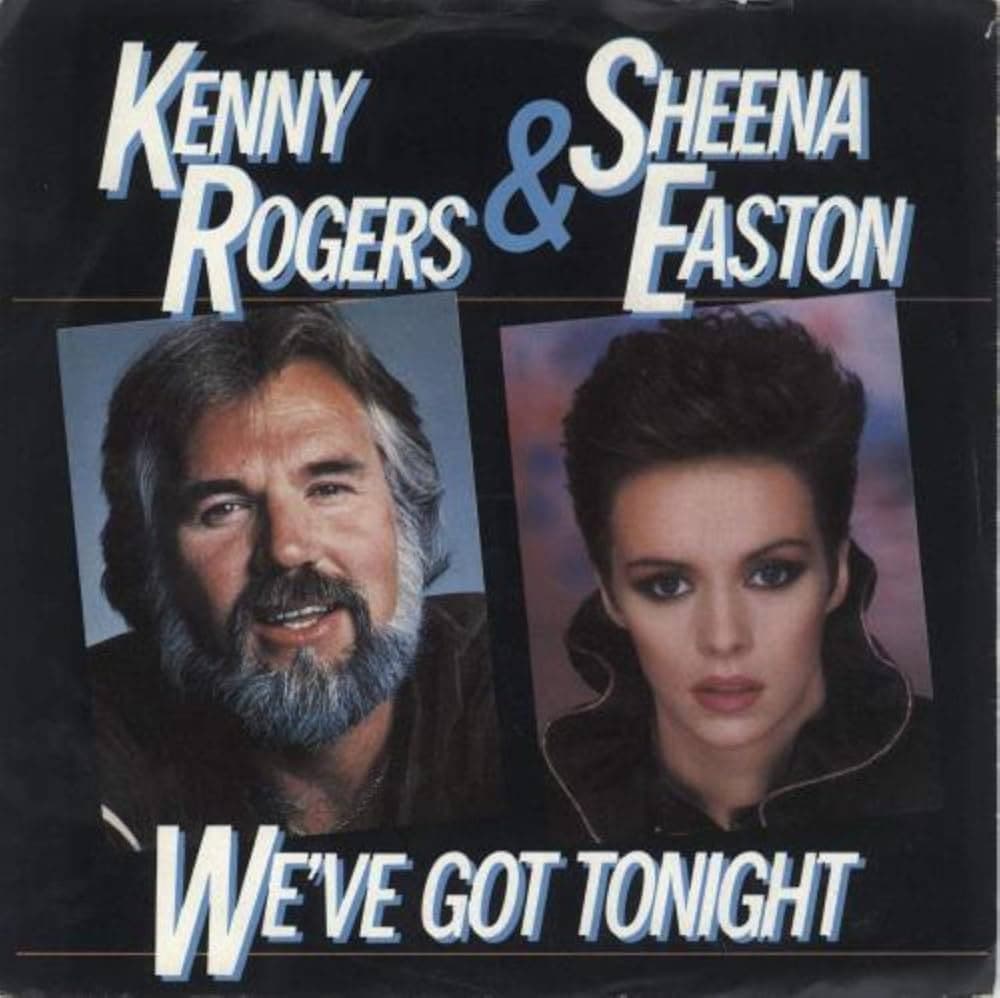
A Night of Honest Longing and Shared Vulnerability, Where Two Voices Meet in the Dark and Find Comfort in the Moment
“We’ve Got Tonight” by Kenny Rogers & Sheena Easton is one of those duets that carries an emotional honesty so immediate and heartfelt that it feels like overhearing a private conversation between two souls seeking warmth in the quiet hours. Released in 1983 as the title track of Rogers’ album We’ve Got Tonight, the duet became a defining moment in both artists’ careers soaring to No. 1 on the Billboard Country Singles chart, No. 6 on the Billboard Hot 100, and No. 2 on the Adult Contemporary chart, while also hitting the Top 30 in the United Kingdom.
Originally written and performed by Bob Seger on his 1978 album Stranger in Town, the song was transformed in this 1983 recording into a tender country-pop ballad that speaks directly to the universal human need for connection. The core message captured so poignantly by the repeated chorus “We’ve got tonight, who needs tomorrow?” is a plea to live in the present moment, to find solace in the here and now even when the future remains uncertain.
What makes this version so resonant is the emotional interplay between two very different voices. Kenny Rogers, at that point already an established storyteller in music, brings his warm, textured baritone steady, sincere, and rich with lived experience. Opposite him is Sheena Easton, the Scottish pop star whose crystalline soprano lends a sense of vulnerability and clarity. Their voices meet not as dramatic theatrics, but as honest dialogue two individuals sharing loneliness, recognition, and the hope of intimacy, even if only for a night.
There is a kind of storytelling here that feels deeply human. The verses begin with admissions of weariness and isolation they know it’s late, they know their original plans didn’t include one another but still they find themselves together, drawn by unspoken longing. In a time when many love songs idealized destiny or forever, “We’ve Got Tonight” stands out because it recognizes impermanence without diminishing its value. It suggests that sometimes the greatest comfort comes from acknowledging the fragility of the moment and embracing it fully.
The backstory of their collaboration adds another rich layer to the song’s meaning. The duet wasn’t just born from artistic instinct. It was encouraged by their label, which hoped to revitalize Easton’s chart fortunes by pairing her with Rogers’ well-established appeal a bold move that became one of the most memorable collaborations of the early 1980s. Rogers himself called Easton personally to propose the duet, rehearsing together on Christmas Eve before heading into the studio days later.
Lyrically and emotionally, the song resonates with listeners because it speaks to loneliness so many of us have felt at night, when the distractions of the day have faded, leaving only the heart’s true questions. There is no pretense here: both artists acknowledge their mutual weariness and invite each other not to solve all of life’s problems, but to simply be present with one another for a brief moment of shared warmth.
Over the decades, “We’ve Got Tonight” has endured not because it promises eternal love, but because it captures a truth older than pop charts: the heart’s hunger for connection. It reminds us that sometimes two souls find shelter in each other’s company, not because they have all the answers, but because they are willing to face the night together if only for a while. That unguarded vulnerability the courage to seek comfort, honesty, and closeness is a gift in itself, one that continues to touch listeners across generations.