
When two wounded hearts meet, love becomes both refuge and risk
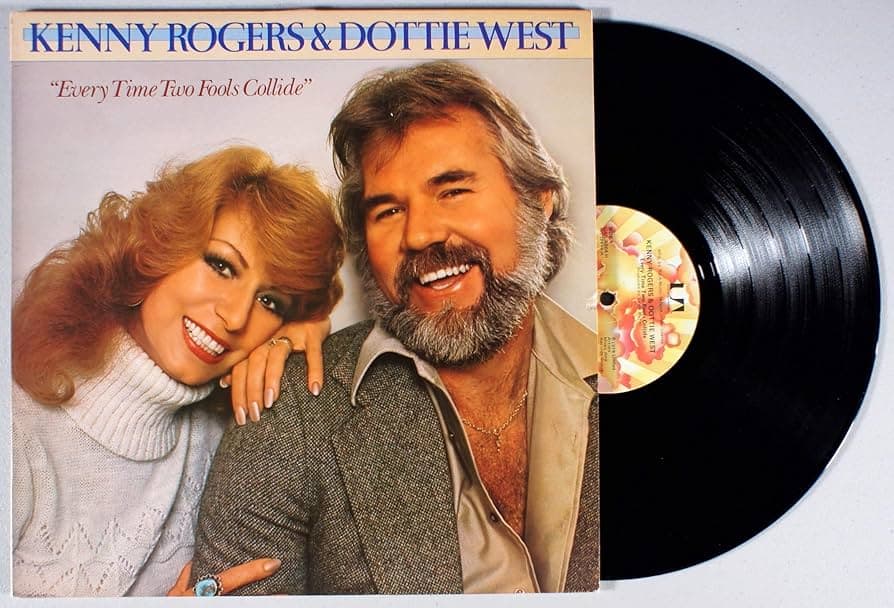
“Every Time Two Fools Collide” is one of the most defining duets in Kenny Rogers’ career—and the song that truly cemented his musical partnership with Dottie West. Released in 1978, the track rose to No. 1 on the Billboard Hot Country Singles chart, marking a pivotal moment not only for both artists, but for country duets as a whole. It wasn’t built on dramatic confrontation or playful flirtation. Instead, it leaned into emotional realism quiet, vulnerable, and deeply human.
At its core, the song tells the story of two people who have been hurt before and should know better—yet cannot resist the pull of each other. The “fools” in the title are not naïve dreamers, but experienced hearts who understand the consequences of love all too well. That subtle distinction gives the song its weight. This is not love discovered for the first time; it is love returned to, despite the scars.
Kenny Rogers’ voice brings a steady, reflective tone measured and restrained, as if his character is constantly holding back emotion. In contrast, Dottie West’s delivery carries warmth and quiet urgency. Her voice doesn’t plead; it confesses. The beauty of the duet lies in how naturally these two perspectives intertwine. Neither voice dominates. Instead, they lean on each other, mirroring the emotional dependence described in the lyrics.
The arrangement is elegantly simple, allowing space for the story to breathe. Gentle instrumentation supports the vocals without drawing attention away from them. There is no need for dramatic crescendos or elaborate production. The tension lives in the pauses, in the way each line feels like a step closer to something both inevitable and dangerous.
Lyrically, “Every Time Two Fools Collide” avoids grand romantic declarations. It speaks in admissions rather than promises. The lovers acknowledge that they may be repeating a mistake, yet they also accept that denying their feelings would be dishonest. This honesty is what makes the song resonate. Love here is not idealized it is complicated, persistent, and sometimes ill-advised.
The chemistry between Rogers and West was undeniable, and this song captured it perfectly. Their collaboration would continue with several successful duets, but “Every Time Two Fools Collide” remains the most emotionally balanced of them all. It feels intimate without being intrusive, dramatic without exaggeration.
In the late 1970s, country music was evolving, blending traditional storytelling with smoother, more crossover-friendly sounds. This song sat comfortably at that intersection. It appealed to country purists through its narrative depth, while also attracting a broader audience with its polished delivery and universal theme.
What gives the song its lasting power is its understanding of emotional contradiction. It recognizes that wisdom does not always protect us from desire, and that knowing better does not mean feeling less. The “collision” in the title is not explosive it is quiet, inevitable, and deeply personal.
Decades later, “Every Time Two Fools Collide” still feels relevant because it speaks to a truth many recognize but rarely admit: sometimes love finds us not when we are ready, but when we are vulnerable. And sometimes, despite everything we know, we step forward anyway.
In that moment of collision, Kenny Rogers and Dottie West give voice to something timeless love as both comfort and consequence, sung with grace, restraint, and undeniable sincerity.