
A warm, easy-swinging celebration of friendship, anticipation, and country guitar at its most human
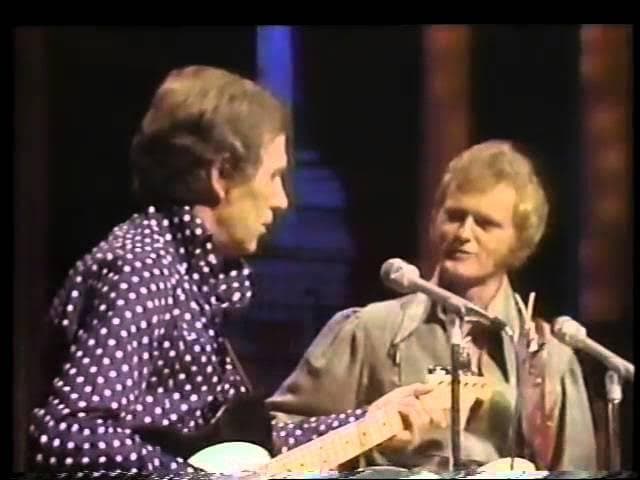
When Chet Atkins and Jerry Reed come together on “Baby’s Coming Home,” the result is not just a song it is a conversation. Released in 1970 on the landmark album Me and Jerry, the track captures a rare balance of technical brilliance and emotional ease. It sounds relaxed, almost casual, yet beneath that surface lies a deep musical understanding forged through years of mutual respect, shared humor, and a common Southern musical language.
The album Me and Jerry was a major success upon release, reaching No. 1 on the Billboard Top Country Albums chart and crossing over to the Billboard Top LPs, where it peaked around No. 32. At a time when instrumental albums were becoming less common in the mainstream, this achievement spoke volumes. While “Baby’s Coming Home” was not released as a charting single, it quickly became one of the album’s most beloved tracks often cited as a perfect example of how two master guitarists could play together without ego, competition, or excess.
By 1970, Chet Atkins was already a legend architect of the Nashville Sound, senior executive at RCA, and a guitarist whose name carried authority across genres. Jerry Reed, on the other hand, was the firecracker: a songwriter, singer, and guitarist with explosive right-hand technique and a mischievous sense of rhythm. What makes “Baby’s Coming Home” so special is how these contrasting personalities blend rather than collide.
The song itself is built around a simple, joyful premise: the anticipation of a loved one’s return. There is no drama here, no heartache or regret. Instead, the feeling is light, hopeful, and grounded in everyday emotion. That simplicity is deliberate. Atkins and Reed understood that not every story needed tension to be meaningful. Sometimes, the quiet happiness of expectation is enough.
Musically, “Baby’s Coming Home” showcases a masterclass in complementary guitar playing. Atkins’ clean, measured fingerstyle provides structure and clarity, while Reed’s syncopated rhythms and playful accents add warmth and movement. The guitars seem to speak to each other one offering a thought, the other replying with a grin. There is swing in the rhythm, but it never feels forced. The groove settles in naturally, like a familiar walk down a well-known road.
What stands out most is restraint. Both men were capable of astonishing virtuosity, yet neither feels the need to dominate the track. Instead, they leave space space for melody, for timing, for the listener’s own reflections. This sense of space gives the song its emotional credibility. It feels lived-in, honest, and unpretentious.
The title “Baby’s Coming Home” carries an emotional weight that goes beyond romance. It speaks to reunion, to the comfort of things returning to their rightful place. In Atkins’ gentle phrasing and Reed’s rhythmic bounce, that feeling becomes tangible. The music does not announce joy; it settles into it. There is a quiet confidence here, an understanding that happiness does not need to be loud to be real.
Historically, the track also represents a turning point in instrumental country music. At a time when vocals and image-driven hits dominated the charts, Chet Atkins & Jerry Reed proved that instrumental storytelling still had a place and an audience. Their collaboration reaffirmed the idea that guitar music could be conversational, emotional, and deeply personal without a single word being sung.
Over the years, “Baby’s Coming Home” has endured as more than a cut on a successful album. It stands as a testament to musical friendship, to trust built over time, and to the beauty of shared restraint. It reminds us that the most lasting music often feels effortless not because it is simple, but because it is sincere.
In this recording, Chet Atkins and Jerry Reed invite the listener into a moment of calm anticipation. Nothing is rushed. Nothing is overstated. The message is clear without being spoken: some joys are best expressed through a gentle melody, a steady rhythm, and the quiet understanding between two musicians who know exactly when and when not to play.