
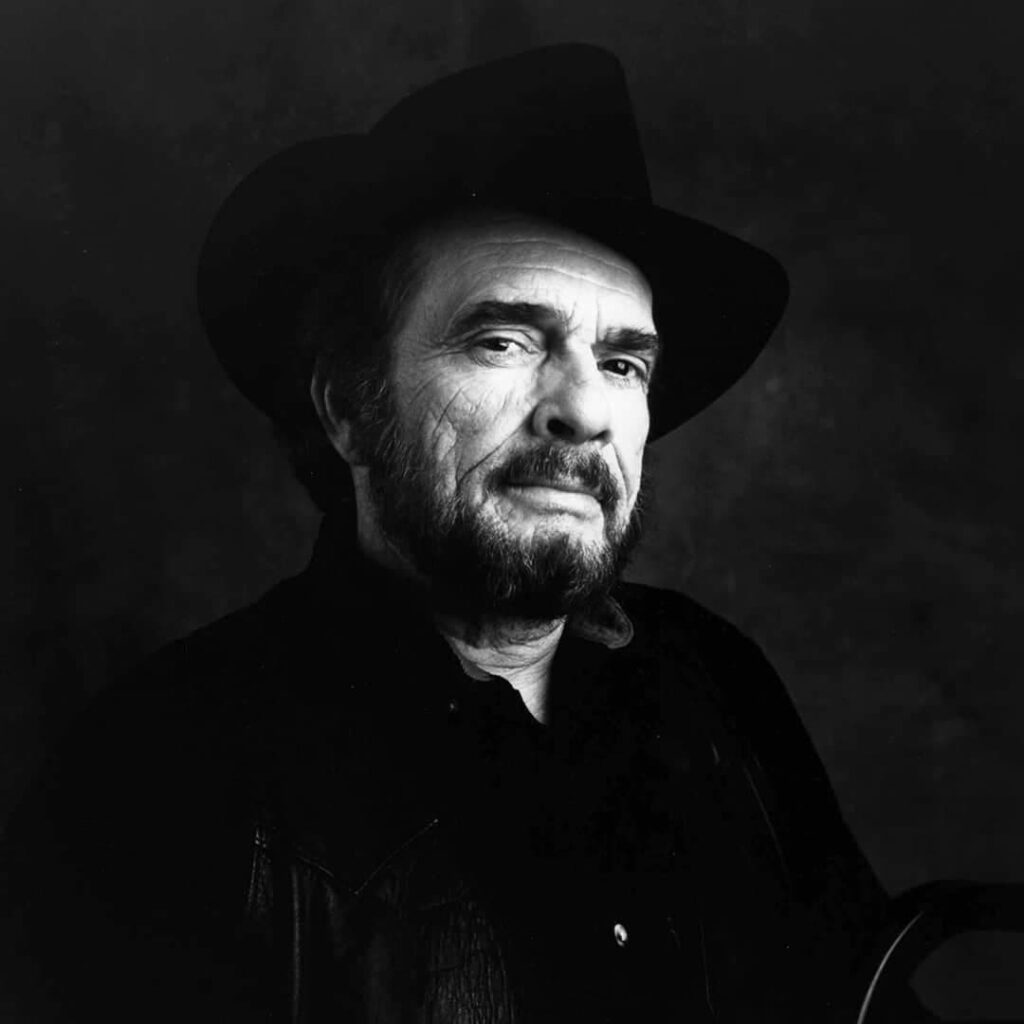
A quiet surrender in a dim bar: “I Think I’ll Just Stay Here and Drink”
When Merle Haggard released “I Think I’ll Just Stay Here and Drink” in October 1980, it struck a chord deep in the hearts of those who know loneliness, regret, and the comfort found at the bottom of a glass. This song, the second single from his album Back to the Barrooms, climbed to No. 1 on the Billboard Hot Country Singles chart, making it the 26th chart-topping hit of his remarkable career.
There’s a powerful story behind this song, rooted in Merle’s own life and the raw honesty that made him a legend. According to his own accounts, the spark for the song came from a phone call with a friend. The friend simply said, “I just wanted to call and say hello … I think I’ll just stay here and drink.” Merle wrote it down nearly word for word, and within a short time, what began as a throwaway line became one of his most enduring barroom ballads.
The irony is that he was initially reluctant to release it as a single. His label, MCA Nashville, pushed for more upbeat songs—they believed up-tempo tracks would play better on radio. But Merle, with his trademark stubbornness and artistic integrity, stood by this slow-burning tune that felt deeply personal. Produced by Jimmy Bowen, the recording features an almost uncommonly long jam for a country single: saxophone from Don Markham, piano from Larry Muhoberac, layered guitars — it feels like you’re right there in the haze of a late-night honky-tonk.
At its core, “I Think I’ll Just Stay Here and Drink” is more than an ode to whiskey. It’s a portrait of emotional resignation, a man who’s given up on changing things — or maybe even trying. He reflects on a relationship that’s compacted into frustration and a fading connection:
“Could be holding you tonight … Ain’t no woman gon’ change the way I think.”
The repeating chorus, “I think I’ll just stay here and drink,” becomes both a literal and metaphorical choice: drink to numb, stay because leaving feels impossible, and surrender to that dull ache inside. SongTell’s interpretation describes the narrator’s detachment from emotion, a mind that becomes “a total blank,” as love has already left.
Putting it in the context of Merle Haggard’s life adds a bittersweet layer. Merle wasn’t just writing about heartbreak — he understood the hard edges of regret and solitude. Born in California, he had a troubled youth, even serving time in San Quentin. He channeled that past into his music, combining grit with a profound sense of vulnerability. By the time Back to the Barrooms was released (October 10, 1980), Merle had already been through enough life to make him wise beyond his years.
And in one of the most poetic bookends to his career, Merle performed this very song in his final Grand Ole Opry appearance, on October 17, 2015 — just months before his health declined. That moment feels like a full circle: the man who once hid his pain in bars standing before the country institution, his voice carried by years of experience, regret, and survival.
What makes “I Think I’ll Just Stay Here and Drink” so timeless and resonant is how honest it is, without grand drama. It’s not about redemption or a triumphant comeback — it’s about a man who’s simply decided he can’t face things differently and so he stays and he drinks. The arrangement itself supports that feeling: the slow groove, the space for instrument solos, the kind of looseness that mirrors how someone might feel after too many nights at the bar.
For older listeners, especially, this song evokes memories of smoky honky-tonks, neon lights flickering, and jukeboxes playing songs that mix heartbreak with consolation. Some may hear in Merle’s voice an echo of their own regrets, or find solace in his decision to stay put rather than fight a losing battle.
Even decades later, the song remains deeply ingrained in Merle’s legacy — it’s featured on his greatest hits collections, and fans still speak of it as one of his finest hours. It’s more than a country tune: it’s a meditation on sorrow, surrender, and the quiet dignity in choosing to stay when leaving is just too painful.
In a way, when Merle said “I think I’ll just stay here and drink,” he wasn’t just talking about a bar — he was describing the complexity of the human heart.
 Oldies Songs