
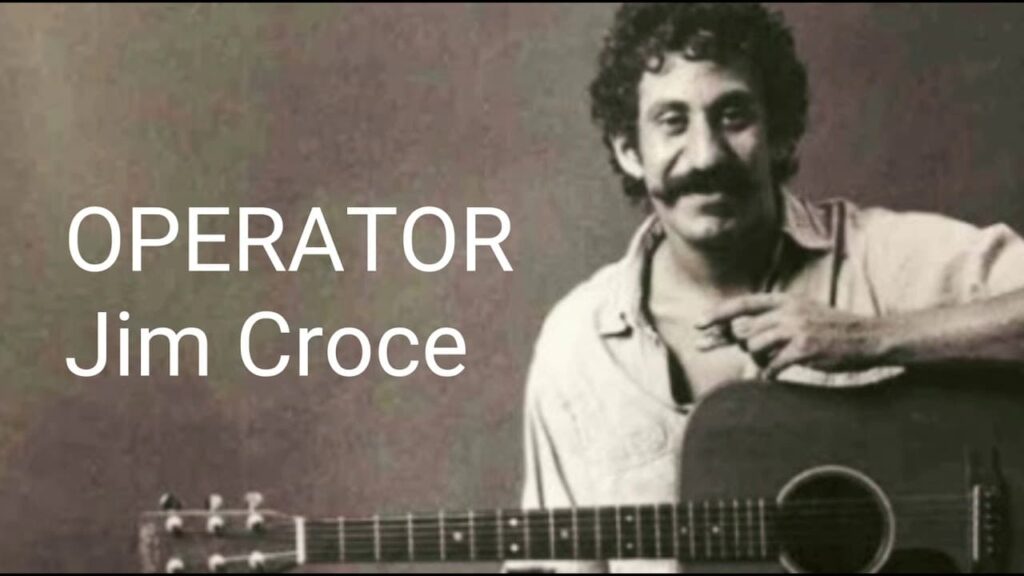
A lonely voice on the line, wrestling with loss and longing
Jim Croce’s Operator (That’s Not the Way It Feels) is a quiet, heart-aching conversation a man dialing up his past, only to confess how deeply he misses what he’s lost, even as he realizes he can’t go back.
When this song was released on August 23, 1972, it became the second single from Jim Croce’s acclaimed album You Don’t Mess Around with Jim. It climbed the charts steadily, peaking at No. 17 on the Billboard Hot 100 by December of that year and also reaching No. 11 on the Easy Listening chart.
Behind that simple melody lies a poignant and deeply personal story. Croce drew inspiration from his own time in the National Guard, where he witnessed lines of soldiers waiting their turn to use an outdoor pay phone. Many of them were placing calls back home, perhaps hoping for a familiar voice or braced for a painful “Dear John” letter. In those moments, Croce observed heartbreak, longing, and a yearning for connection all of which later informed the emotional core of Operator.
Lyrically, the song is a masterclass in storytelling. The narrator asks the telephone operator to help him place a call, but the number on the matchbook is faded, an echo of how his memories of his former lover have grown dim with time. He admits he wants to prove he’s “overcome the blow,” that he’s moved on, but as the operator patiently gives him the number, he realizes tears fill his eyes. At that moment he changes his mind, telling the operator to forget the call “you can keep the dime.” It’s a small gesture, but one that carries the weight of resignation and acceptance. He doesn’t really need the conversation; he needs closure, and what he really needs is someone to understand.
That repeated line “that’s not the way it feels” cuts to the heart of his truth. He’s telling himself and the operator that even if he says he’s fine, it doesn’t match the ache he carries. Musically, the song’s gentle folk-rock arrangement anchored by Croce’s acoustic guitar and calm, conversational vocals gives it a warm, intimate quality. There’s no grand production, only enough space for his voice and his story to breathe.
To those who hear it today, Operator is more than a period piece about payphones and dimes. It’s a timeless meditation on betrayal, loneliness, and the human impulse to reach out when everything has changed. The “operator” becomes a symbolic confidante, someone who listens without judgment, helping the narrator confront his own vulnerability.
Over the decades, the song has remained one of Croce’s most beloved works. It captures the gentle strength in admitting pain, and the subtle courage in letting go. Even now, when we replay it, we can almost hear that pay-phone line crackle, sense the hesitation in his voice, and feel just how real his sorrow is.
In the quiet of this song, we are invited into a moment of emotional honesty. We remember what it feels like to long, to regret, and to admit that healing doesn’t always look like what we tell others or even ourselves. Operator (That’s Not the Way It Feels) stands as a testament to Croce’s gift for turning simple conversations into stories that resonate deeply inside us.