
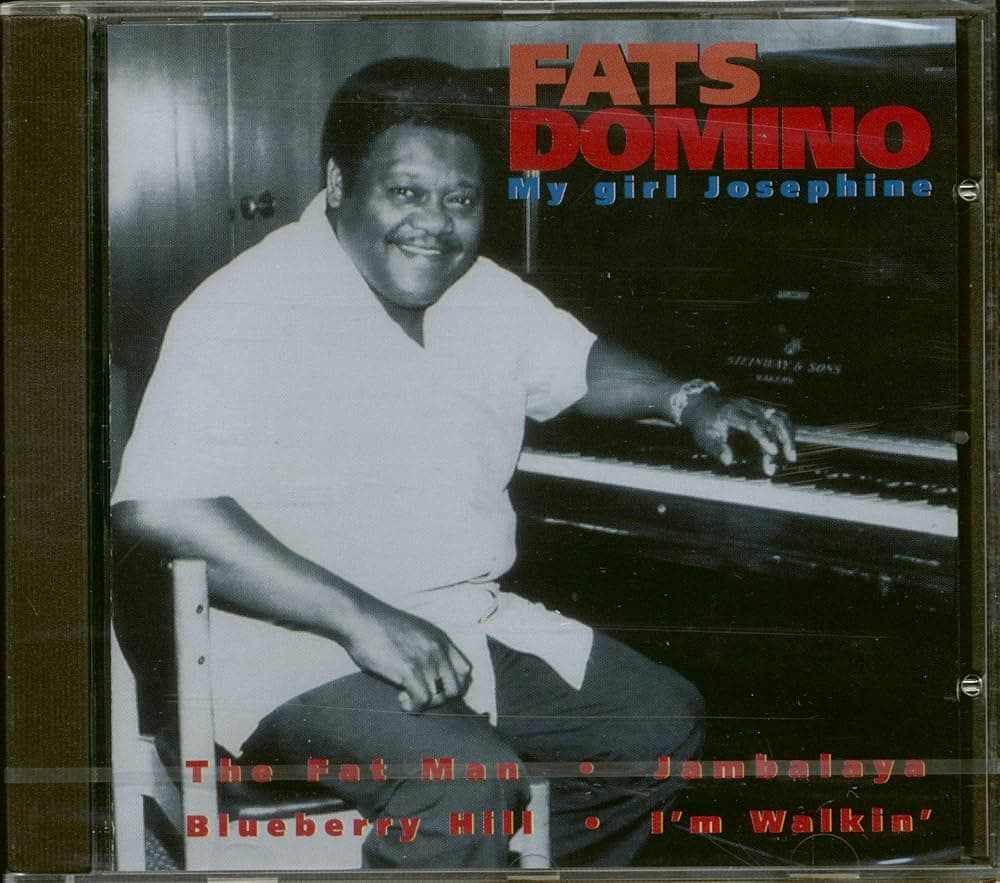
The Irresistible Charm of the Big Beat: Fats Domino’s “My Girl Josephine”
In the pantheon of early rock and roll, few artists could command a groove with as much effortless joy as Fats Domino. When “My Girl Josephine” was released in 1960, it didn’t just climb to number 7 on the Billboard R&B chart and number 14 on the Hot 100; it became a definitive blueprint for the New Orleans “Big Beat.” For the sophisticated listener who remembers the crackle of a fresh 45rpm record and the magnetic pull of a jukebox, this track is a masterclass in rhythmic economy. It captures “The Fat Man” at a moment of supreme crossover success, delivering a sound that was sophisticated enough for the city and soulful enough for the world.
The story behind “My Girl Josephine” is a testament to the legendary collaboration between Fats and his co-writer/producer Dave Bartholomew. Recorded at the fabled Cosimo Matassa studios in New Orleans, the song is built upon a “double-shuffle” drum beat a rolling, infectious rhythm that feels like a parade moving down Canal Street. For the discerning thính giả who appreciates the technical “bones” of a hit, the brilliance lies in the piano work. Fats employs his signature triplet style, but with a percussive “honky-tonk” edge that perfectly complements the honking baritone saxophone. The high-fidelity warmth of the original analog recording preserves that “wooden” room sound, making the listener feel as though they are standing right in the middle of a vibrant, mid-century studio session.
For those of us who have lived through the many “tempos” of life, the meaning of “My Girl Josephine” is found in its playful, unabashed celebration of devotion. The lyrics are simple, almost nursery-rhyme-like in their cadence, yet they carry the genuine warmth of a man who is utterly smitten.
“Hello, Josephine! How do you do? / Do you remember me, baby? I remember you.”
To a listener with decades of experience, these words evoke the sweet, uncomplicated nostalgia of a first encounter or a long-lost summer love. Fats’ delivery is characteristically “easy” he doesn’t strain or shout; he simply invites the listener into his happiness. It is a soulful, rhythmic reminder that the best parts of life are often the ones that don’t require complex explanations. Through the lens of our gathered years, this song serves as a sanctuary of pure pop-rock joy, reflecting a time when the “Big Beat” was the heartbeat of a generation.
Revisiting “My Girl Josephine” today is an exercise in profound aesthetic pleasure. In an era of over-produced digital tracks, the organic “swing” of this recording stands as a glowing ember of authentic artistry. For the discerning reader, this piece remains a testament to the power of a “simple” song played with world-class skill. Fats Domino didn’t just play the piano; he captured the spirit of a city and the optimism of an era, leaving us with a rhythmic masterpiece that continues to make the world feel a little brighter. It is a timeless invitation to tap our feet and remember that, sometimes, all you need is a great groove and a girl named Josephine to make everything feel right.