
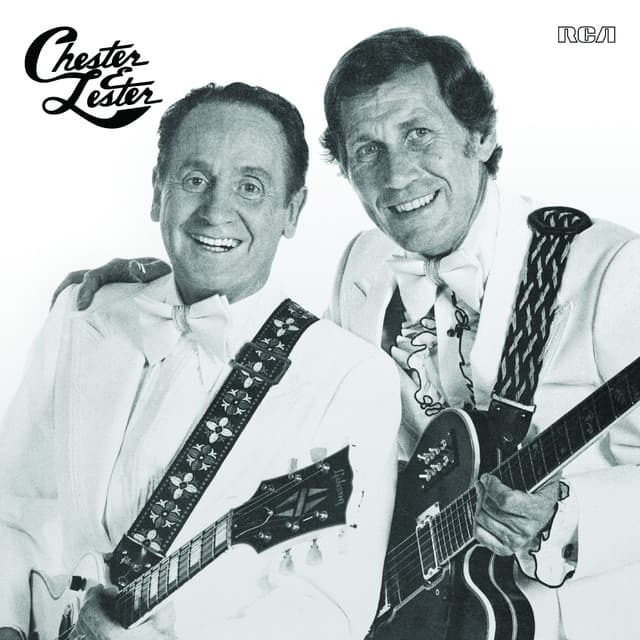
A Dialogue of Two Legends: The Whispering Strings and Timeless Virtuosity of a Masterful Guitar Conversation
When two titans of the six-string world sit down together, the result is rarely just a performance; it is a historical event. Such was the case in 1976 when the “Country Gentleman” Chet Atkins and the “Wizard of Waukesha” Les Paul joined forces for their landmark collaborative album, Chester & Lester. The opening track, “Avalon,” is a breathtaking display of musical telepathy that immediately captured the hearts of critics and aficionados alike. The album itself was a massive success, winning the Grammy Award for Best Country Instrumental Performance in 1977 and peaking at number eleven on the Billboard Country Albums chart. For listeners who appreciate the nuances of tone and the elegance of a well-placed note, “Avalon” stands as a peak of instrumental storytelling a playful, sophisticated, and deeply nostalgic journey back to a jazz standard first popularized in 1920 by Al Jolson.
The story behind the recording of “Avalon” is as charming as the music itself. By the mid-70s, Les Paul had largely retreated from the limelight, living a quiet life in New Jersey. Chet Atkins, a longtime disciple of Les’s revolutionary recording techniques and solid-body guitar designs, managed to coax his idol back into the studio at RCA’s “Studio B” in Nashville. The sessions were famously loose and improvisational. Unlike the heavily produced tracks of the era, Atkins insisted on keeping the tape rolling between takes. On “Avalon,” you can hear the audible chemistry the lighthearted banter, the chuckles, and the spontaneous competitive spirit as they trade licks. It wasn’t a stiff professional obligation; it was two old friends rediscovering the joy of play, proving that true mastery never loses its sense of wonder.
Technically, “Avalon” serves as a fascinating contrast in styles that merged into a singular, harmonious voice. Chet Atkins brought his precise, thumb-picking Nashville style, characterized by a clean, warm tone and impeccable rhythmic clarity. In contrast, Les Paul brought his signature jazz-inflected runs, rapid-fire trills, and the unique, bright “slapback” echo he pioneered. As they navigate the familiar melody of the 1920s classic, the song becomes a bridge between eras. It honors the Tin Pan Alley roots of the composition while infusing it with the technical sophistication of mid-century guitar excellence. The “meaning” of this version of “Avalon” isn’t found in lyrics, but in the respect and mutual admiration evident in every bar. It is a celebration of a life dedicated to a craft.
For the sophisticated listener, hearing “Avalon” is an exercise in auditory memory. It evokes an era when musicianship was measured by the touch of a finger on a steel string rather than digital manipulation. There is something profoundly moving about the way the two men “speak” to each other through their instruments. It reminds us that while technology and trends move at a breakneck pace, the human element the soul in the fingertips is what truly endures. The song carries a breezy, Mediterranean warmth (befitting the fictional island of Avalon), offering a respite from the complexities of modern life. It is music for a quiet afternoon, perhaps with a view of a garden or a well-loved book in hand, allowing the mind to drift back to the concerts, the record stores, and the sheer magic of discovering these sounds for the first time.
Today, the Chester & Lester sessions, and “Avalon” in particular, are viewed as a “masterclass in the art of the duet.” It remains a vital part of the Chet Atkins and Les Paul legacy, representing a moment where the teacher and the student met as equals. The recording captures a fleeting brilliance that feels both effortless and incredibly complex. To listen to it now is to be invited into that Nashville studio, to sit in a corner and watch two geniuses at work, reminding us that beauty is found in the details—the slight vibrato, the daring improvisation, and the shared smile between two legends who knew they were making something that would last forever.