
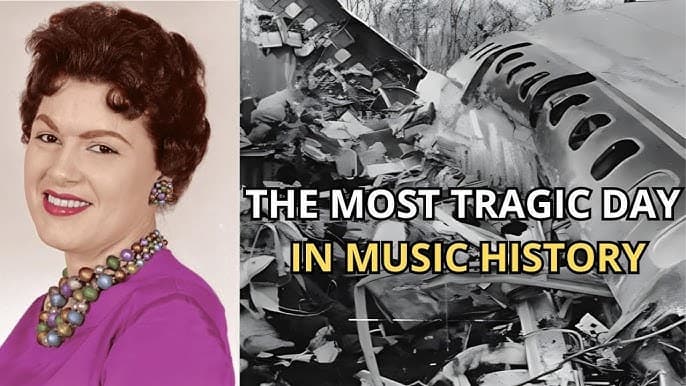
For more than sixty years, the death of Patsy Cline has lingered in the public imagination as something heavier than a tragic accident. It was not only the sudden loss of a beloved voice. It was the sense that her life and career had been moving through a series of narrow escapes, as if fate had been circling her long before it finally caught up.
Patsy Cline died on March 5, 1963, at just 30 years old, when the small plane carrying her home from a benefit concert crashed in bad weather. She was at the height of her powers, redefining what a female country singer could sound like and how far she could reach. The shock of her death was immediate, but what followed was something deeper: a lingering question of inevitability. Looking back, many fans and historians cannot help but notice how often she had already stared death down and walked away.
The Final Flight
The flight that took Patsy Cline’s life was not a commercial airliner but a small private aircraft. There was no flight data recorder, no cockpit voice recorder, and no detailed reconstruction of the final minutes. What investigators could piece together came from weather reports, radar data, and the wreckage itself.
The conditions that night were severe. Heavy rain, strong winds, low visibility, and thick cloud cover made flying especially dangerous for small aircraft. Multiple people advised against flying. Some urged delaying the trip until morning. Patsy herself reportedly considered staying behind. But the decision was made to go.
The most widely accepted explanation is spatial disorientation. In poor visibility, without a clear horizon, pilots can lose their sense of direction, especially if they are not extensively trained in instrument-only flying. It is a quiet, terrifying possibility: no explosion, no dramatic failure, just a gradual loss of orientation until the ground arrives without warning.
There was no evidence of mechanical failure. No sign of sabotage. No hidden conspiracy. And yet, the absence of definitive answers left room for something else to grow. Not suspicion, but a haunting sense of unfinished business.
A Career Built After Surviving Death
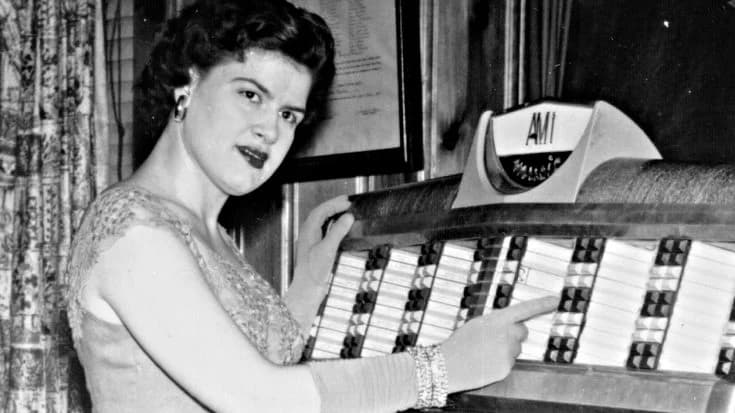
What makes Patsy Cline’s death feel especially fated is the fact that she had already survived events that should have ended her life.
In 1961, just two years before the plane crash, she was involved in a devastating head-on car collision. The impact was severe. Patsy was thrown against the windshield, suffering a broken wrist, a fractured hip, deep facial cuts, and internal injuries. Doctors were uncertain whether she would survive.
She did survive, but recovery was slow and painful. She spent weeks in the hospital and months healing. During that time, she was forced into silence. She could not sing. She could barely move. For a singer whose voice was her identity, the enforced stillness was brutal.
And yet, when she returned, something had changed.
Her voice sounded deeper, richer, more controlled. Whether this was due to physical changes after the accident or emotional transformation remains debated, but many listeners believe her post-accident recordings carry a new gravity. Songs recorded after her recovery feel more assured, more emotionally grounded, as if she had already crossed some invisible line.
In hindsight, that accident reads like a warning that was ignored or a rehearsal for what was to come. She had been given another chance, and she used it with astonishing clarity.
Living as If Time Was Limited
Those close to Patsy Cline often described her as someone who lived intensely, almost urgently. She worked relentlessly. She traveled constantly. She pushed through illness and exhaustion. After surviving the car crash, she seemed less interested in caution and more committed to living fully.
There are accounts of her speaking openly about death, sometimes joking about it, sometimes treating it as an unavoidable companion. This was not morbid obsession. It was acceptance. She had already been close enough to see how thin the line really was.
Her determination to fly on that final night reflects this mindset. Not recklessness, but resolve. She had commitments. She had responsibilities. And perhaps, deep down, she believed that if death had wanted her already, it would have taken her in that hospital bed years earlier.
This belief is tragically human. Many survivors of near-death experiences carry a sense of borrowed time, sometimes accompanied by an unconscious feeling of invincibility. Patsy Cline was no exception.
Why the Mystery Persists
There is nothing sensational about the facts of the crash, and yet the story refuses to fade. This is because mystery does not always require unanswered technical questions. Sometimes it lives in emotional gaps.
We do not know what Patsy Cline was thinking as the plane climbed into the storm. We do not know whether she hesitated at the last moment. We do not know whether fear crossed her mind or whether she felt calm, even resigned.
What we do know is that she had already escaped death once, in a way that reshaped her art. That knowledge changes how we hear her music. Songs recorded after her accident feel like messages sent ahead of time, filled with composure rather than panic.
This is why her death feels predestined to so many listeners. Not because it was written, but because her life seems to point toward it in retrospect, as if the narrative only makes sense once the ending is known.
The Music Left Behind
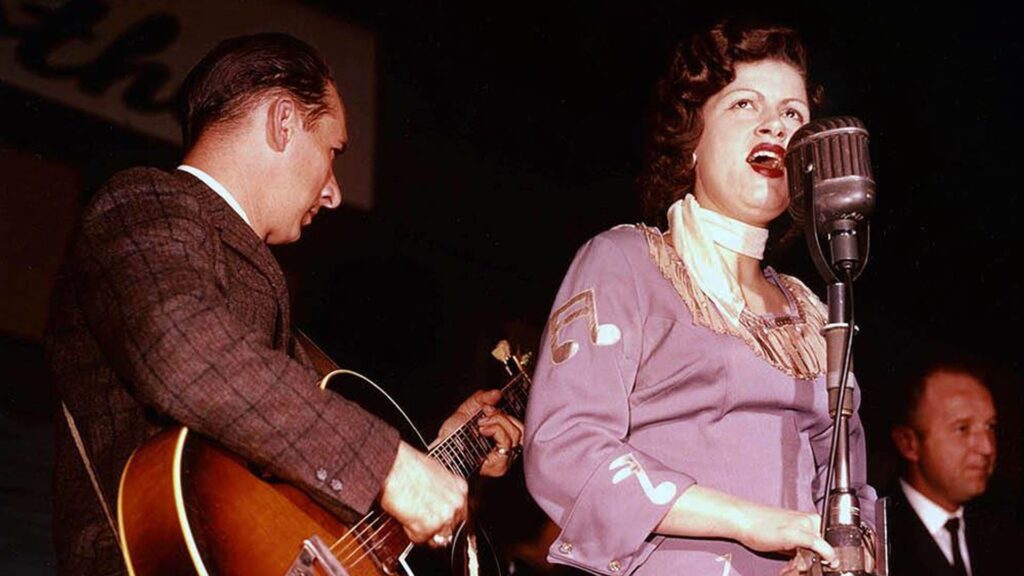
Patsy Cline did not leave behind an enormous catalog by modern standards. Her career was brief, her time limited. But what she recorded carries disproportionate weight.
Her songs are not hysterical or melodramatic. They are controlled, dignified, and emotionally precise. Even when she sings about heartbreak, there is strength in her delivery. This restraint is what makes her music feel timeless.
Knowing how her life ended adds another layer. Each song becomes both a performance and a reminder. Not of death itself, but of awareness. She sang as someone who understood fragility, not intellectually, but physically.
In this sense, her music and her death are inseparable. The same calm acceptance that defines her vocal style also defines how people remember her passing.
Fate or Perspective
Was Patsy Cline’s death inevitable? There is no meaningful way to answer that question. Accidents are shaped by choices, conditions, and chance. Nothing mystical needs to be invoked to explain what happened.
And yet, humans search for patterns. When someone survives catastrophe and then dies young, we connect the dots whether they belong together or not. We look backward and see signs that may not have existed at the time.
What matters is not whether fate was real, but how the story feels. And Patsy Cline’s story feels like one of borrowed time used wisely. She did not waste the years she was given after surviving death. She deepened her craft. She strengthened her voice. She left recordings that continue to speak with authority decades later.
In the end, perhaps the most haunting part of her final flight is not the mystery of how it ended, but the certainty of what came before. She had already faced death, survived it, and returned changed. When it finally came back for her, it did so quietly, without drama, leaving behind a voice that sounds as if it already knew how precious every moment was.
That is why the story endures. Not because of unanswered questions, but because Patsy Cline lived, sang, and ultimately departed with the calm assurance of someone who had already looked over the edge and chosen to keep going anyway.
 Oldies Songs