
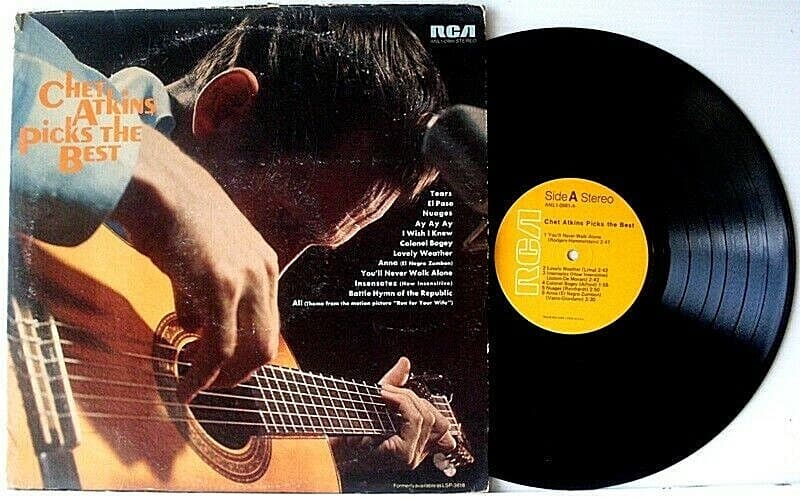
The Cinematic Elegance of a Master: Chet Atkins’ “All”
In the vast and varied landscape of Chet Atkins’ career, there are recordings that stand out not for their “down-home” grit, but for their sheer, cosmopolitan polish. His interpretation of “All,” the theme from the 1966 motion picture Run for Your Wife, is a shimmering example of “Mr. Guitar” in his most sophisticated mode. Written by the prolific Italian composer Nino Oliviero (famed for “More”), the piece was transformed by Chet into a high-fidelity instrumental that bridges the gap between Nashville and the grand cinemas of Rome and London. For the sophisticated thính giả who appreciates the lush, orchestral side of the 1960s, this track is a sanctuary of melody—a reminder of a time when the guitar was a lead voice capable of carrying the emotional weight of a silver-screen romance.
The story behind “All” lies in Chet’s uncanny ability to adapt to the “Easy Listening” and “Space Age Pop” trends of the mid-60s without losing his signature identity. Recorded during a period when he was frequently collaborating with arranger Anita Kerr and the RCA Victor orchestra, the track features a rich, bed of strings that allows Chet’s clean, bell-like tone to float effortlessly above. For the discerning listener, the brilliance of this arrangement is found in the “sustain” and the “space.” Chet treats the melody with a rhythmic, soulful reverence, using subtle vibrato and his impeccable thumb-bass technique to give the song a steady heartbeat. It is a masterclass in the “Nashville Sound” at its most cinematic, proving that technical precision can coexist beautifully with grand, emotional storytelling.
For those of us who have navigated the decades and seen the world grow louder and more chaotic, the meaning of a piece like “All” is found in its “unhurried grace.” It evokes an era of mid-century elegance—of well-tailored suits, wide-screen vistas, and a certain kind of professional poise that has become increasingly rare.
“Chet’s guitar doesn’t just play the notes; it breathes them, capturing the ‘all-encompassing’ nature of the title with a quiet, controlled confidence.”
To a listener with a lifetime of chapters already written, this track serves as a glowing ember of nostalgia. It reminds us of the power of a “simple theme” to conjure up an entire world of feeling. Atkins’ delivery is masterfully understated; he allows the melody to speak for itself, imbuing every phrase with a sense of dignity and “earned peace.” Through the lens of our gathered years, this song is a rhythmic anchor, a testament to the fact that excellence doesn’t always need to be flashy—it just needs to be true.
Revisiting “All” today on a high-quality system is a visceral journey into the golden age of studio recording. The organic warmth of the 1960s RCA “Living Stereo” era provides a depth of sound that digital modernism often struggles to replicate. For the discerning reader, this recording remains a testament to the versatility of a “Certified Guitar Player.” Chet Atkins didn’t just pick tunes; he curated moods, leaving us with a soulful legacy that tells us that no matter where the journey takes us, there is always room for a little cinematic beauty. It is a timeless invitation to close your eyes, let the strings swell, and find the “all” in a single, perfect chord.