
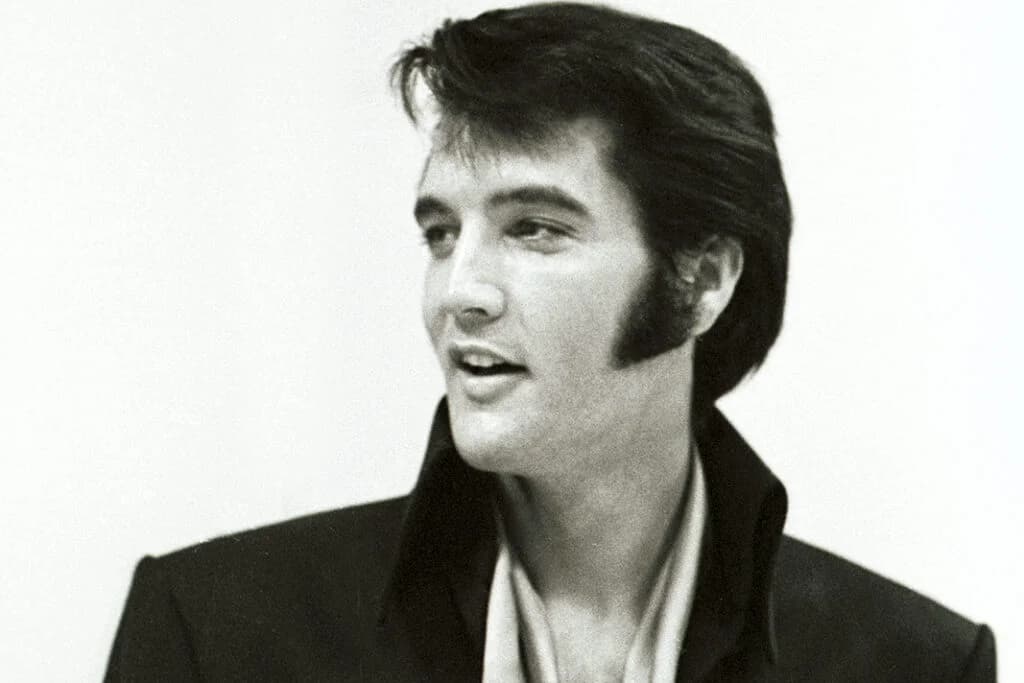
A stark, compassionate cry against the cycle of poverty “In the Ghetto” by Elvis Presley
“In the Ghetto” is a sobering reflection on systemic poverty and social neglect, where Elvis Presley lends his powerful voice to the plight of those trapped in a cycle that repeats itself.
Released on April 14, 1969, the single marked a significant moment in Elvis’s career it was recorded at American Sound Studio in Memphis during the same sessions that produced From Elvis in Memphis. The song climbed the Billboard Hot 100, peaking at #3, becoming his first Top 10 hit in the U.S. in several years. Internationally, it resonated widely: in the UK, it reached #2 on the Singles Chart.
Written by Mac Davis, “In the Ghetto” was originally titled “The Vicious Circle.” The song begins with a mother in a Chicago slum giving birth to another child amid grinding poverty: “As the snow flies on a cold and gray Chicago mornin’ / A poor little baby child is born in the ghetto.” The lyrics chronicle the boy’s life he grows hungry, learns to steal and fight, and eventually, in desperation, takes to crime. In a tragic turning point, he buys a gun and steals a car, but his life ends violently, alone in the street. The final verse suggests the cycle will repeat, closing with the birth of another child in the same unforgiving environment.
Elvis’s decision to record “In the Ghetto” reflects more than just a musical choice it was a socially conscious moment. Having struggled with poverty himself in his youth, he connected deeply to Davis’s narrative. During the Memphis sessions on January 20, 1969, Elvis reportedly recorded as many as 23 takes, seeking to capture the emotional sincerity the song demanded. Under producer Chips Moman, the arrangement features subtle strings, soft piano lines, and restrained backing vocals it’s not flashy, but it perfectly frames Elvis’s voice, giving full weight to the message.
The significance of “In the Ghetto” lies in its courage to confront real issues poverty, violence, and societal neglect at a time when many popular songs focused on love or dance. Elvis used his platform to draw attention to a problem that is deeply human and persistent. By telling the story through the eyes of individuals, he personalizes what might otherwise feel like distant social statistics.
Critics have noted how this song stands among Elvis’s most socially relevant works. Some listeners at the time considered it controversial, though many appreciated the empathy he brought to such a difficult subject. Over decades, “In the Ghetto” has become one of his signature songs not just for its chart success, but for the way it resonates emotionally and morally.
For older listeners especially, this song often brings a wave of nostalgia intertwined with weight: memories of turbulent times, of hearing powerful voices on the radio that dared to speak of things bigger than love or fame. Elvis’s performance in “In the Ghetto” feels like a moment of real reckoning a gentle but firm plea for compassion, action, and awareness.
In the end, Elvis Presley’s “In the Ghetto” remains a timeless and profound statement a haunting reminder that some circles of struggle are vicious indeed, and a call for listeners to look beyond themselves and see the humanity in every life, no matter how marginalized.