
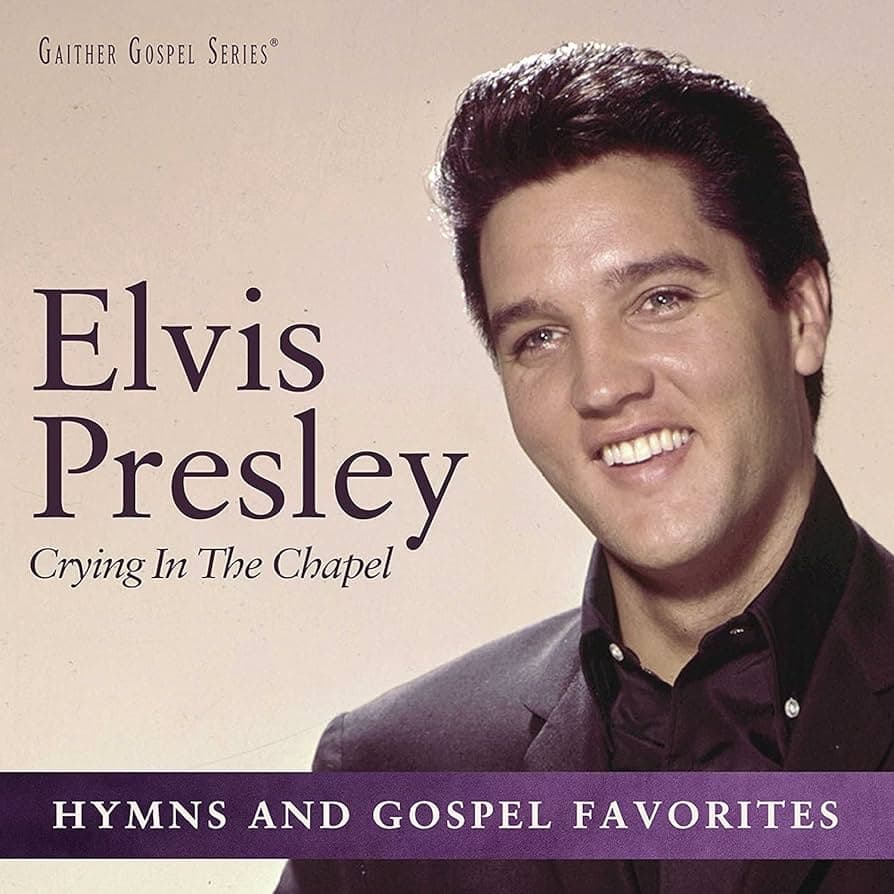
A humble, heartfelt plea for peace and solace expressed through tears of faith “Crying in the Chapel” by Elvis Presley
“Crying in the Chapel” is a deeply spiritual and emotionally sincere hymn, in which Elvis Presley vulnerably acknowledges that true peace comes not from worldly success, but from quiet moments of prayer and devotion.
Originally written by Artie Glenn for his son Darrell in the early 1950s, the song tells of a simple chapel where people gather to pray, find contentment, and lay down their burdens before God. Elvis recorded his version on October 31, 1960, with backing vocals by The Jordanaires and a delicate arrangement featuring guitar, piano, and soft harmonies. Interestingly, despite completing three takes, Elvis was initially unwilling to release the song he and his team weren’t fully satisfied and shelved it for several years.
It wasn’t until April 6, 1965, that RCA finally issued “Crying in the Chapel” as a single, part of their Gold Standard Series. To the surprise of many, it proved to be a major hit: it climbed to #3 on the U.S. Billboard Hot 100, and astonishingly dominated the Easy Listening chart, holding the #1 spot for seven weeks. Across the Atlantic, the song resonated deeply, claiming #1 on the UK Singles Chart.
Beneath its spiritual veneer, the song’s meaning is profound and universal. Elvis’s voice aches with both joy and longing as he sings, “The tears I shed were tears of joy … I know the meaning of contentment now.” Using a humble chapel as a metaphorical sanctuary, he expresses how this sacred space became a refuge a place where “humble people go to pray” and where one can find solace in shared faith. The lines “I searched and I searched, but I couldn’t find / No way on earth to gain peace of mind” reflect a deep human conviction: that inner peace and spiritual comfort aren’t found in wealth or fame but are given through true humility and devotion.
The origin story of the song adds another layer of meaning. Artie Glenn, the songwriter, reportedly wrote it after a time of personal crisis recovering from spinal surgery and vowing to draw closer to God. The “chapel” in the lyrics is said to be inspired by a modest Baptist church in Fort Worth, Texas, where Artie found strength and faith. When Elvis recorded his version, he brought his own humility to the performance, delivering the lines with a reverent sincerity that transcends the spotlight and public persona.
Musically, Elvis’s rendition is restrained yet powerful. The arrangement is spare gentle piano, soft backing voices, and light acoustic accompaniment allowing his voice to carry the emotional weight of the message. This simplicity mirrors the lyric’s themes: a “plain and simple chapel” where faith, not glamour, is central.
Over time, “Crying in the Chapel” has become one of Elvis’s most beloved gospel performances. It was later included on his 1967 gospel album How Great Thou Art, further solidifying its place among his spiritual repertoire. The song also became his first million-seller since “Return to Sender,” marking a commercial revival rooted not in rock ’n’ roll, but in heartfelt faith.
For listeners who remember radio stations filled with rich voices and the soft glow of vinyl, this song brings a wave of nostalgia not only for Elvis’s voice but for a time when songs of faith spoke just as powerfully as pop anthems. There is comfort in his voice, as if he’s quietly guiding you to a place where burdens are lightened, and hearts are renewed.
In essence, Elvis Presley’s “Crying in the Chapel” is more than a gospel hymn it is a moment of confession, of healing, and of humble surrender. It reminds us that solace can be found in the quietest corners, and that tears shed in a chapel may be some of the most peaceful of all.