
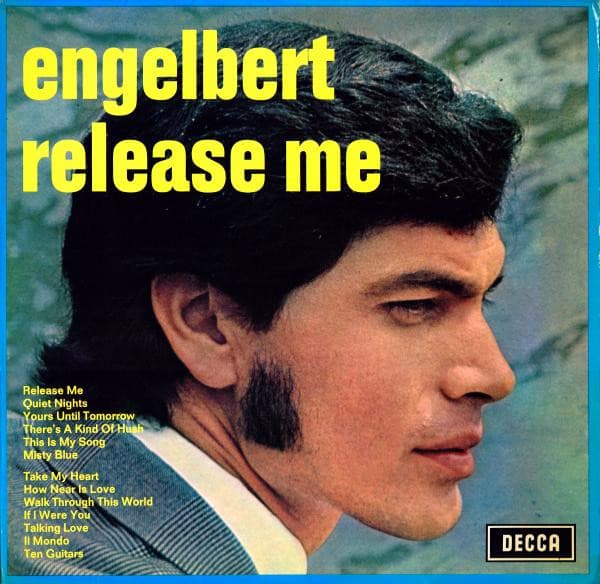
A Plea for Freedom Drenched in Velvet Melancholy
When Engelbert Humperdinck released “Release Me” in 1967, few could have foreseen that this elegantly sorrowful ballad would not only catapult him into international stardom but also alter the course of British pop history. Issued as a single from his debut album Release Me, the song soared to number one on the UK Singles Chart, famously preventing The Beatles’ “Penny Lane” / “Strawberry Fields Forever” double A-side from reaching the top spot. In the United States, it climbed into the Billboard Hot 100’s upper reaches and became a defining moment of adult contemporary music’s golden age. This was not merely a hit; it was an anthem of heartbreak wrapped in velvet—an intersection of crooner tradition and modern emotional realism.
The origins of “Release Me” trace back to the early 1950s, written by Eddie Miller, Robert Yount, and Dub Williams. Originally conceived as a country tune, it found new life in Humperdinck’s hands through a lush orchestral arrangement and his extraordinary vocal restraint—a voice that could tremble with passion yet remain composed enough to convey dignity amid despair. In his version, the song transcended genre boundaries: part torch song, part confession, and entirely timeless in its emotional resonance.
What gives “Release Me” its enduring power is not just the melody’s aching grace but the emotional paradox at its core. It is a plea for liberation—one lover asking another to let go—yet sung with such tenderness that it becomes less a demand than an act of mercy. Humperdinck inhabits this contradiction with masterful control: each phrase unfurls like silk concealing steel beneath. His baritone carries both guilt and longing, evoking that moment when love decays into memory but still refuses to die quietly. The listener becomes complicit in this emotional negotiation, drawn into the quiet dignity of someone who loves enough to leave.
Musically, the arrangement exemplifies late-1960s pop craftsmanship: sweeping strings cradle the vocal line while gentle brass accents lend grandeur without overwhelming intimacy. The pacing—neither hurried nor languid—mirrors the tension between desire and duty. In an era when rock was turning louder and more rebellious, Humperdinck’s elegance was almost subversive; he reminded audiences that emotional intensity could be expressed through restraint rather than volume.
Decades later, “Release Me” remains more than a sentimental relic—it is a testament to how sincerity can outlast fashion. Its success marked a turning point for British popular music, proving that traditional balladry still had profound cultural weight even as youth culture surged around it. To listen now is to step into a world where heartbreak is handled with poise, where love’s ending is not shouted but whispered with grace—and where freedom itself sounds like forgiveness set to music.
 Timeless Melodies