
The Architect of American Fingerstyle: Merle Travis and the High-Fidelity Wizardry of “Cannonball Rag” and “Who’s Sorry Now”
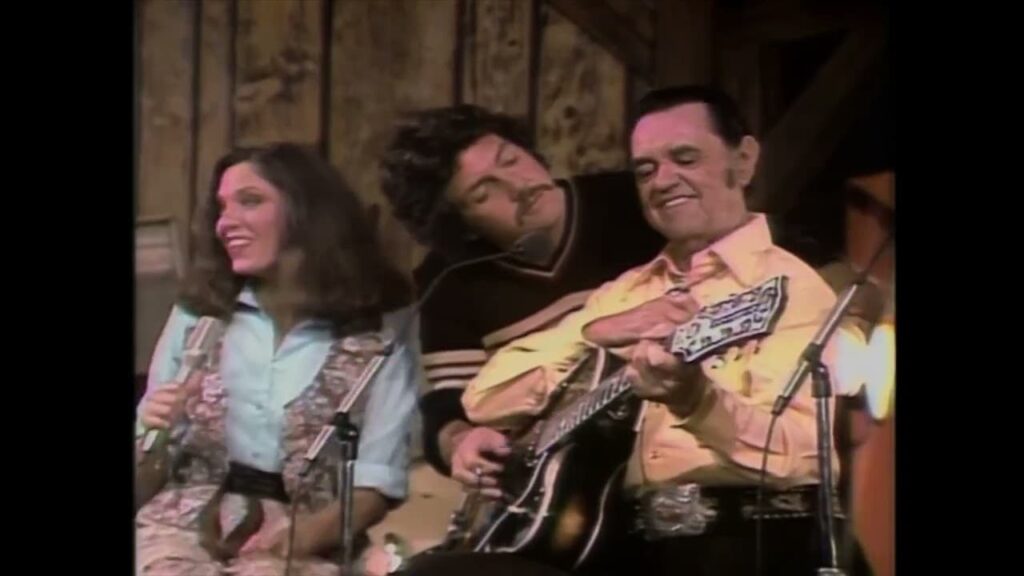
When tracking the foundational architecture of twentieth-century American guitar music, certain historic television performances emerge as definitive, towering monuments to sheer instrumental genius, absolute rhythmic independence, and unvarnished country showmanship. A legendary peak of real-time guitar mastery was brilliantly captured during a 1970s variety television broadcast, featuring the incomparable pioneer Merle Travis. Preserved for the global listening community on the definitive Vestapol archival DVD collection Sixteen Tons, this priceless video tracking documents Travis delivering a spectacular double-feature showcase: his iconic, blistering instrumental piece “Cannonball Rag” followed by a beautifully swung, intricate solo arrangement of the traditional pop standard, “Who’s Sorry Now.” Stepping under the warm studio spotlights with his trademark humility, the Country Music Hall of Fame legend stripped away any need for orchestral safety nets—proving to a multi-generational audience why his revolutionary right-hand mechanics permanently altered the DNA of acoustic and electric guitar playing forever.
The notable historical and educational weight surrounding this specific 1970s broadcast highlights an era when the architects of modern root music were captured with incredible clarity on analog tape. By the time this tracking was filmed, Merle Travis had already achieved an immortal legacy as a premier songwriter—having penned foundational anthems like “Sixteen Tons” and “Dark as a Dungeon”—and as the singular vanguard who popularized the iconic “Travis picking” style. Captured beautifully with a pristine technical layout, this television mix represents a magnificent victory of classic live sound engineering. Free from the sterile digital cosmetics or artificial pitch alterations of the modern era, the microphone placement perfectly isolates the woody, immediate acoustic snap of his heavy thumbpick and the crisp articulation of his index finger against the strings, delivering an exceptional high-fidelity presence that echoes with the authentic wisdom of a true master.
The behind-the-scenes fascination of this live medley lies in the jaw-dropping contrast between Merle’s relaxed, conversational stage demeanor and the sheer, mind-boggling complexity of his physical execution. The performance kicks off with “Cannonball Rag,” a lightning-fast showcase that functions as an absolute masterclass in syncopation and thumb-independence. Rather than relying on a full rhythm section to maintain the drive, Travis acts as his own bass player, drummer, and lead soloist simultaneously. In a magnificent showcase of generational artistry, this specific 1970s television tracking often featured Merle sharing the studio space with his equally brilliant son, guitar virtuoso Thom Bresh, creating a powerful, deeply comforting display of musical lineage as their instruments locked into a flawless, driving pocket that radiated pure creative joy.
For the serious musicologist and the sophisticated guitarist who treasure the deep technical nuances of classic fingerstyle mechanics, Travis’ execution on “Who’s Sorry Now” remains an absolute revelation. Written originally in 1923 by Ted Snyder, Bert Kalmar, and Harry Ruby, the standard is usually framed as a dramatic vocal ballad, but Merle completely reimagines the piece through a swung, ragtime-inflected country-jazz lens. Utilizing only his thumb and index finger—a striking restriction that baffles modern guitarists who rely on all four fingers—Travis drives a steady, walking bass line on the lower strings while his index finger simultaneously plucks out intricate jazz chord modulations and cascading lead counter-melodies on top. The visible sense of ease, the dry wit flashing in his eyes, and the organic slide of his fingers across the frets create an authentic intimacy that computer-sequenced modern tracking simply cannot duplicate.
To turn the volume all the way up and re-engage with the magnificent archival treasures of Merle Travis’ 1970s television delivery today is to be swept away by a powerful wave of sweet nostalgia and profound gratitude. Watching this premier vanguard effortlessly command the intricate syncopations of these timeless selections transports the educated viewer back to a highly sophisticated era of musical history—a time when an iconic pioneer could completely captivate an international audience through the sheer strength of absolute sincerity, flawless live precision, and pure creative genius. This definitive milestone stands as a permanent, highly reflective reminder that real, enduring stardom requires no artificial synthetic enhancements to command our deepest admiration. It leaves the international listening community with a timeless reminder that when a beautiful melody is delivered straight from the passionate, resilient soul of a true legend, its magic possesses an immortal strength that will continue to cross generations, warm our hearts, and shine forever.