
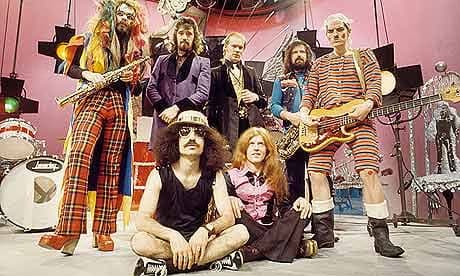
A vibrant tapestry of glam rock nostalgia that captures the whimsical pulse of a bygone era with theatrical brilliance.
When we look back at the kaleidoscope of the 1970s, few figures loom as large or as colorful as Roy Wood. After his foundational work with The Move and co-founding Electric Light Orchestra (ELO), Wood veered into a world of sonic maximalism with his band, Wizzard. In 1975, amid a flurry of face paint and multi-instrumental chaos, the band released “Main Street,” the title track of an album that would eventually become a “lost” treasure of the era. While the song did not mirror the chart-topping heights of their earlier anthem “See My Baby Jive,” its release marked a sophisticated shift toward a jazz-fusion and rock-and-roll hybrid that showcased Roy Wood as the eccentric architect of British pop.
The story behind “Main Street” is one of artistic ambition clashing with the realities of the music industry. Recorded primarily in 1975, the track was intended to lead a more musically complex direction for the group, moving away from the “Wall of Sound” pop parodies into a gritty, brass-heavy exploration of urban life. However, due to internal band shifts and record label delays, the Main Street album was shelved for decades, finally seeing the light of day in 2000. For the discerning listener, this makes the song feel like a time capsule—a message in a bottle from the height of the glam era that arrived long after the party had ended, yet perfectly preserved the energy of the time.
The meaning of “Main Street” is a vivid, almost cinematic stroll through the sights and sounds of the city. For a generation that remembers the bustling downtowns of the mid-70s, the lyrics evoke a sense of place that is both gritty and magical. It is an ode to the “main drag”—the center of social life where the neon flickered and the music from shop doors provided the soundtrack to our youth. There is a certain intellectual playfulness in the arrangement; the heavy use of saxophones and complex rhythmic shifts reflects the transition from the simple melodies of the sixties to the more experimental, boundary-pushing compositions of the seventies.
For the mature listener, revisiting “Main Street” is an exercise in joyous reflection. It represents a time when music wasn’t just heard; it was a spectacle. Roy Wood’s production style, characterized by its dense layers and “everything-but-the-kitchen-sink” approach, mirrors the complexity of our own memories. Just as the song blends different genres—bits of 1950s rock, 1940s big band, and 1970s glam—our lives are a blend of different eras, each leaving a distinct mark on our character.
There is a bittersweet quality to hearing “Main Street” today. It reminds us of a period of immense creative freedom, where artists like Wizzard weren’t afraid to be loud, strange, and unashamedly theatrical. It brings to mind the old record shops, the smell of vinyl, and the thrill of discovering an artist who seemed to be building an entire world just for us. The song stands as a vibrant monument to a time when the “main street” of our lives was wide, bright, and full of endless, melodic possibilities. It is a reminder that even if a song takes twenty-five years to truly be heard, the soul within the notes never ages.