
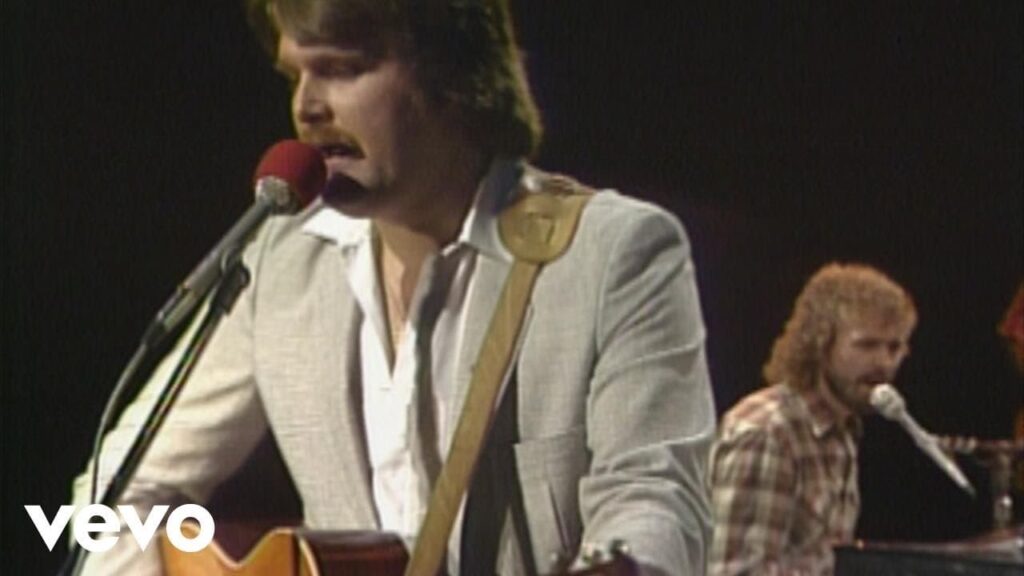
A vibrant masterclass in bluegrass-infused heartache, where the high lonesome sound reclaimed the airwaves and restored the soul of traditional country music.
In the early 1980s, the landscape of Nashville was undergoing a profound identity crisis, caught between the polished “Countrypolitan” strings of the past and the slick pop influences of the future. Into this void stepped a young man with a mandolin and a mission. When Ricky Skaggs released “Crying My Heart Out Over You” in 1981, it felt like a lightning bolt from the Appalachian hills striking the heart of Music City. Originally a classic bluegrass heartbreak anthem written by Carl Butler, Lester Flatt, Earl Scruggs, and Sherry Lynn, the song was reborn in the hands of Skaggs. For the listener who remembers the first time they heard those unmistakable fiddle lines cutting through the radio static, this track represents the exact moment when “New Traditionalism” was born, proving that the old ways still held a powerful, rhythmic truth.
The commercial impact of “Crying My Heart Out Over You” was nothing short of revolutionary. It soared to No. 1 on the Billboard Hot Country Singles chart in 1982, becoming Ricky Skaggs’ first chart-topping hit and the first bluegrass-oriented song to reach that pinnacle in decades. Featured on his seminal album Waitin’ for the Sun to Shine, the track didn’t just top the charts; it changed the trajectory of the genre. It earned Skaggs the CMA Male Vocalist of the Year and Horizon Award, signaling a massive shift back to the roots. The song’s success proved that an audience raised on the high lonesome sound was still there, waiting for someone with enough virtuosity and soul to lead them back to the “well.”
The story behind the song is one of deep-seated reverence and musical lineage. Ricky Skaggs was a prodigy who had shared the stage with Bill Monroe at the age of six. By the time he recorded this hit, he had sharpened his skills with the Country Gentlemen and Emmylou Harris’s Hot Band. He didn’t just cover Flatt & Scruggs; he electrified their spirit for a modern audience. The “Official Video” captured this perfectly, showcasing a clean-cut Skaggs performing with a joy that belied the sadness of the lyrics. It reflects a time when the music industry realized that “tradition” wasn’t a relic of the past, but a living, breathing force. For Skaggs, this song was a declaration that he would carry the torch of his mentors while forging a path that was entirely his own.
Meaningfully, “Crying My Heart Out Over You” explores the timeless, almost ritualistic nature of grief following a lost love. The lyrics describe the physical and emotional toll of a breakup—the sleepless nights and the tears that won’t stop falling. For a mature audience, the song resonates because it doesn’t try to sugarcoat the experience. It uses the “high lonesome” vocal style to give voice to an ache that is universal. As the fiddle and mandolin intertwine in the instrumental breaks, they don’t just provide a melody; they provide a catharsis. It is a song about the resilience required to face one’s own heartbreak, acknowledging that sometimes, the only way out is through the music.
There is an infectious, driving energy in the rhythm—a “bounce” that makes the sadness feel strangely celebratory. Listening to it now, one is struck by the sheer acoustic brilliance of the production. In an era where digital percussion was beginning to take over, Skaggs relied on the woody resonance of the upright bass and the sharp “crack” of the snare. For those of us who have lived through the many cycles of country music, this track is a grounding reminder of what “real” music sounds like. It honors the craftsmen who came before and the artists who refuse to let the fire go out. Ricky Skaggs didn’t just sing a hit; he started a movement, and “Crying My Heart Out Over You” remains the vibrant, soulful heartbeat of that legacy.