
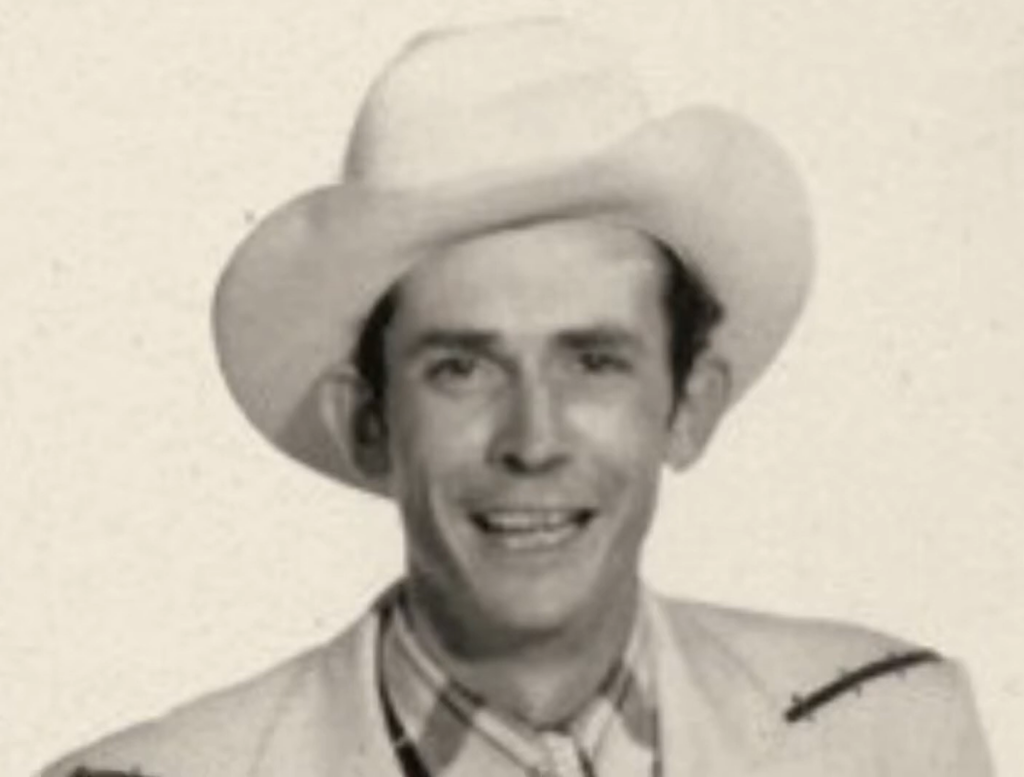
A Timeless Plea in Country Music History
In the twilight of his brief but monumental career, Hank Williams continued to deliver the raw emotion that defined a generation. While high-quality concert footage from 1952 is exceedingly rare, preserved recordings—most notably from his 1951-1952 radio transcriptions—offer a haunting glimpse into the intimate power of Williams’s presence during the final year of his life. Among these treasures, his performances of “Why Don’t You Love Me” stand as a testament to his enduring stage charisma.
Originally released in 1950, “Why Don’t You Love Me” quickly ascended to the top of the U.S. Country and Western charts, securing its place as one of Williams’s definitive number-one hits. Written during a period of personal upheaval, the song masterfully balances themes of romantic confusion with a notably playful, honky-tonk rhythm. This juxtaposition of sorrow and wit became a hallmark of Williams’s songwriting, proving that heartache could still move a dance floor.
His live deliveries during this era stood out not for elaborate production, but for their striking simplicity. Whether backed by his Drifting Cowboys or performing with a lone acoustic guitar, Williams communicated directly with his audience. His vocal delivery—often unpolished yet deeply expressive—reinforced his status as the most influential figure in country music history. Even as his health declined in 1952, his ability to turn a chart-topping single into a shared emotional experience remained intact.
Lyrically, the song explores the perspective of a man questioning the sudden loss of affection. Rather than projecting blame, the narrator turns inward, asking what he may have done wrong. This introspective approach resonated deeply with postwar audiences and continues to connect with listeners decades later. The universal theme of longing ensures the song’s lasting relevance in the Americana canon.
By 1952, despite his struggles, Williams had secured his place as the leading voice of the genre. Historic moments, such as his final televised appearance on the Kate Smith Evening Hour, demonstrated how his music transcended simple studio recordings. He commanded the screen through sheer sincerity and “white lightning” energy, proving that emotional authenticity was his greatest instrument.
Today, these archival recordings serve as vital cultural documents, preserving the artistry of a musician whose journey ended tragically soon. “Why Don’t You Love Me” remains not only a commercial triumph of its era but also a tribute to the power of honest songwriting. More than seven decades later, the voice of Hank Williams continues to echo, reminding us of a time when a simple melody and a vulnerable heart could captivate the world.
 Timeless Melodies