
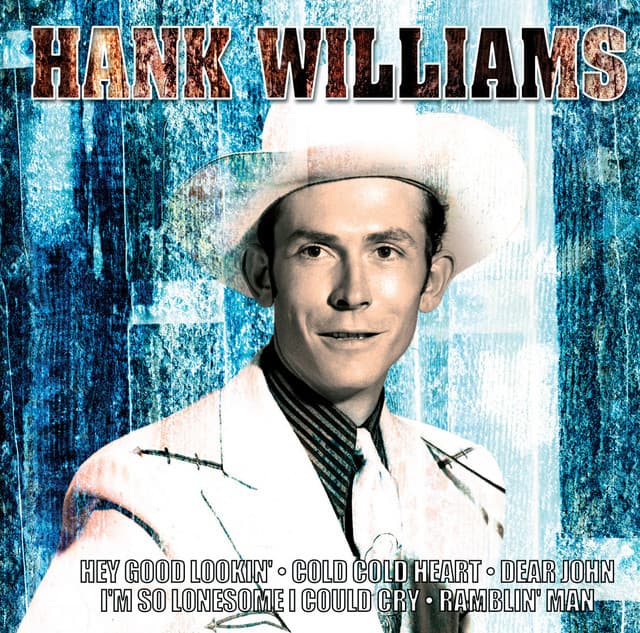
A heartbreak so quiet and enduring that it still echoes in every lonely heart it touches.
When Hank Williams released “Cold, Cold Heart” in 1951, it immediately stood as one of the most emotionally honest songs ever written in country music. The song rose to number one on the Billboard country chart, where it remained for seven weeks, confirming what listeners already felt from the very first verse. This was not just another tale of lost love. It was a confession carved from loneliness, disappointment, and the deep ache of loving someone who could no longer love back.
At the time of its release, Hank Williams was already a towering figure in American music, yet he was also a deeply troubled man. His marriage to Audrey Williams was unraveling, weighed down by emotional distance, misunderstandings, and pain that neither seemed able to heal. “Cold, Cold Heart” emerged directly from this reality. Hank wrote the song after a bitter argument, transforming personal sorrow into universal truth. Rather than disguise his hurt, he laid it bare, choosing restraint over anger, sorrow over accusation.
Musically, the song is deceptively simple. Built on a slow, steady tempo, it allows space for the words to breathe. There is no rush, no attempt to soften the blow. Hank’s voice carries a fragile steadiness, as if he is holding himself together just long enough to tell the story. His delivery is gentle, almost resigned, which makes the pain feel even heavier. He is not pleading. He is acknowledging a truth he has already accepted.
Lyrically, “Cold, Cold Heart” speaks from the perspective of someone who has tried everything. The narrator recalls giving love freely, offering warmth and patience, only to be met with emotional distance. There is no cruelty in his tone. Instead, there is confusion and sadness. He cannot understand how love once shared so deeply could turn so cold. This emotional maturity sets the song apart. It does not blame. It mourns.
One of the most remarkable aspects of the song is its reach beyond country music. Later in 1951, Tony Bennett recorded a pop version of “Cold, Cold Heart,” which climbed to number one on the Billboard pop chart. This was a rare achievement at the time and proved that Hank Williams’ songwriting crossed cultural and musical boundaries. A song born in the honky tonks of the South resonated just as deeply in urban ballrooms and living rooms across America. Heartbreak, it seemed, spoke the same language everywhere.
For Hank Williams, the success of the song brought recognition, but not relief. His personal struggles continued, and the sadness heard in “Cold, Cold Heart” would soon feel prophetic. Listening today, it is impossible not to hear the quiet exhaustion behind his voice. This was not performance sadness. It was lived experience. That authenticity is why the song has never faded.
Over the decades, countless artists have covered “Cold, Cold Heart,” yet few capture the same fragile balance of dignity and despair. Hank’s version remains definitive because it does not try to impress. It simply tells the truth. There is courage in that honesty, especially at a time when men were rarely encouraged to express emotional vulnerability so openly.
Today, “Cold, Cold Heart” stands as one of the great pillars of classic American songwriting. It reminds listeners that heartbreak does not always arrive with anger or drama. Sometimes it arrives quietly, settles in, and stays. Hank Williams gave voice to that kind of pain, the kind that lingers long after love has gone silent. In doing so, he left behind a song that continues to feel personal, timeless, and heartbreakingly human.
 Oldies Songs