
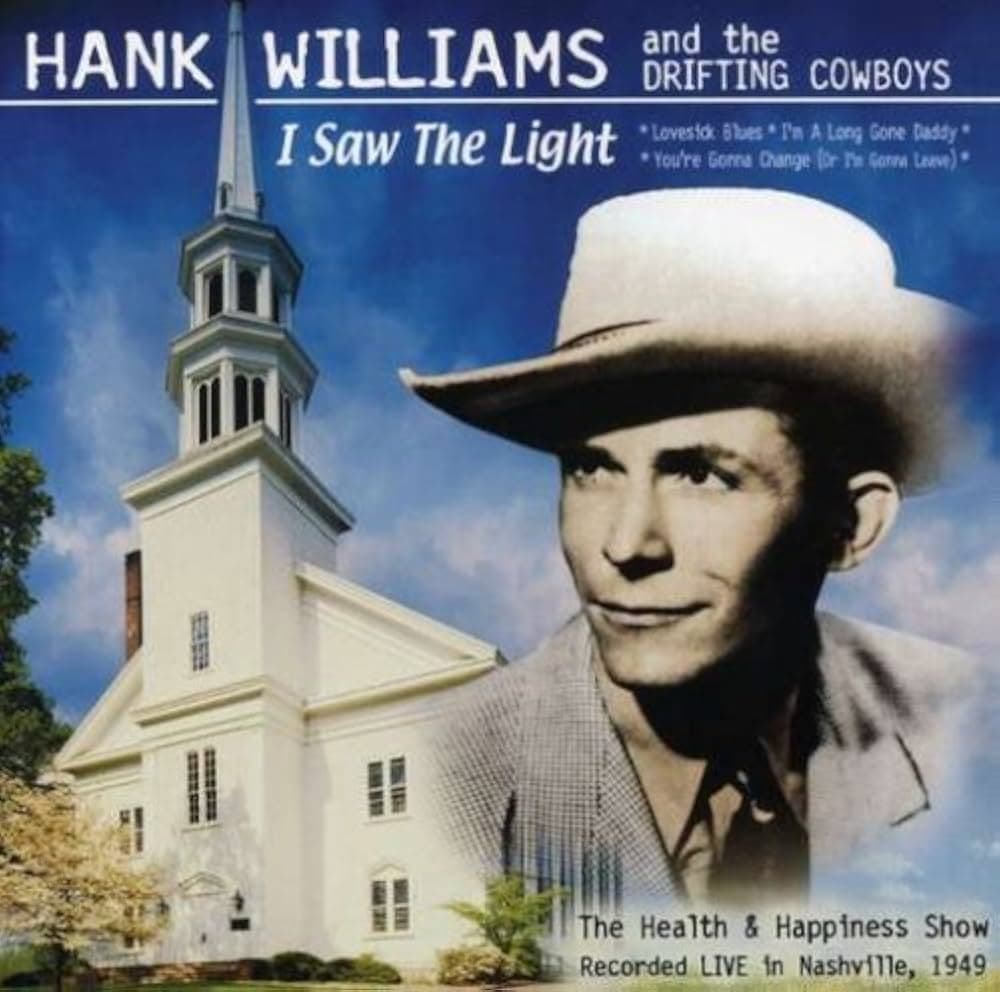
A Beacon of Hope and Redemption in American Music: Hank Williams – “I Saw The Light”
“I Saw The Light” stands among the most enduring and spiritually powerful songs in Hank Williams’ catalogue a hymn-like declaration of redemption that transcends its humble origin to become a foundational cornerstone of country gospel music and an emblem of personal and cultural transformation.
Written and recorded by Hank Williams in 1947 and released as a single in September 1948 with Six More Miles (To the Graveyard) on the B-side, I Saw The Light did not climb high on the charts when it first appeared. Yet its emotional and spiritual resonance quickly outgrew its initial commercial reception, ultimately securing its place as one of Williams’ most beloved and frequently performed songs.
The story behind the song’s creation is as poignant as its lyrics. One night in early 1947, Williams was returning from a concert in Alabama with his mother, Lilly, who was driving the car while Hank slept off the road dust and whisky. As they neared Montgomery and the glow of Dannelly Field’s beacon appeared, his mother remarked, “I just saw the light.” That simple observation stuck with him, and soon Williams was crafting what would become a timeless testimony of spiritual awakening.
In I Saw The Light, Williams blends traditional gospel motifs with the rhythms of country and hillbilly blues, creating a hymn that feels both ancient and immediate. The song’s narrative is simple yet profound: a wanderer lost in sin and darkness finds clarity, joy, and salvation through a moment of divine illumination. The refrain “I saw the light, I saw the light / No more darkness, no more night / Now I’m so happy, no sorrow in sight / Praise the Lord, I saw the light” captures the emotional heart of the piece, echoing the biblical theme of spiritual rebirth found in passages such as John’s Gospel.
Although I Saw The Light did not become a major hit at the time of its release, it grew in stature through live performances and covers by other artists. It eventually became a standard in both country and gospel repertoires, sung in churches, summer camps, and concert halls alike. Many listeners came to know Williams not only for his heartbreak ballads and honky-tonk staples but also for the heartfelt sincerity of his spiritual songs.
What makes this song especially poignant is its place within Hank Williams’ own life. Despite its message of spiritual clarity, Williams himself struggled with inner turmoil addiction, health problems, fractured relationships, and the relentless pressures of fame plagued him throughout his brief career. He died tragically on January 1, 1953, at just 29 years old, a young man who had seen both dizzying success and deep personal pain. Yet I Saw The Light stands as a testament to the part of his spirit that longed for meaning, redemption, and peace.
Over the decades, the song’s influence has only grown. In 2005, Country Music Television ranked it among the greatest songs of faith in country music a fitting acknowledgment of its far-reaching impact. It has been covered by artists across genres and generations, and its message of transformation continues to speak to listeners facing life’s darkness.
To older listeners today, I Saw The Light often evokes not just sacred gatherings or church pews, but personal moments of introspection: evenings by the radio, harmonies sung around a firelight, or the sense of peace that comes after a long night of struggle. Its simple melody and evocative lyrics bridge the sacred and the personal, reminding us that music can be both a confession and a celebration.
In the end, I Saw The Light is not merely a country gospel song it is a mirror of the human heart’s search for meaning, connection, and illumination. It stands as a testament to Hank Williams’ genius: that he could take a fleeting moment of inspiration, a casual remark from a weary night’s drive, and transform it into a work of profound emotional and spiritual power that continues to shine in the hearts of listeners around the world.
 Oldies Songs