
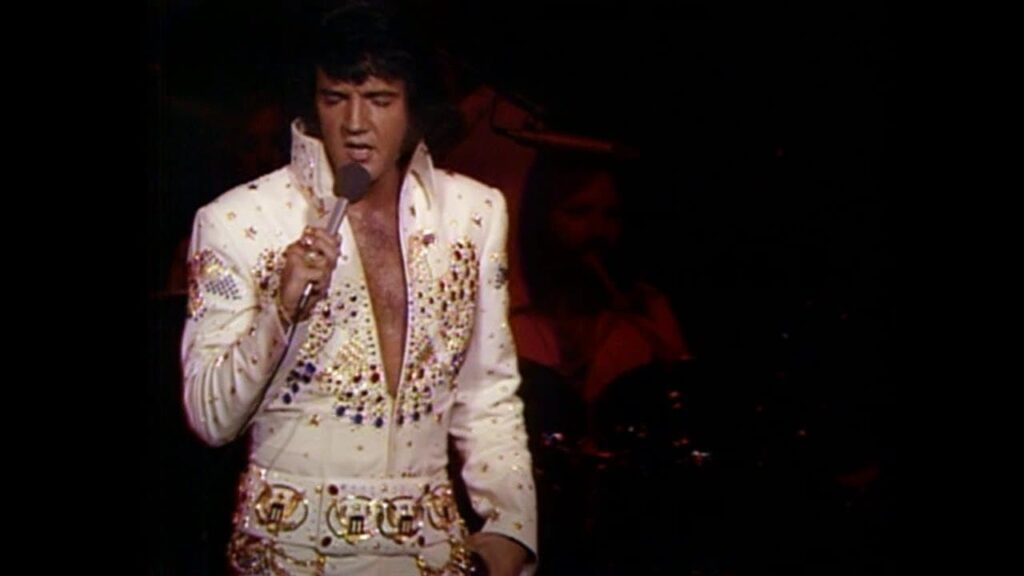
A smoky whisper of desire and longing reimagined by Elvis Presley
When Elvis Presley recorded “Fever” on April 3, 1960 and included it on his comeback album Elvis Is Back!, released April 8, 1960 he transformed a well-worn rhythm & blues classic into a sultry, intimate confession that bore the weight of his voice and the subtlety of his style. While Elvis’s version was never issued as a major single and thus did not chart on its own, the album itself marked a pivotal moment in his post-Army career and helped cement his standing as a versatile artist capable of more than just rock ’n’ roll.
The song “Fever” was originally written by Eddie Cooley and Otis Blackwell (under the pseudonym John Davenport), and first made famous by Little Willie John in 1956, when his recording soared to No. 1 on the R&B chart and reached the top ranks of the pop chart. Over the years, “Fever” became a widely covered standard but Elvis’s 1960 rendition remains one of the most distinctive, for the way it blends minimal instrumentation with his warm, suggestive vocals.
From the first breath he draws in the studio, Elvis’s Fever feels like a slow burn not flashy, but charged with sensual restraint. The arrangement is spare: soft piano, subtle saxophone from Boots Randolph, muted drums and bass, and the quiet backing of The Jordanaires. This minimalism leaves space for Elvis’s voice to hover giving every line weight, every pause a meaning. When he sings “You give me fever when you kiss me,” the heat is not in the music, but in the breathing between the notes, in the soft exhale of longing and desire.
The lyrics conjure simple yet vivid images of love’s consuming power: a night that burns, arms that ignite, a fever rising at every touch. Through Elvis’s voice, those images turn personal: not some distant story of lovers, but a confession from a man who feels the ache, the hunger, the yearning. That vulnerability half-whispered, not shouted became the song’s true power.
Because Fever wasn’t released as a standalone single, there is no chart data to mark its immediate public impact under Elvis’s name. But to measure it by numbers alone is to miss its legacy. Over time, the song became a hidden jewel within Elvis’s catalog one that fans revisited again and again, especially as they grew older and found in its smoky tones a reflection of their own longings, regrets, and memories of love.
Indeed, Elvis later brought Fever to life in his performances, embedding it in live shows like “Aloha from Hawaii via Satellite” in 1973 a testament to how much the song meant to him, and how deeply it resonated with his audience.
In a broader sense, Elvis’s version of Fever stands as a bridge between eras. It connects the rhythm-and-blues roots of the 1950s with the evolving pop sensibilities of the 1960s, carrying forward a tradition of emotional honesty and intimate expression. His interpretation proved that a song didn’t need to roar to be powerful sometimes a whisper was more than enough.
Listening to “Fever” today, especially on a quiet evening, is like returning to a half-remembered dream: velvet lights, slow glances, a subtle ache beneath the surface. For those who once heard it on vinyl or radio, it may bring back the scent of smoke-filled bars, the thrill of teenage longing, or memories of love discovered in the soft glow of lamplight.
But perhaps more than anything, it reminds us that music at its best doesn’t just entertain. It remembers. It holds onto what we dared feel. And in the voice of Elvis Presley, Fever becomes not just a song, but a temperature in the heart: slow, simmering, impossible to forget.