
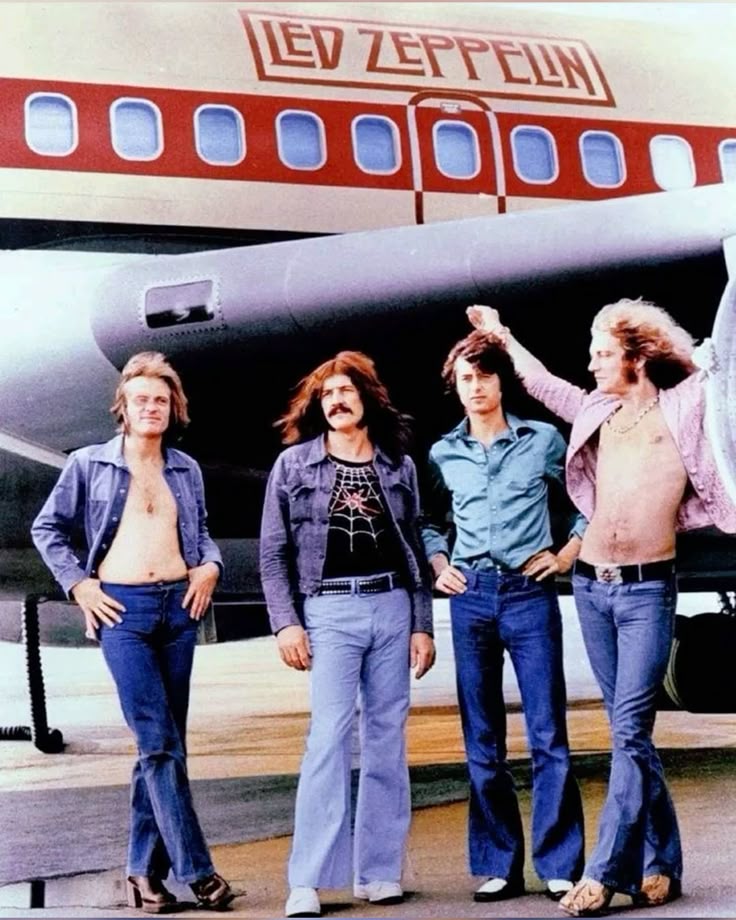
Before the Legend: How Led Zeppelin Built Power, Chaos, and a Sound That Changed Everything
Long before they became the defining force of stadium rock, Led Zeppelin were simply a group of musicians trying to find alignment in sound and identity. In 1968, under the temporary name The New Yardbirds, Jimmy Page assembled a lineup that would soon prove extraordinary, bringing in Robert Plant, John Bonham, and John Paul Jones. What followed was not immediate domination, but an intense period of work, risk, and creative conviction.
Their early success was shaped not only by talent but by strategy. Manager Peter Grant secured a groundbreaking deal with Atlantic Records, granting the band rare artistic control. This decision allowed them to reject conventional promotion, avoid television exposure, and focus on albums as complete statements rather than collections of singles. It was a gamble that paid off.
Between 1969 and 1971, the band released a series of albums culminating in Led Zeppelin IV, a record that would cement their global status. Songs like Stairway to Heaven expanded the boundaries of rock, while their live performances grew increasingly ambitious, defined by improvisation, volume, and spectacle.
Yet the rise of Led Zeppelin was never purely about music. Their reputation off stage became just as significant. Stories of excess, destruction, and relentless touring created an image of a band living at the extreme edge of the rock and roll lifestyle. While some accounts were exaggerated, the intensity was real. It was a pace that few could sustain.
Amid this chaos, moments of retreat revealed another side of their artistry. While working on Led Zeppelin III, Page and Plant withdrew to a remote cottage in Wales, searching for quiet and renewal. That contrast between noise and reflection became central to their sound.
The late 1970s marked a turning point. Personal tragedy struck when Robert Plant lost his young son, forcing the band to pause. Not long after, internal strain and exhaustion began to show. In 1980, the sudden death of John Bonham brought everything to an immediate halt. Without him, the band chose not to continue.
Looking back, the story of Led Zeppelin is not defined by a single factor. It is the result of chemistry, ambition, discipline, and instability existing at the same time. Their music captured that tension. It was controlled, yet unpredictable. Powerful, yet vulnerable.
That is why their legacy endures. Not simply because they were successful, but because they created something that still feels alive. Something that demands to be heard at full volume.