
Love Beyond Wealth: The Timeless Choice in “A Poor Man’s Roses”. When Emotion Outweighs Fortune in Classic Country Storytelling
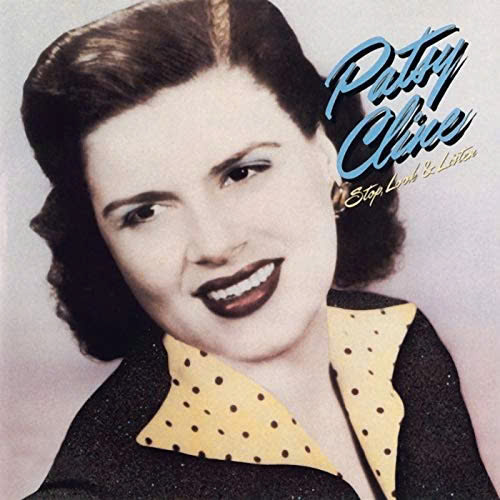
In the golden era of country music, few voices carried emotional truth as powerfully as Patsy Cline. Her recording of A Poor Man’s Roses (Or a Rich Man’s Gold) stands as a delicate yet profound reflection on love, choice, and values, delivered with the restrained elegance that defined the Nashville Sound.
Patsy Cline – A Poor Man’s Roses (Or A Rich Man’s Gold)
Originally written by Bob Hilliard and Milton De Lugg, the song was recorded by Cline in November 1956 and released in early 1957 as the B side to her breakthrough single Walkin’ After Midnight . Though it did not achieve the same commercial impact as its counterpart, the song quietly resonated with audiences, reaching the country charts and reinforcing Cline’s growing reputation as an interpreter of emotionally rich material .
The performance itself reflects a defining moment in Cline’s early career. At the time, she was navigating the transition from traditional country styling toward a more polished, crossover sound guided by producer Owen Bradley. This approach, later known as the Nashville Sound, blended orchestral arrangements with heartfelt storytelling, allowing Cline’s voice to bridge genres and reach a wider audience . Backed by The Jordanaires, whose harmonies became a signature element of her recordings, the track gains a soft, almost cinematic depth.
Lyrically, the song presents a timeless dilemma: choosing between sincere love and material security. The narrator stands at a crossroads, weighing affection from a modest partner against the promise of wealth from another. Lines such as “I must make up my mind today what to have what to hold” encapsulate a universal emotional conflict that transcends its era . Rather than dramatizing the choice, Cline delivers it with quiet conviction, allowing listeners to feel the weight of the decision.
While there is no direct evidence linking the song’s narrative to Cline’s personal life, its themes echo the emotional intensity that defined her career. Known for her ability to convey vulnerability and strength simultaneously, she often elevated simple lyrics into deeply human experiences. Her interpretations did not rely on embellishment but on authenticity, a quality that continues to define her legacy.
Today, A Poor Man’s Roses endures as more than a classic recording. It represents a moment when country music embraced emotional realism over spectacle, and when an artist like Patsy Cline could transform a modest composition into a lasting statement about love and values.