
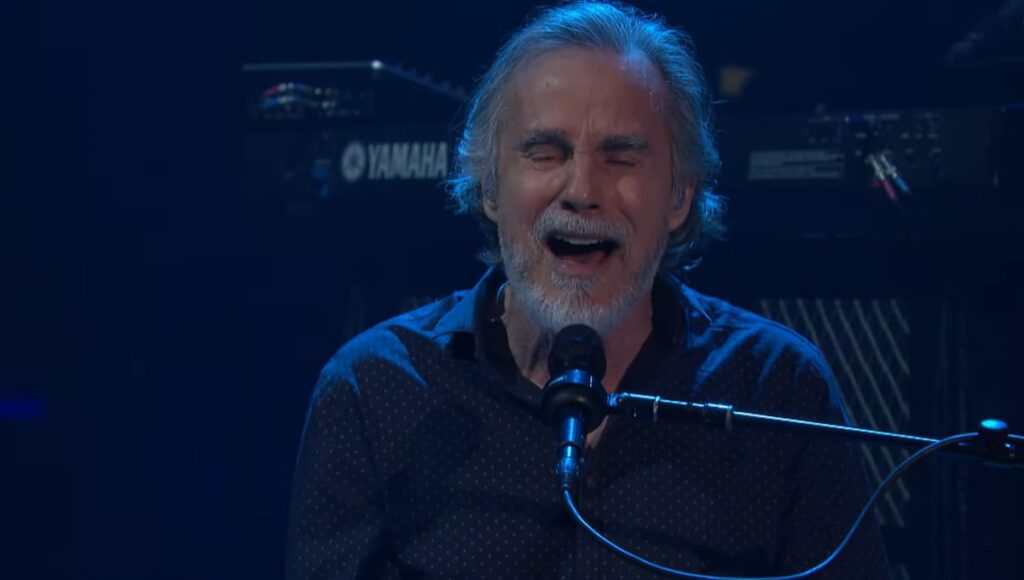
When Bright Songs Carry Heavy Truths: Jackson Browne Revisits a Classic on Austin City Limits
In a striking performance on Austin City Limits, Jackson Browne revisits one of his most enduring songs, Doctor My Eyes. First released in 1972, the track helped define Browne’s early career with its deceptively upbeat melody and introspective lyrics. Decades later, the same song returns with a weight that only time can give.
At first listen, “Doctor My Eyes” feels almost optimistic. Its rhythm is light, its melody accessible. Yet beneath that surface lies a quiet tension. The song tells the story of someone who has seen too much, someone who has tried to understand the world in all its complexity, only to arrive at emotional numbness. It is not sorrow that defines the narrator, but the absence of feeling itself.
That contrast becomes even more powerful in this live setting. On the Austin City Limits stage, Browne no longer sings as a young observer trying to make sense of life. He performs as someone who has lived through decades of change, success, and personal reflection. The line between storytelling and autobiography begins to blur.
The significance of the venue adds another layer. Austin City Limits is more than a performance space. It is a cultural institution, a stage where artists are not only celebrated but contextualized within the broader history of music. For Browne, performing here feels less like promotion and more like reflection, a moment where past and present quietly meet.
What makes this rendition particularly compelling is how little has changed and how much has deepened. The arrangement remains familiar, the melody intact. But Browne’s delivery carries a different tone. There is restraint, a sense of calm acceptance, and perhaps even resolution. The question once posed in “Doctor, my eyes” no longer feels urgent. It lingers instead as a thought that has already been lived through.
In an era of fast consumption and fleeting attention, this performance stands apart. It reminds audiences that some songs are not meant to evolve through reinvention, but through time itself. And sometimes, the most powerful transformation is not in the music, but in the person who returns to sing it.